

Wellness
Loss of senses impacts mental health and loneliness in ageing adults


New research shows sensory decline in older adults is linked to worse mental health and increased loneliness.
Most people — up to 94% of U.S. adults — experience at least some dulling of their senses with age, finding themselves squinting at screens, craving stronger flavours, and missing snatches of conversations more and more frequently.
Researchers at the University of Chicago Medicine are looking into how these changes can go beyond mere inconvenience and actually worsen overall mental health in older adults.
“When your senses decline, you can’t experience the world as well,” said Jayant Pinto, MD, a physician and expert in olfactory dysfunction at UChicago Medicine.
“You can’t hear colleagues or friends at the dinner table; you can’t discern what’s going on in your environment; you may have a hard time reading or making things out when you’re in your neighborhood. It makes all your cognitive burdens a little harder, and that probably wears you down over time and causes mental health problems.”
Along with Alexander Wang, a medical student at the UChicago Pritzker School of Medicine, Pinto recently led a study examining the prevalence and impact of sensory impairments among older adults.
They found that people with sensory disabilities tend to have worse mental health, and that different types of sensory disability were associated with different aspects of mental health.
Revealing associations between perception and emotion
The UChicago researchers analysed data on sensory function (vision, hearing and sense of smell) and self-reported mental health from nearly 4,000 older adults, collected over 10 years of follow-up as part of the National Social Life, Health & Aging Project.
They found that people who had multiple senses impaired experienced more loneliness and had significantly worse self-reported mental health overall, and people with three sensory disabilities were more likely to experience frequent depressive episodes. In analyses that differentiated between the senses, vision impairment was most strongly associated with both loneliness and poor self-rated mental health.
Scientists are still exploring how changes in all five senses can impact people, but the UChicago researchers can already point to many ways sensory decline contributes directly to feelings of loneliness, sadness and boredom.
Older people with vision impairment may have trouble getting out of the house or seeing the faces of their friends and family, and hearing loss can make conversations stilted and frustrating.
Even loss of smell can affect someone’s ability to find joy in familiar scents — like a favourite home-cooked meal or a loved one’s signature perfume — and perceive pheromones, which (though not registered consciously) contribute to social dynamics.
“We saw that hearing and vision disability tended to be associated with lower self-rated mental health and feelings of loneliness, but olfactory disability had a weaker association,” Wang said.
“This stood out to me because hearing and vision disabilities tend to be much more stigmatized than olfactory disability. This made me reflect on the ways in which social stigma may be driving this worse mental health.”
Caring for one another in an aging society
In the face of that stigma, the researchers say their results highlight the importance of improving access to mental health services and increasing awareness of the connection between sensory loss and mental distress.
In particular, understanding how different sensory disabilities impact the long-term mental health of older adults could help healthcare professionals — especially primary care providers, otolaryngologists and ophthalmologists — screen for mental health conditions when they identify sensory loss in their patients, providing opportunities for personalised and timely interventions.
In addition to proactively treating older adults’ mental health, the researchers pointed to steps that can be taken to directly lessen the day-to-day effects of sensory difficulties, which would in turn lessen their negative mental health implications.
“We have an aging society; everybody has a relative who’s getting older and having a harder time in life. It’s a burden for us all to share,” Pinto said.
“Lessening the burdens of your aging relatives and friends can have a huge impact on people’s lives, their productivity and their quality of life.”
On a personal level, family members and friends can help by being patient and finding ways to communicate more effectively, such as speaking clearly or using written notes. On a societal level, public policies and community programs can ensure accessibility in public spaces and provide resources that improve quality of life.
Pinto also highlighted a wide range of technologies and medical interventions are available that can help compensate for sensory impairment. For hearing loss, there are cochlear implants, hearing aids and other hearing-assistive devices — which research has indicated could slow cognitive decline in addition to improving quality of life.
For vision loss, there are glasses, contacts, cataract surgery and LASIK surgery, along with accommodations like text-to-speech computer programs. Even for the sense of smell, health experts can sometimes help by reducing sinus inflammation or conducting smell training exercises.
“In many cases, we can mitigate sensory difficulties in ways that might actually improve people’s lives, mental health and sense of loneliness — which is a huge epidemic,” Pinto said.
“These are simple ways we can intervene to help people and potentially have a huge impact on society.”
Recognising and destigmatising sensory disability
The researchers said they intentionally used the word “disability” throughout the paper to underscore the significant impact of sensory impairments on individuals’ lives. This terminology also aligns with efforts to destigmatise these conditions and promote a more inclusive approach to healthcare.
“To some extent, our society already considers decreased sensory function to be a disability: think of the blind and d/Deaf communities,” Wang said.
“Like many marginalised communities, the disabled community has historically had a very contentious relationship with the medical field, which can cause distress and limit access to mental health services. With better understanding and compassion, we can strive to improve the care we provide to older adults and disabled patients.”
He said that by framing the data this way, he hopes to encourage more healthcare providers to move away from thinking in terms of the Medical Model of Disability and move towards the Social Model of Disability.
“My understanding is that the Medical Model characterises disability as something that is ‘deficient’ with a person, thus requiring some sort of ‘fixing’ of the individual,” he explained.
“The Social Model characterizes disability as more of an identity, so limitations relating to disability stem from a society’s lack of accessibility and accommodation for disabled people.”
Recognising sensory impairments as disabilities and acknowledging their impact on mental health are important steps toward more comprehensive and compassionate care. By addressing the medical, social and environmental barriers that exacerbate these impairments, clinicians — and society as a whole — can better support older adults in maintaining their independence.


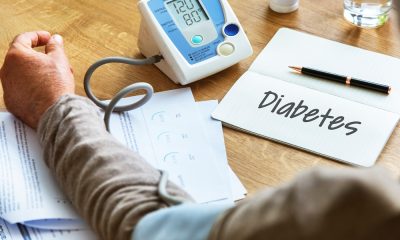
People with diabetes may have undiagnosed heart failure that could be detected by a simple screening blood test, research suggests.
The TARTAN-HF trial found that one in four patients with diabetes who had at least one other risk factor for heart failure had undiagnosed heart failure detected through screening with a blood test and ultrasound scanning of the heart.
Experts said the findings show the extent of unrecognised heart failure in people with diabetes, and how the condition can be detected using a widely available blood test called NT-proBNP, which measures how much strain the heart is under.
They suggest a heart failure screening programme for diabetics could improve diagnosis rates, lead to earlier treatment and potentially reduce the risk of hospitalisation and death.
The study, involving 700 patients, was led by the University of Glasgow in collaboration with AstraZeneca, Roche Diagnostics, Us2.ai, NHS Greater Glasgow and Clyde and NHS Lanarkshire.
Dr Kieran Docherty, clinical senior lecturer at the University of Glasgow’s School of Cardiovascular and Metabolic Health, said: “Our results from the landmark TARTAN-HF trial identified heart failure in a large proportion of people living with diabetes, emphasising the need for a heart failure screening strategy in this group of patients.
“We know that many of the symptoms and signs of heart failure are non-specific, and may go unrecognised as potentially being due to heart failure for a long time.
“The strategy used in our trial is simple and easy to implement in clinical practice, and will aid in the early identification of heart failure in people with diabetes, and facilitate the initiation of medications that we know improve outcomes in patients with heart failure.”
The study, which began more than three years ago, involved more than 700 people with diabetes from the two health board areas who had at least one other risk factor for heart failure.
They were randomly assigned either to receive heart failure screening or to continue with their usual care.
Researchers found screening uncovered a large number of previously unrecognised cases of heart failure. Around one in four, or 24.9 per cent, of those screened were found to have the condition within six months, compared with 1 per cent in the group continuing their usual care.
The study, involving patients with type 1 and type 2 diabetes, found almost all of the participants found to have heart failure had preserved ejection fraction, which can be difficult to detect without dedicated testing.
The findings of the TARTAN-HF trial were presented at the American College of Cardiology conference taking place from 28 to 30 March in New Orleans in the US.
Dr Edward Piper, medical director at AstraZeneca UK, said: “Delayed diagnosis and treatment of heart failure in people with type 2 diabetes contributes to poor long-term outcomes. TARTAN-HF demonstrates that targeted, risk-based screening can identify previously undiagnosed heart failure in approximately one in four high-risk patients with diabetes, enabling earlier intervention with guideline-directed therapy.”
Dr Christian Simon, head of global medical affairs at Roche Diagnostics, said: “We are proud to have supported the landmark TARTAN-HF trial. These findings demonstrate the transformative power of early, accessible diagnostics like the NT-proBNP blood test.
“By identifying unrecognised heart failure in people with diabetes, we enable clinicians to initiate appropriate treatments sooner, ultimately improving patient outcomes and lives.”


The UK has launched a £6.3m men’s health fund to back local projects aimed at helping men and boys live longer, healthier lives.
The Men’s Health Community Fund is a partnership between the Department of Health and Social Care, Movember and People’s Health Trust.
The government is contributing £3m, while the two charities are more than doubling that to take the total to £6.3m.
Grants will support community projects reaching underserved men and boys aged 16 and over, particularly in the most disadvantaged areas and at key points in their lives such as becoming a father, losing a job or retiring.
Projects could include support for new fathers, activities for men facing loneliness and social isolation, services to help young men engage with the health system, and support for men in work, out of work and moving into retirement.
The programme will bring together voluntary, community and social enterprise organisations to test new ways of reaching men who are least likely to use traditional health services.
An evaluation funded through the National Institute for Health and Care Research will assess what works and help inform future policy and delivery.
Health and social care secretary Wes Streeting said: “Too many men across the country are living shorter, less healthy lives, particularly those in our most disadvantaged communities.
“This new partnership will help men get the support they need in the places they feel most comfortable, their communities, among people they trust.
“By working with expert charities and local organisations, we can reach the men who are too often missed by traditional services and help them take better care of their mental and physical health.”
“It is a key step in delivering our first ever Men’s Health Strategy and driving forward our ambition to halve the gap in healthy life expectancy between the richest and poorest areas.”
The Men’s Health Strategy sets out plans to tackle the physical and mental health challenges men and boys face.
Men can be less likely to seek help and more likely to suffer in silence, while higher rates of smoking, drinking, gambling and drug use are damaging men’s health and affecting families, workplaces and communities.
The government is also investing £3.6m over the next three years in suicide prevention projects for middle-aged men in local communities across areas of England where men are most at risk, many of which are also among the most deprived. Suicide is one of the biggest killers of men under 50, and three-quarters of all suicides are men.
The projects will aim to break down barriers middle-aged men face in seeking support, including stigma around asking for help and a lack of awareness of what is available and how to access it.
They will be co-designed with experts and men with lived experience of mental health crises and suicidal thoughts.

Gut-friendly foods may damage heart, charity warns

Diabetes patients face increased risk of undiagnosed heart failure

UK government announces £6.3m fund to boost men’s health

Brain health collaboratory launches in Gulf South