


News
Centenarian study probes healthy ageing


A centenarian study by HLI and LEV Foundation will examine why some people live past 100 and remain healthier for longer.
The collaboration will study blood samples from centenarians and supercentenarians, people aged 100 and 110 or over, to explore the biology of exceptional longevity.
Researchers are trying to answer a central question in ageing science: why do individuals age at different rates?
The study will use multi-omic analysis, including genomics and proteomics, which examine genes and proteins, to identify biomarkers and biological pathways linked to exceptional longevity.
Wei-Wu He, executive chairman at HLI, said: “Centenarians and supercentenarians offer natural insights in human ageing.
“By applying our precision longevity platform to those who have achieved exceptional longevity, we can better understand how to preserve health in late life for everyone.
“The knowledge gained here has the potential to reshape how we approach aging and age-related disease.”
The organisations say these rare groups represent a unique biological resource.
Their blood samples may contain molecular and cellular information that helps explain why some people age more slowly and maintain good health for longer than the wider population.
Building on those analyses, the study is expected to provide new insights into the mechanisms behind exceptional longevity and differences in ageing.
Comparative analyses of exceptionally long-lived people and broader population cohorts will aim to identify key molecular features of extreme longevity and help lay the groundwork for future longitudinal studies.
Human Longevity, Inc. (HLI) and LEV Foundation announced the collaboration. HLI, founded in 2013 and based in South San Francisco, says it integrates genomics, artificial intelligence and multimodal diagnostics to extend human healthspan.
LEV Foundation, founded in 2022, is a California-based nonprofit focused on extending healthy human lifespan, with its flagship Robust Mouse Rejuvenation study series examining combinations of promising anti-ageing interventions.
The project is being spearheaded by Natalie S. Coles-de Grey, who the organisations say brings decades of expertise in the study of supercentenarians.
Both Coles-de Grey and LEVF’s president and chief science officer, Aubrey de Grey, are joining HLI’s scientific advisory board.
de Grey said: “I’m delighted that LEVF is partnering with HLI to further both organizations’ goals.
“There is so much to be learned, from the oldest old in our society, that will refine the preventative medicine for the chronic conditions of late life that HLI has pioneered.
“Such work is immensely complementary to LEVF’s focus on mice, and I’m sure that this collaboration will have synergy that will save many future lives.”
The organisations said findings from the study are expected to contribute to the growing field of longevity science and may inform the development of diagnostics, therapeutics and preventive strategies aimed at extending healthspan across the global population.


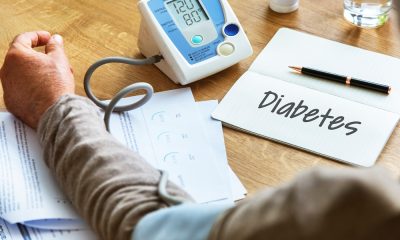





People with diabetes may have undiagnosed heart failure that could be detected by a simple screening blood test, research suggests.
The TARTAN-HF trial found that one in four patients with diabetes who had at least one other risk factor for heart failure had undiagnosed heart failure detected through screening with a blood test and ultrasound scanning of the heart.
Experts said the findings show the extent of unrecognised heart failure in people with diabetes, and how the condition can be detected using a widely available blood test called NT-proBNP, which measures how much strain the heart is under.
They suggest a heart failure screening programme for diabetics could improve diagnosis rates, lead to earlier treatment and potentially reduce the risk of hospitalisation and death.
The study, involving 700 patients, was led by the University of Glasgow in collaboration with AstraZeneca, Roche Diagnostics, Us2.ai, NHS Greater Glasgow and Clyde and NHS Lanarkshire.
Dr Kieran Docherty, clinical senior lecturer at the University of Glasgow’s School of Cardiovascular and Metabolic Health, said: “Our results from the landmark TARTAN-HF trial identified heart failure in a large proportion of people living with diabetes, emphasising the need for a heart failure screening strategy in this group of patients.
“We know that many of the symptoms and signs of heart failure are non-specific, and may go unrecognised as potentially being due to heart failure for a long time.
“The strategy used in our trial is simple and easy to implement in clinical practice, and will aid in the early identification of heart failure in people with diabetes, and facilitate the initiation of medications that we know improve outcomes in patients with heart failure.”
The study, which began more than three years ago, involved more than 700 people with diabetes from the two health board areas who had at least one other risk factor for heart failure.
They were randomly assigned either to receive heart failure screening or to continue with their usual care.
Researchers found screening uncovered a large number of previously unrecognised cases of heart failure. Around one in four, or 24.9 per cent, of those screened were found to have the condition within six months, compared with 1 per cent in the group continuing their usual care.
The study, involving patients with type 1 and type 2 diabetes, found almost all of the participants found to have heart failure had preserved ejection fraction, which can be difficult to detect without dedicated testing.
The findings of the TARTAN-HF trial were presented at the American College of Cardiology conference taking place from 28 to 30 March in New Orleans in the US.
Dr Edward Piper, medical director at AstraZeneca UK, said: “Delayed diagnosis and treatment of heart failure in people with type 2 diabetes contributes to poor long-term outcomes. TARTAN-HF demonstrates that targeted, risk-based screening can identify previously undiagnosed heart failure in approximately one in four high-risk patients with diabetes, enabling earlier intervention with guideline-directed therapy.”
Dr Christian Simon, head of global medical affairs at Roche Diagnostics, said: “We are proud to have supported the landmark TARTAN-HF trial. These findings demonstrate the transformative power of early, accessible diagnostics like the NT-proBNP blood test.
“By identifying unrecognised heart failure in people with diabetes, we enable clinicians to initiate appropriate treatments sooner, ultimately improving patient outcomes and lives.”

The UK has launched a £6.3m men’s health fund to back local projects aimed at helping men and boys live longer, healthier lives.
The Men’s Health Community Fund is a partnership between the Department of Health and Social Care, Movember and People’s Health Trust.
The government is contributing £3m, while the two charities are more than doubling that to take the total to £6.3m.
Grants will support community projects reaching underserved men and boys aged 16 and over, particularly in the most disadvantaged areas and at key points in their lives such as becoming a father, losing a job or retiring.
Projects could include support for new fathers, activities for men facing loneliness and social isolation, services to help young men engage with the health system, and support for men in work, out of work and moving into retirement.
The programme will bring together voluntary, community and social enterprise organisations to test new ways of reaching men who are least likely to use traditional health services.
An evaluation funded through the National Institute for Health and Care Research will assess what works and help inform future policy and delivery.
Health and social care secretary Wes Streeting said: “Too many men across the country are living shorter, less healthy lives, particularly those in our most disadvantaged communities.
“This new partnership will help men get the support they need in the places they feel most comfortable, their communities, among people they trust.
“By working with expert charities and local organisations, we can reach the men who are too often missed by traditional services and help them take better care of their mental and physical health.”
“It is a key step in delivering our first ever Men’s Health Strategy and driving forward our ambition to halve the gap in healthy life expectancy between the richest and poorest areas.”
The Men’s Health Strategy sets out plans to tackle the physical and mental health challenges men and boys face.
Men can be less likely to seek help and more likely to suffer in silence, while higher rates of smoking, drinking, gambling and drug use are damaging men’s health and affecting families, workplaces and communities.
The government is also investing £3.6m over the next three years in suicide prevention projects for middle-aged men in local communities across areas of England where men are most at risk, many of which are also among the most deprived. Suicide is one of the biggest killers of men under 50, and three-quarters of all suicides are men.
The projects will aim to break down barriers middle-aged men face in seeking support, including stigma around asking for help and a lack of awareness of what is available and how to access it.
They will be co-designed with experts and men with lived experience of mental health crises and suicidal thoughts.

Gut-friendly foods may damage heart, charity warns

Diabetes patients face increased risk of undiagnosed heart failure

UK government announces £6.3m fund to boost men’s health

Brain health collaboratory launches in Gulf South
