

Wellness
“Emotional contagion” a factor in senior’s mental health


A new study has revealed the impact of “emotional contagion” – a kind of behavioural mirroring – on the mental health of seniors.
The study found that vulnerability to emotional contagion varies from person to person, just as personality traits do, and is something that’s often overlooked in studies of mental health, especially among the elderly.
“Just as some people are more likely to catch a respiratory virus through close contact, others are more susceptible to ‘catching’ the emotions of the people around them,” explained Marie-Josée Richer, a psychoeducator at the Institut universitaire de gériatrie de Montréal, affiliated with Université de Montréal, who did doctoral research on the subject in the elderly.
“A person vulnerable to emotional contagion is especially sensitive to the emotions of others,” added Pierrich Plusquellec, a professor in UdeM’s School of Psychoeducation and co-director of the Centre for Studies on Human Stress.
“It’s an adaptive response that occurs unconsciously through mimicry of facial expressions, gestures and postures, leading to the emotions convergencing.”
For example, he said, “a person with this sensitivity may feel physically tense when seeing angry people on TV, tear up when seeing someone cry, or feel more cheerful when in contact with a happy person. To measure vulnerability to emotional contagion, we look at a range of emotions: joy, love, anger, fear. Emotional contagion plays an essential role in a society, as it is the basis of empathy.”
But this vulnerability can be a double-edged sword. In the study co-supervised by Plusquellec and UdeM psychology professor Sébastien Grenier and published in PLOS Mental Health, Richer found that vulnerability to emotional contagion is greater among seniors suffering from psychological distress.
“This research was part of my work on psychological resilience in older adults,” she said.
“The main objective was to better understand the factors that influence resilience among seniors in order to help prevent psychological distress, which can have serious effects on the overall health of seniors, including increased risk of cardiovascular disease, cognitive decline and premature death.”
The UdeM researchers studied a group of 170 adults aged 55 or over living in retirement homes or using the services of community organizations, and who were dealing with some type of adversity. Adversity was defined as challenges, obstacles or difficult conditions that an individual may face, such as bereavement or conflict with a loved one (explicit adversity) or vulnerability to emotional contagion (implicit adversity).
The study was part of a larger project evaluating the effects of a program to manage stress and stress contagion. To be included, participants had to live in a metropolitan area and be interested in group stress-management techniques. The researchers sought a broad sample, including individuals with varying levels of psychological distress and physical limitations, so as to be representative of the general population.
Data were collected between September 2018 and September 2019. Most of the participants – 85 per cent – were women. They ranged in age from 56 to 96, with an average of 76.1. Most were born in Canada and lived alone.
Participants were divided into three groups based on level of psychological distress:
- Nearly 45 per cent fit the anxiety profile, with clinical or subclinical symptoms of anxiety only.
- Around 20 per cent were classified in the anxious depression profile, with clinical or subclinical symptoms of both anxiety and depression.
- The last group, the no-distress profile, consisted of individuals with no significant symptoms of anxiety or depression.
“We classify symptoms of varying intensity that are strong enough to interfere with a person’s daily life as ‘subclinical’ or ‘clinical’,” Grenier explained.
“Symptoms are clinical if they meet the criteria for a formal diagnosis of anxiety or depression. For example, a person with clinical anxiety might experience frequent panic attacks, difficulty leaving the house and social isolation.
“A person with subclinical anxiety would not have a formal diagnosis but may experience physical symptoms and worries that affect their daily functioning.”
The researchers analysed levels of psychological distress in relation to factors such as sex, age, income, living situation, independence, satisfaction with one’s social network and one’s way of coping with adversity, and in relation to an emotional contagion scale that measured subjects’ vulnerability in this regard.
The results show that the seniors who were most vulnerable to emotional contagion were 8.5 to 10 times more likely to present symptoms of anxiety or anxious depression than those who were less vulnerable. This finding was independent of other factors, such as an individual’s social support or coping strategies.
The study marks the first time that vulnerability to emotional contagion has been examined as a determinant of psychological distress in seniors, the researchers say.
Though they did not establish a cause-and-effect relationship between vulnerability to emotional contagion and psychological distress, their study does highlight the importance of considering both explicit and implicit adversity to identify seniors at risk for psychological distress. In communal living environments, such as seniors’ residences, and in caregiving situations, the risks of emotional contagion need to be addressed proactively, the researchers argue.
They recommend developing tools to help the individuals most vulnerable to emotional contagion better manage this sensitivity. This could strengthen their psychological resilience and help improve their quality of life. They also suggest future research on moderators of vulnerability to emotional contagion in order to improve our understanding of its impact on mental health and help reduce psychological distress in older people.




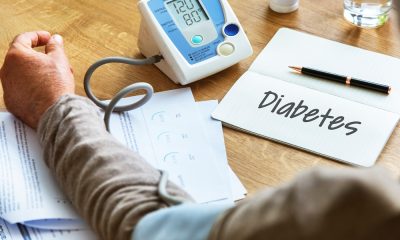
People with diabetes may have undiagnosed heart failure that could be detected by a simple screening blood test, research suggests.
The TARTAN-HF trial found that one in four patients with diabetes who had at least one other risk factor for heart failure had undiagnosed heart failure detected through screening with a blood test and ultrasound scanning of the heart.
Experts said the findings show the extent of unrecognised heart failure in people with diabetes, and how the condition can be detected using a widely available blood test called NT-proBNP, which measures how much strain the heart is under.
They suggest a heart failure screening programme for diabetics could improve diagnosis rates, lead to earlier treatment and potentially reduce the risk of hospitalisation and death.
The study, involving 700 patients, was led by the University of Glasgow in collaboration with AstraZeneca, Roche Diagnostics, Us2.ai, NHS Greater Glasgow and Clyde and NHS Lanarkshire.
Dr Kieran Docherty, clinical senior lecturer at the University of Glasgow’s School of Cardiovascular and Metabolic Health, said: “Our results from the landmark TARTAN-HF trial identified heart failure in a large proportion of people living with diabetes, emphasising the need for a heart failure screening strategy in this group of patients.
“We know that many of the symptoms and signs of heart failure are non-specific, and may go unrecognised as potentially being due to heart failure for a long time.
“The strategy used in our trial is simple and easy to implement in clinical practice, and will aid in the early identification of heart failure in people with diabetes, and facilitate the initiation of medications that we know improve outcomes in patients with heart failure.”
The study, which began more than three years ago, involved more than 700 people with diabetes from the two health board areas who had at least one other risk factor for heart failure.
They were randomly assigned either to receive heart failure screening or to continue with their usual care.
Researchers found screening uncovered a large number of previously unrecognised cases of heart failure. Around one in four, or 24.9 per cent, of those screened were found to have the condition within six months, compared with 1 per cent in the group continuing their usual care.
The study, involving patients with type 1 and type 2 diabetes, found almost all of the participants found to have heart failure had preserved ejection fraction, which can be difficult to detect without dedicated testing.
The findings of the TARTAN-HF trial were presented at the American College of Cardiology conference taking place from 28 to 30 March in New Orleans in the US.
Dr Edward Piper, medical director at AstraZeneca UK, said: “Delayed diagnosis and treatment of heart failure in people with type 2 diabetes contributes to poor long-term outcomes. TARTAN-HF demonstrates that targeted, risk-based screening can identify previously undiagnosed heart failure in approximately one in four high-risk patients with diabetes, enabling earlier intervention with guideline-directed therapy.”
Dr Christian Simon, head of global medical affairs at Roche Diagnostics, said: “We are proud to have supported the landmark TARTAN-HF trial. These findings demonstrate the transformative power of early, accessible diagnostics like the NT-proBNP blood test.
“By identifying unrecognised heart failure in people with diabetes, we enable clinicians to initiate appropriate treatments sooner, ultimately improving patient outcomes and lives.”


The UK has launched a £6.3m men’s health fund to back local projects aimed at helping men and boys live longer, healthier lives.
The Men’s Health Community Fund is a partnership between the Department of Health and Social Care, Movember and People’s Health Trust.
The government is contributing £3m, while the two charities are more than doubling that to take the total to £6.3m.
Grants will support community projects reaching underserved men and boys aged 16 and over, particularly in the most disadvantaged areas and at key points in their lives such as becoming a father, losing a job or retiring.
Projects could include support for new fathers, activities for men facing loneliness and social isolation, services to help young men engage with the health system, and support for men in work, out of work and moving into retirement.
The programme will bring together voluntary, community and social enterprise organisations to test new ways of reaching men who are least likely to use traditional health services.
An evaluation funded through the National Institute for Health and Care Research will assess what works and help inform future policy and delivery.
Health and social care secretary Wes Streeting said: “Too many men across the country are living shorter, less healthy lives, particularly those in our most disadvantaged communities.
“This new partnership will help men get the support they need in the places they feel most comfortable, their communities, among people they trust.
“By working with expert charities and local organisations, we can reach the men who are too often missed by traditional services and help them take better care of their mental and physical health.”
“It is a key step in delivering our first ever Men’s Health Strategy and driving forward our ambition to halve the gap in healthy life expectancy between the richest and poorest areas.”
The Men’s Health Strategy sets out plans to tackle the physical and mental health challenges men and boys face.
Men can be less likely to seek help and more likely to suffer in silence, while higher rates of smoking, drinking, gambling and drug use are damaging men’s health and affecting families, workplaces and communities.
The government is also investing £3.6m over the next three years in suicide prevention projects for middle-aged men in local communities across areas of England where men are most at risk, many of which are also among the most deprived. Suicide is one of the biggest killers of men under 50, and three-quarters of all suicides are men.
The projects will aim to break down barriers middle-aged men face in seeking support, including stigma around asking for help and a lack of awareness of what is available and how to access it.
They will be co-designed with experts and men with lived experience of mental health crises and suicidal thoughts.

Gut-friendly foods may damage heart, charity warns

Diabetes patients face increased risk of undiagnosed heart failure

UK government announces £6.3m fund to boost men’s health

Brain health collaboratory launches in Gulf South