


Research
Ultra-processed food linked to higher risk of early death – study


A 30-year study from researchers in the US has linked ultra-processed food to a slightly higher risk of early death.
Higher consumption of most ultra-processed foods is linked to a slightly higher risk of death, with ready-to-eat meat, poultry, and seafood based products, sugary drinks, dairy based desserts, and highly processed breakfast foods showing the strongest associations, finds a 30-year US study in The BMJ.
The researchers say not all ultra-processed food products should be universally restricted, but that their findings “provide support for limiting consumption of certain types of ultra-processed food for long term health.”
Ultra-processed foods include packaged baked goods and snacks, fizzy drinks, sugary cereals, and ready-to-eat or heat products. They often contain colours, emulsifiers, flavours, and other additives and are typically high in energy, added sugar, saturated fat, and salt, but lack vitamins and fibre.
Mounting evidence links ultra-processed foods to higher risks of obesity, heart disease, diabetes and bowel cancer, but few long term studies have examined links to all cause and cause specific deaths, especially due to cancer.
To address this knowledge gap, researchers tracked the long-term health of 74,563 female registered nurses from 11 US states in the Nurses’ Health Study (1984-2018) and 39,501 male health professionals from all 50 US states in the Health Professionals Follow-up Study (1986-2018) with no history of cancer, cardiovascular diseases, or diabetes at study enrolment.
Every two years participants provided information on their health and lifestyle habits, and every four years they completed a detailed food questionnaire. Overall dietary quality was also assessed using the Alternative Healthy Eating Index-2010 (AHEI) score.
During an average 34-year follow-up period, the researchers identified 48,193 deaths, including 13,557 deaths due to cancer, 11,416 deaths due to cardiovascular diseases, 3926 deaths due to respiratory diseases, and 6343 deaths due to neurodegenerative diseases.
Compared with participants in the lowest quarter of ultra-processed food intake (average 3 servings per day), those in the highest quarter (average 7 servings per day) had a 4% higher risk of total deaths and a 9% higher risk of other deaths, including an 8% higher risk of neurodegenerative deaths.
No associations were found for deaths due to cardiovascular diseases, cancer, or respiratory diseases.
In absolute numbers, the rate of death from any cause among participants in the lowest and highest quarter of ultra-processed food intake was 1472 and 1536 per 100,000 person years, respectively.
The association between ultra-processed food intake and death varied across specific food groups, with meat, poultry, and seafood based ready-to-eat products showing the strongest and most consistent associations, followed by sugar sweetened and artificially sweetened beverages, dairy based desserts, and ultra-processed breakfast food.
And the association was less pronounced after overall dietary quality was taken into account, suggesting that dietary quality has a stronger influence on long term health than ultra-processed food consumption, note the authors.
This is an observational study, so no firm conclusions can be drawn about cause and effect, and the authors point out that the ultra-processed food classification system does not capture the full complexity of food processing, leading to potential misclassification. In addition, participants were health professionals and predominantly white, limiting the generalizability of the findings.
However, this was a large study with long follow-up, using detailed, validated, and repeated measurements, and results were similar after further analyses, providing greater confidence in the conclusions.
The researchers stress that not all ultra-processed food products should be universally restricted and say oversimplification when formulating dietary recommendations should be avoided.
But they conclude: “The findings provide support for limiting consumption of certain types of ultra-processed food for long term health,” adding that “future studies are warranted to improve the classification of ultra-processed foods and confirm our findings in other populations.”
In a linked editorial, researchers in New Zealand point out that recommendations to avoid ultra-processed food may also give the impression that foods that are not ultra-processed, such as red meat, can be frequently consumed.
They argue that debate about the ultra-processed concept must not delay food policies that improve health, such as restrictions on marketing unhealthy foods to children, warning labels on nutritionally poor food products, and taxes on sugary drinks.
“Our focus should be on advocating for greater global adoption of these and more ambitious interventions and increasing safeguards to prevent policies from being influenced by multinational food companies with vested interests that do not align with public health or environmental goals,” they conclude.






NICE will review whether new Alzheimer’s drugs should be offered on the NHS after an appeal found their wider impact was not fully counted.
An appeal found that the National Institute for Health and Care Excellence had failed to properly account for the wider impact of the treatments, including the heavy burden on unpaid carers, when calculating the cost effectiveness of the medicines.
Both treatments, lecanemab and donanemab, will now return to a NICE committee for further consideration.
“Today’s ruling is an opportunity for NICE to consider the real cost of Alzheimer’s on people and their families, and we welcome the decision to look again at whether new medicines could be provided on the NHS,” said David Thomas, head of policy and public affairs at Alzheimer’s Research UK.
Lecanemab and donanemab do not cure Alzheimer’s, but they slow it by targeting and clearing clumps of amyloid proteins, sticky protein build-ups in the brain linked to the disease.
While the drugs are available privately in the UK for people who can afford them, NICE ruled last year that they were too expensive to be made available on the NHS in England and Wales.
It is estimated informal dementia care costs the economy more than £20bn a year.
Alzheimer’s Research UK wants NICE to update how it assesses the value of new dementia drugs and factor in the huge additional costs this condition places on society and the wider economy.
NICE and its expert committees assess whether new drugs are good value for money for the NHS based on a wide range of evidence.
This includes how treatments perform in clinical trials, the experiences of patients and carers, and the costs of new drugs as well as any changes to NHS services needed to provide access.
When NICE weighs up whether a new Alzheimer’s drug is cost effective for the NHS, it carries out a limited assessment of the impact dementia has on the health of carers.
But the condition takes an enormous toll on families and society because caring for someone with dementia can lead people to become more isolated and give up work.
It can have a major emotional impact and put families under financial strain.
Thomas said: “Research has delivered new treatments with the potential to provide people with valuable extra months of independence, lessening the burden on carers.
“While these treatments offer modest benefits and can cause serious side effects, they provide the foundation for a future where dementia becomes a treatable condition.
“Now we need NICE to look again at how these medicines could benefit both people with early Alzheimer’s and their carers.”
Chris, whose mother Shirley is living with Alzheimer’s disease, said: “The real cost of Alzheimer’s is far greater than many people realise.
“In order to give my mum the care she needed, I moved back home to help my dad as the care was too much for him alone. After my dad passed away from Covid in 2021, I became sole carer for my mum.
“It was a very difficult period, working a full-time job, caring for Mum and dealing with the loss of my dad. Eventually I got some in-home care support to help.
“The family has borne most of the cost of Mum’s care, both in time and fees, and the family home has been sold to finance it.”
“The emotional and financial strain Alzheimer’s has taken on our family is horrendous, and I know many families across the UK are experiencing this pressure.”
He is backing Alzheimer’s Research UK’s call for NICE to change how it evaluates new dementia treatments.
The timeframe for the next NICE meetings to discuss the drugs is still to be set, and it is not certain follow-up hearings would change NICE’s guidance on access to the medicines.
But Alzheimer’s Research UK is continuing to push to make sure dementia is now a main priority for political and NHS decision-makers.
The head of the ongoing independent review into adult social care, Baroness Louise Casey, has called on the government to act, show leadership and prioritise dementia.
She has proposed appointing a dementia tsar to drive forward the prevention, treatment and care of dementia.
Baroness Casey has also argued for more funding for dementia treatment trials.
With more than 130 Alzheimer’s drugs in clinical trials worldwide, the charity says it is vital the NHS runs trials of new treatments now to understand how to deliver them to eligible patients in future.
In addition to changing how NICE assesses new medicines, the health service needs to collect real-world evidence on new dementia drugs and prepare for diagnostic tests and innovative treatments that are coming.
“Alzheimer’s Research UK is calling on the government to give dementia the same political determination that transformed cancer care,” Thomas said.
“We urgently need investment and a clear UK-wide plan so new treatments can be assessed in the NHS and reach the people who stand to benefit.”
Health and social care secretary Wes Streeting has said dementia is “one of the greatest challenges of our time” and pledged that the UK should become a world leader in dementia clinical trials.
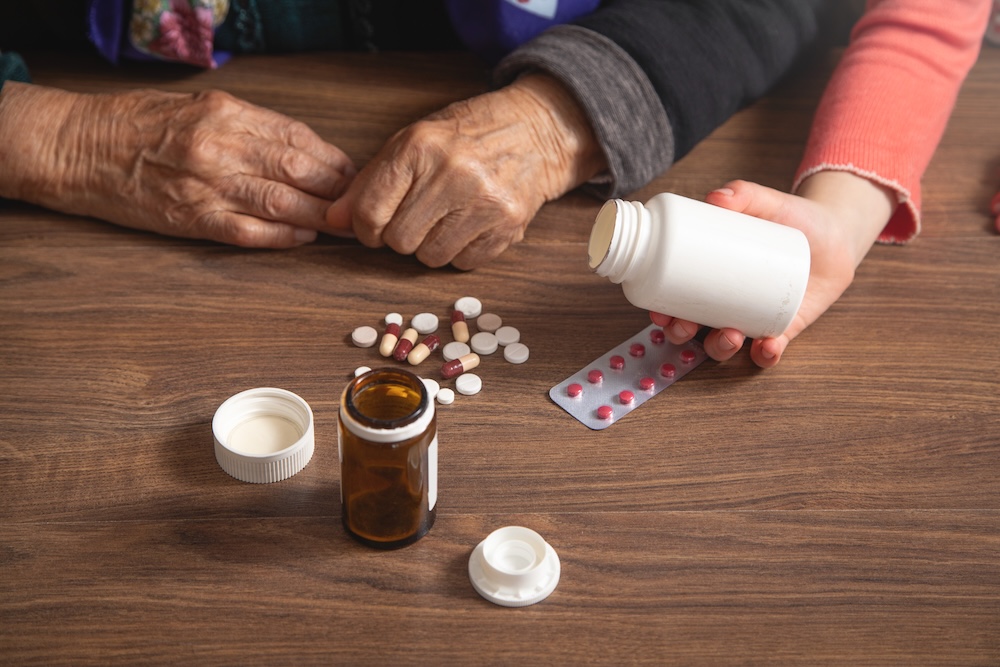

A prebiotic fibre supplement may ease arthritis pain and improve grip strength in people with knee osteoarthritis, a study suggests.
The daily supplement, made from inulin, a dietary fibre found in chicory root, Jerusalem artichokes and other vegetables, also lowered pain sensitivity and saw fewer people drop out than a digital physiotherapy programme tested alongside it.
Dr Afroditi Kouraki, lead author of the study from the University of Nottingham, said: ‘Our findings suggest that targeting gut health with a prebiotic supplement is a safe, well-tolerated, and effective way to reduce pain in people with knee osteoarthritis.
“The very low dropout rate compared to the exercise group is also encouraging from a public health perspective, people were able to fit this supplement easily into their daily lives.’
Osteoarthritis of the knee, a wear-and-tear joint condition, affects hundreds of millions of people worldwide and is a leading cause of pain and disability, particularly in older adults.
Current treatments rely heavily on pain medication, which can cause side effects, or exercise programmes, which many patients find hard to maintain.
The INSPIRE trial, led by researchers at the University of Nottingham, involved 117 adults with knee osteoarthritis and tested four groups: inulin alone, digital physiotherapy-supported exercise alone, a combination of both, and a placebo. Both inulin and physiotherapy independently reduced knee pain.
However, inulin alone improved grip strength and reduced pain sensitivity, measures linked to how the nervous system processes pain, while physiotherapy did not.
The dropout rate for those taking the supplement was just 3.6 per cent, compared with 21 per cent for the physiotherapy group, suggesting a daily supplement may be easier for people to stick with than an exercise programme.
Inulin works as a prebiotic, meaning it feeds beneficial bacteria in the gut.
This leads to the production of compounds called short-chain fatty acids, particularly butyrate, which can affect inflammation and pain pathways throughout the body.
Participants taking inulin also showed increased levels of both butyrate and GLP-1, a gut hormone linked to pain regulation and muscle health.
Higher GLP-1 levels were associated with improved grip strength, pointing to a possible gut-muscle connection.
Senior author Professor Ana Valdes added: ‘The link we observed between GLP-1 and grip strength is particularly intriguing and points to a broader gut-muscle-pain axis that warrants further investigation. This could have implications not just for osteoarthritis, but for understanding how gut health influences ageing and physical resilience more broadly.’
Professor Lucy Donaldson, director of research at Arthritis UK, said: “The pain of arthritis can severely impact quality of life. Our recent lived experience survey showed that six in ten people are living in pain most or all of the time due to their arthritis.
“Researchers are starting to explore the role of the gut microbiome in our experience of pain.
“This exciting preliminary research highlights how diet and physiotherapy can act in different ways to have benefits for people with arthritis.
“We know a variety and balance of healthy foods, including fibre, and regular physical activity matter, and we’re glad to be supporting research that explores how they work to help people with arthritis.”

Gut-friendly foods may damage heart, charity warns

Diabetes patients face increased risk of undiagnosed heart failure

UK government announces £6.3m fund to boost men’s health

Brain health collaboratory launches in Gulf South

Centenarian study probes healthy ageing
Centenarian study probes healthy ageing

Active sitting linked to lower dementia risk

Endogenex raises US$50m for diabetes procedure

Working nights undermines type 2 diabetes management – study
UK government announces £6.3m fund to boost men’s health
 News4 weeks ago
Centenarian study probes healthy ageing
- News4 weeks ago
Active sitting linked to lower dementia risk
- News4 weeks ago
Endogenex raises US$50m for diabetes procedure
- News4 weeks ago
Working nights undermines type 2 diabetes management – study
- News4 weeks ago
UK government announces £6.3m fund to boost men’s health
- News4 weeks ago
Brain health collaboratory launches in Gulf South
- Wellness4 weeks ago
Social isolation is a horrible consequence of dementia – AI could be an answer
- Wellness3 weeks ago
Diabetes patients face increased risk of undiagnosed heart failure