


Research
New insights into role of high blood pressure in development of dementia

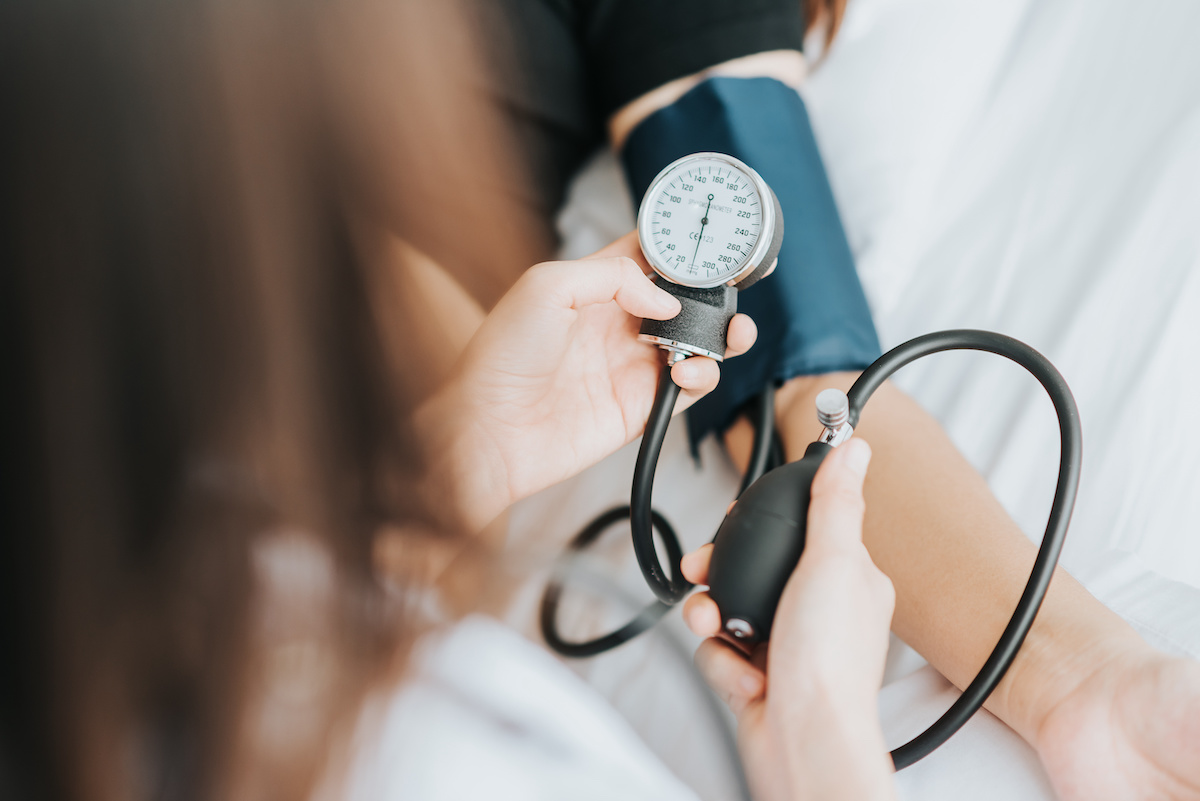
For the first time, researchers have identified specific regions of the brain that are damaged by high blood pressure and may contribute to a decline in mental processes and the development of dementia.
High blood pressure is known to be involved in causing dementia and damage to brain function. The study, which is published in the European Heart Journal shows how this happens.
It gathered information from a combination of magnetic resonance imaging (MRI) of brains, genetic analyses and observational data from thousands of patients to look at the effect of high blood pressure on cognitive function. The researchers then checked their findings in a separate, large group of patients in Italy.
Tomasz Guzik, Professor of Cardiovascular Medicine, at the University of Edinburgh (UK) and Jagiellonian University Medical College, Krakow (Poland), who led the research, said: “By using this combination of imaging, genetic and observational approaches, we have identified specific parts of the brain that are affected by increases in blood pressure, including areas called the putamen and specific white matter regions. We thought these areas might be where high blood pressure affects cognitive function, such as memory loss, thinking skills and dementia. When we checked our findings by studying a group of patients in Italy who had high blood pressure, we found that the parts of the brain we had identified were indeed affected.
“We hope that our findings may help us to develop new ways to treat cognitive impairment in people with high blood pressure. Studying the genes and proteins in these brain structures could help us understand how high blood pressure affects the brain and causes cognitive problems. Moreover, by looking at these specific regions of the brain, we may be able to predict who will develop memory loss and dementia faster in the context of high blood pressure. This could help with precision medicine, so that we can target more intensive therapies to prevent the development of cognitive impairment in patients most at risk.”
High blood pressure is common and occurs in 30. per cent of people worldwide, with an additional 30 per cent showing the initial stages of the disease. Studies have shown that it affects how well the brain works and that it can cause long-term changes. However, until now it was not known exactly how high blood pressure damages the brain and which specific regions are affected.
In research co-funded by the European Research Council, the British Heart Foundation and the Italian Ministry of Health, Prof. Guzik and an international team of researchers used brain MRI imaging data from over 30,000 participants in the UK Biobank study, genetic information from genome-wide association studies (GWAS) from UK Biobank and two other international groups (COGENT and the International Consortium for Blood Pressure). They used a technique called Mendelian randomisation, to see if high blood pressure was actually the cause of changes to specific parts of the brain rather than just being associated with these changes.
“Mendelian randomisation is a way of using genetic information to understand how one thing affects another,” said Professor Guzik.
“In particular, it tests if something is potentially causing a certain effect, or if the effect is just a coincidence. It works by using a person’s genetic information to see if there is a relationship between genes predisposing to higher blood pressure and outcomes. If there is a relationship, then it is more likely that the high blood pressure is causing the outcome. This is because genes are randomly passed down from parents, so they are not influenced by other factors that could confuse the results.
“In our study, if a gene that causes high blood pressure is also linked to certain brain structures and their function, then it suggests that high blood pressure might really be causing brain dysfunction at that location, leading to problems with memory, thinking and dementia.”
The researchers found changes to nine parts of the brain were related to higher blood pressure and worse cognitive function. These included the putamen, which is a round structure in the base of the front of the brain, responsible for regulating movement and influencing various types of learning.
Other areas affected were the anterior thalamic radiation, anterior corona radiata and anterior limb of the internal capsule, which are regions of white matter that connect and enable signalling between different parts of the brain. The anterior thalamic radiation is involved in executive functions, such as the planning of simple and complex daily tasks, while the other two regions are involved in decision-making and the management of emotions.
The changes to these areas included decreases in brain volume and the amount of surface area on the brain cortex, changes to connections between different parts of the brain, and changes in measures of brain activity.
First author of the study, Associate Professor Mateusz Siedlinski, also a researcher at the Jagiellonian University Medical College, said: “Our study has, for the first time, identified specific places in the brain that are potentially causally associated with high blood pressure and cognitive impairment. This was uniquely possible thanks to the availability of data from UK Biobank, including MRI brain images, and thanks to previous research identifying genetic variants that affect the structure and function of over 3000 areas of the brain.”
Co-author of the study, Professor Joanna Wardlaw, Head of Neuroimaging Sciences at the University of Edinburgh, added: “It has been known for a long time that high blood pressure is a risk factor for cognitive decline, but how high blood pressure damages the brain was not clear. This study shows that specific brain regions are at particularly high risk of blood pressure damage, which may help to identify people at risk of cognitive decline in the earliest stages, and potentially to target therapies more effectively in future.”
Limitations of the study include that participants in the UK Biobank study are mainly white and middle-aged, so it might not be possible to extrapolate the findings to older people.












NICE will review whether new Alzheimer’s drugs should be offered on the NHS after an appeal found their wider impact was not fully counted.
An appeal found that the National Institute for Health and Care Excellence had failed to properly account for the wider impact of the treatments, including the heavy burden on unpaid carers, when calculating the cost effectiveness of the medicines.
Both treatments, lecanemab and donanemab, will now return to a NICE committee for further consideration.
“Today’s ruling is an opportunity for NICE to consider the real cost of Alzheimer’s on people and their families, and we welcome the decision to look again at whether new medicines could be provided on the NHS,” said David Thomas, head of policy and public affairs at Alzheimer’s Research UK.
Lecanemab and donanemab do not cure Alzheimer’s, but they slow it by targeting and clearing clumps of amyloid proteins, sticky protein build-ups in the brain linked to the disease.
While the drugs are available privately in the UK for people who can afford them, NICE ruled last year that they were too expensive to be made available on the NHS in England and Wales.
It is estimated informal dementia care costs the economy more than £20bn a year.
Alzheimer’s Research UK wants NICE to update how it assesses the value of new dementia drugs and factor in the huge additional costs this condition places on society and the wider economy.
NICE and its expert committees assess whether new drugs are good value for money for the NHS based on a wide range of evidence.
This includes how treatments perform in clinical trials, the experiences of patients and carers, and the costs of new drugs as well as any changes to NHS services needed to provide access.
When NICE weighs up whether a new Alzheimer’s drug is cost effective for the NHS, it carries out a limited assessment of the impact dementia has on the health of carers.
But the condition takes an enormous toll on families and society because caring for someone with dementia can lead people to become more isolated and give up work.
It can have a major emotional impact and put families under financial strain.
Thomas said: “Research has delivered new treatments with the potential to provide people with valuable extra months of independence, lessening the burden on carers.
“While these treatments offer modest benefits and can cause serious side effects, they provide the foundation for a future where dementia becomes a treatable condition.
“Now we need NICE to look again at how these medicines could benefit both people with early Alzheimer’s and their carers.”
Chris, whose mother Shirley is living with Alzheimer’s disease, said: “The real cost of Alzheimer’s is far greater than many people realise.
“In order to give my mum the care she needed, I moved back home to help my dad as the care was too much for him alone. After my dad passed away from Covid in 2021, I became sole carer for my mum.
“It was a very difficult period, working a full-time job, caring for Mum and dealing with the loss of my dad. Eventually I got some in-home care support to help.
“The family has borne most of the cost of Mum’s care, both in time and fees, and the family home has been sold to finance it.”
“The emotional and financial strain Alzheimer’s has taken on our family is horrendous, and I know many families across the UK are experiencing this pressure.”
He is backing Alzheimer’s Research UK’s call for NICE to change how it evaluates new dementia treatments.
The timeframe for the next NICE meetings to discuss the drugs is still to be set, and it is not certain follow-up hearings would change NICE’s guidance on access to the medicines.
But Alzheimer’s Research UK is continuing to push to make sure dementia is now a main priority for political and NHS decision-makers.
The head of the ongoing independent review into adult social care, Baroness Louise Casey, has called on the government to act, show leadership and prioritise dementia.
She has proposed appointing a dementia tsar to drive forward the prevention, treatment and care of dementia.
Baroness Casey has also argued for more funding for dementia treatment trials.
With more than 130 Alzheimer’s drugs in clinical trials worldwide, the charity says it is vital the NHS runs trials of new treatments now to understand how to deliver them to eligible patients in future.
In addition to changing how NICE assesses new medicines, the health service needs to collect real-world evidence on new dementia drugs and prepare for diagnostic tests and innovative treatments that are coming.
“Alzheimer’s Research UK is calling on the government to give dementia the same political determination that transformed cancer care,” Thomas said.
“We urgently need investment and a clear UK-wide plan so new treatments can be assessed in the NHS and reach the people who stand to benefit.”
Health and social care secretary Wes Streeting has said dementia is “one of the greatest challenges of our time” and pledged that the UK should become a world leader in dementia clinical trials.


A prebiotic fibre supplement may ease arthritis pain and improve grip strength in people with knee osteoarthritis, a study suggests.
The daily supplement, made from inulin, a dietary fibre found in chicory root, Jerusalem artichokes and other vegetables, also lowered pain sensitivity and saw fewer people drop out than a digital physiotherapy programme tested alongside it.
Dr Afroditi Kouraki, lead author of the study from the University of Nottingham, said: ‘Our findings suggest that targeting gut health with a prebiotic supplement is a safe, well-tolerated, and effective way to reduce pain in people with knee osteoarthritis.
“The very low dropout rate compared to the exercise group is also encouraging from a public health perspective, people were able to fit this supplement easily into their daily lives.’
Osteoarthritis of the knee, a wear-and-tear joint condition, affects hundreds of millions of people worldwide and is a leading cause of pain and disability, particularly in older adults.
Current treatments rely heavily on pain medication, which can cause side effects, or exercise programmes, which many patients find hard to maintain.
The INSPIRE trial, led by researchers at the University of Nottingham, involved 117 adults with knee osteoarthritis and tested four groups: inulin alone, digital physiotherapy-supported exercise alone, a combination of both, and a placebo. Both inulin and physiotherapy independently reduced knee pain.
However, inulin alone improved grip strength and reduced pain sensitivity, measures linked to how the nervous system processes pain, while physiotherapy did not.
The dropout rate for those taking the supplement was just 3.6 per cent, compared with 21 per cent for the physiotherapy group, suggesting a daily supplement may be easier for people to stick with than an exercise programme.
Inulin works as a prebiotic, meaning it feeds beneficial bacteria in the gut.
This leads to the production of compounds called short-chain fatty acids, particularly butyrate, which can affect inflammation and pain pathways throughout the body.
Participants taking inulin also showed increased levels of both butyrate and GLP-1, a gut hormone linked to pain regulation and muscle health.
Higher GLP-1 levels were associated with improved grip strength, pointing to a possible gut-muscle connection.
Senior author Professor Ana Valdes added: ‘The link we observed between GLP-1 and grip strength is particularly intriguing and points to a broader gut-muscle-pain axis that warrants further investigation. This could have implications not just for osteoarthritis, but for understanding how gut health influences ageing and physical resilience more broadly.’
Professor Lucy Donaldson, director of research at Arthritis UK, said: “The pain of arthritis can severely impact quality of life. Our recent lived experience survey showed that six in ten people are living in pain most or all of the time due to their arthritis.
“Researchers are starting to explore the role of the gut microbiome in our experience of pain.
“This exciting preliminary research highlights how diet and physiotherapy can act in different ways to have benefits for people with arthritis.
“We know a variety and balance of healthy foods, including fibre, and regular physical activity matter, and we’re glad to be supporting research that explores how they work to help people with arthritis.”

Gut-friendly foods may damage heart, charity warns

Diabetes patients face increased risk of undiagnosed heart failure

UK government announces £6.3m fund to boost men’s health

Brain health collaboratory launches in Gulf South
