

Research
MySense – helping people stay safe for longer at home

Seven years ago, the renowned theoretical physicist and cosmologist Professor Stephen Hawking warned that the creation of artificial intelligence would be “either the best, or the worst thing, ever to happen to humanity.”
He was speaking at the opening of the Leverhulme Centre for the Future of Intelligence, a multi-disciplinary institute within Cambridge University dedicated to studying artificial intelligence – now universally known simply as AI.
Despite fears in some circles around the rise of AI, its development has moved on apace. From medicine to manufacturing, education, science, transportation, customer service, agriculture, entertainment, retail, surveillance, finance, and the military, the technology has quickly become a part of everyday life.
Not surprisingly, it’s also a driving force behind pioneering new ideas and inventions, one of which is helping oversee people living with dementia and other neurological conditions.
MySense is a high-level monitoring system developed in the UK that uses AI algorithmic intelligence to keep a check on vulnerable patients, identify preventative solutions, and prioritise the human touch when it’s needed, cutting down on hospital visits and allowing people to live at home for longer.
The data collected builds a digital portrait of the patient and in some cases can even recognise the warning signals for a potential illness, alerting care givers weeks in advance.
Clinical evaluation at two NHS trusts has shown MySense is already having a positive impact in cutting unplanned hospital admissions, freeing up beds, and saving money.
South Warkwickshire NHS Foundation Trust, for instance, recorded a 46% reduction in unplanned hospital admissions for patients in its area using MySense.
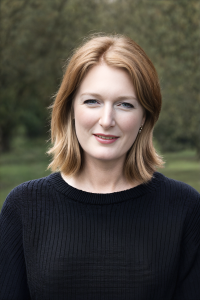
MySense founder and group CPO, Lucie Glenday
Meanwhile, University Hospitals North Midlands NHS Trust, which has used MySense to work with a cohort of high-intensity and frail elderly patients, recorded consistent monthly reductions of between 40%-50% over an eight-month period compared to admissions for the same users before the product was used in their care.
This equated to an average cost reduction per patient of £16,458 per year.
They’re impressive figures. But for many, there may be the thorny issue that whilst MySense offers the chance to get in front of a range of health problems, alongside giving valuable reassurance and peace of mind to users, their families, and caregivers, at its heart it is reliant on AI to build up a picture of the patient.
Eight sensors are installed in specific locations around the home. One is a wearable heart monitor, whilst another is a sleep belt that goes on the bed. But the others are used to detect movement and activities around the house, such as the bathroom, kitchen, and front door.
This sensor technology picks up around 20,000 data points per day per person to create a personalised insight.
Multiple layers of algorithms and AI process that information to build up a picture of an individual’s activities and health. Environmental and contextual attributes are then applied that overlay disease models and can predict health decline and deterioration.
What MySense essentially does is build a picture of what is ‘normal’ for each user to live independently in their own home. Variations in the data from the sensors could then be a warning signal that not all is well.
Self-confessed data geek and MySense founder and group CPO, Lucie Glenday, whose early career included working on the Government Digital Services team which created gov.uk, is the first to admit that she shares some of the current worries being aired about the possible risks our overreliance on AI could pose.
She told Agetech World: “I have very strong feelings myself around the way that AI models are trained, the ethical nature of that training, and the transparency of the decision-making. I think all of those things are really big questions that need to be answered.”
But Ms Glenday, who set up MySense in 2016 to help people with neurological disorders like dementia, Parkinson’s, and motor neurone disease, live better lives, added: “We’re a B-Corp (companies that meet high standards of social and environmental performance, transparency, and accountability), so we take our ethical responsibilities really, really, seriously. This is not something that is in response to all this damaging stuff in the press.
“This is something that we have built into the business that is at the very core. It is really important.”
She explained that because of the complexity of the problem that MySense needs to solve, it runs multiple machine-learning algorithms.
“The reason we use the sensors is because we get those consistent data points coming in day in and day out to be able to build the models off.
“We have to have good data coming in, and ethically acquired data.
“So, we have all of this data, how do we process, understand and analyse it in a way that doesn’t mean that we have this black box and a machine making decisions that it’s not qualified to make?
“We put some guard rails in place. You say that all machine learning has to be supervised for a production environment, so every single decision that is made has to have supervision in it so that we can absolutely go back and audit every decision an AI machine has made.
 “We do use some deep learning methodology, but it’s only in research. It is literally looking at some of the medical data out there and understanding those patterns.”
Transparency and audibility are critical, she said, making sure the training is undertaken on ethically acquired data, and that there is proper oversight “to make sure we are not running roughshod over this stuff.”
MySense is a very personal venture for Ms Glenday. Her sister, Olivia, was just 23 when she died from a rare form of MND in December 2006.
Hence her interest in helping people with neurological disorders to live better, independent lives in their own homes.
Ms Glenday believes MySense is unique.
She said: “There is an awful lot out there in the market that is part of the digital switchover that uses sensors around the home and talks about AI. But we have never put ourselves in that box. We have not played in the telecare space. That is not the environment that we have built the product for.
“It is probably going to sound a bit arrogant but yes, I believe we are unique because we have looked at this purely as a data problem.
“I do not believe there is any other organisation out there right now with 352 metrics on an individual on a daily basis that can track and manage someone’s independence and health to the level that we can.
“It may well be that there is a whole cohort of people out there that say ‘Oh well, I don’t need all of that information. I just need to know that somebody is alive and that they are not on the floor.’ And that is absolutely fine. I have to say there are lots of great products out there to solve that problem.
“But I genuinely believe with overstretched health provision across the world, not just here in the UK, more and more focus is going to be about supporting people to live with long-term and chronic conditions at home, and we are going to need to overcome that challenge as a society over the next few years. I believe we are positioned perfectly to take that opportunity on.”
The vast amounts of information collected by MySense allow for better early diagnosis of a range of problems. Ms Glenday said: “A great example of this is UTIs (urinary tract infection). For the most part, people are picking them up between a week to two weeks in advance of a UTI requiring somebody to be blue-lighted into hospital.
“This is because we are seeing the patterns. We are seeing the behaviours, we are seeing the reduction in mobility, we are seeing the poor sleep patterns, we are seeing the escalation in heart rate, we are seeing a reduction in the number of times going to the kitchen to stay hydrated, we are seeing a decrease or increase in respiratory rate overnight.
“All of these factors show the early indications really early on so that people can intervene and say, ‘OK, we think we’ve got a problem.’ I think that is why we have achieved the results we have.
“It means that people can get ahead and hopefully either put the additional support around or treat at home so there is no requirement to go into hospital.”
MySense is not a medical device, however, although Ms Glenday has high hopes it will get such accreditation in the next year. “All we do at this point in time is deliver what we see. We are not triaging, we are not saying we have picked up an early diagnosis of dementia. What we are saying is, look at all these different factors that would help a clinical team on the ground get to that decision much quicker than they would without that line of sight.
“That is the really important part of what we do; telling that story so that it is easier for the clinical teams to make a clinical decision about future care for this individual.”
Ms Glenday’s hope is that in the near future, enough behaviour information will have been gathered for MySense to begin to fundamentally understand what is going to happen and build care tailored better to each patient.
“We are really excited for the next phase as we start to build our predictive models around specific diseases.
“So, we are going to be looking at Parkinson’s and diabetes and of course, a cause close to my heart, MND, and start building our predictive models against those specific conditions.
“Hopefully, that will mean that we get to work with those cohorts.
“I would love to be able to go and sit down with someone who has recently been diagnosed with Parkinson’s and say ‘We are going to help you manage this.’
“That would just be an extraordinary thing for us as a business to be able to achieve. That is what is making me really excited.”









NICE will review whether new Alzheimer’s drugs should be offered on the NHS after an appeal found their wider impact was not fully counted.
An appeal found that the National Institute for Health and Care Excellence had failed to properly account for the wider impact of the treatments, including the heavy burden on unpaid carers, when calculating the cost effectiveness of the medicines.
Both treatments, lecanemab and donanemab, will now return to a NICE committee for further consideration.
“Today’s ruling is an opportunity for NICE to consider the real cost of Alzheimer’s on people and their families, and we welcome the decision to look again at whether new medicines could be provided on the NHS,” said David Thomas, head of policy and public affairs at Alzheimer’s Research UK.
Lecanemab and donanemab do not cure Alzheimer’s, but they slow it by targeting and clearing clumps of amyloid proteins, sticky protein build-ups in the brain linked to the disease.
While the drugs are available privately in the UK for people who can afford them, NICE ruled last year that they were too expensive to be made available on the NHS in England and Wales.
It is estimated informal dementia care costs the economy more than £20bn a year.
Alzheimer’s Research UK wants NICE to update how it assesses the value of new dementia drugs and factor in the huge additional costs this condition places on society and the wider economy.
NICE and its expert committees assess whether new drugs are good value for money for the NHS based on a wide range of evidence.
This includes how treatments perform in clinical trials, the experiences of patients and carers, and the costs of new drugs as well as any changes to NHS services needed to provide access.
When NICE weighs up whether a new Alzheimer’s drug is cost effective for the NHS, it carries out a limited assessment of the impact dementia has on the health of carers.
But the condition takes an enormous toll on families and society because caring for someone with dementia can lead people to become more isolated and give up work.
It can have a major emotional impact and put families under financial strain.
Thomas said: “Research has delivered new treatments with the potential to provide people with valuable extra months of independence, lessening the burden on carers.
“While these treatments offer modest benefits and can cause serious side effects, they provide the foundation for a future where dementia becomes a treatable condition.
“Now we need NICE to look again at how these medicines could benefit both people with early Alzheimer’s and their carers.”
Chris, whose mother Shirley is living with Alzheimer’s disease, said: “The real cost of Alzheimer’s is far greater than many people realise.
“In order to give my mum the care she needed, I moved back home to help my dad as the care was too much for him alone. After my dad passed away from Covid in 2021, I became sole carer for my mum.
“It was a very difficult period, working a full-time job, caring for Mum and dealing with the loss of my dad. Eventually I got some in-home care support to help.
“The family has borne most of the cost of Mum’s care, both in time and fees, and the family home has been sold to finance it.”
“The emotional and financial strain Alzheimer’s has taken on our family is horrendous, and I know many families across the UK are experiencing this pressure.”
He is backing Alzheimer’s Research UK’s call for NICE to change how it evaluates new dementia treatments.
The timeframe for the next NICE meetings to discuss the drugs is still to be set, and it is not certain follow-up hearings would change NICE’s guidance on access to the medicines.
But Alzheimer’s Research UK is continuing to push to make sure dementia is now a main priority for political and NHS decision-makers.
The head of the ongoing independent review into adult social care, Baroness Louise Casey, has called on the government to act, show leadership and prioritise dementia.
She has proposed appointing a dementia tsar to drive forward the prevention, treatment and care of dementia.
Baroness Casey has also argued for more funding for dementia treatment trials.
With more than 130 Alzheimer’s drugs in clinical trials worldwide, the charity says it is vital the NHS runs trials of new treatments now to understand how to deliver them to eligible patients in future.
In addition to changing how NICE assesses new medicines, the health service needs to collect real-world evidence on new dementia drugs and prepare for diagnostic tests and innovative treatments that are coming.
“Alzheimer’s Research UK is calling on the government to give dementia the same political determination that transformed cancer care,” Thomas said.
“We urgently need investment and a clear UK-wide plan so new treatments can be assessed in the NHS and reach the people who stand to benefit.”
Health and social care secretary Wes Streeting has said dementia is “one of the greatest challenges of our time” and pledged that the UK should become a world leader in dementia clinical trials.


A prebiotic fibre supplement may ease arthritis pain and improve grip strength in people with knee osteoarthritis, a study suggests.
The daily supplement, made from inulin, a dietary fibre found in chicory root, Jerusalem artichokes and other vegetables, also lowered pain sensitivity and saw fewer people drop out than a digital physiotherapy programme tested alongside it.
Dr Afroditi Kouraki, lead author of the study from the University of Nottingham, said: ‘Our findings suggest that targeting gut health with a prebiotic supplement is a safe, well-tolerated, and effective way to reduce pain in people with knee osteoarthritis.
“The very low dropout rate compared to the exercise group is also encouraging from a public health perspective, people were able to fit this supplement easily into their daily lives.’
Osteoarthritis of the knee, a wear-and-tear joint condition, affects hundreds of millions of people worldwide and is a leading cause of pain and disability, particularly in older adults.
Current treatments rely heavily on pain medication, which can cause side effects, or exercise programmes, which many patients find hard to maintain.
The INSPIRE trial, led by researchers at the University of Nottingham, involved 117 adults with knee osteoarthritis and tested four groups: inulin alone, digital physiotherapy-supported exercise alone, a combination of both, and a placebo. Both inulin and physiotherapy independently reduced knee pain.
However, inulin alone improved grip strength and reduced pain sensitivity, measures linked to how the nervous system processes pain, while physiotherapy did not.
The dropout rate for those taking the supplement was just 3.6 per cent, compared with 21 per cent for the physiotherapy group, suggesting a daily supplement may be easier for people to stick with than an exercise programme.
Inulin works as a prebiotic, meaning it feeds beneficial bacteria in the gut.
This leads to the production of compounds called short-chain fatty acids, particularly butyrate, which can affect inflammation and pain pathways throughout the body.
Participants taking inulin also showed increased levels of both butyrate and GLP-1, a gut hormone linked to pain regulation and muscle health.
Higher GLP-1 levels were associated with improved grip strength, pointing to a possible gut-muscle connection.
Senior author Professor Ana Valdes added: ‘The link we observed between GLP-1 and grip strength is particularly intriguing and points to a broader gut-muscle-pain axis that warrants further investigation. This could have implications not just for osteoarthritis, but for understanding how gut health influences ageing and physical resilience more broadly.’
Professor Lucy Donaldson, director of research at Arthritis UK, said: “The pain of arthritis can severely impact quality of life. Our recent lived experience survey showed that six in ten people are living in pain most or all of the time due to their arthritis.
“Researchers are starting to explore the role of the gut microbiome in our experience of pain.
“This exciting preliminary research highlights how diet and physiotherapy can act in different ways to have benefits for people with arthritis.
“We know a variety and balance of healthy foods, including fibre, and regular physical activity matter, and we’re glad to be supporting research that explores how they work to help people with arthritis.”

Gut-friendly foods may damage heart, charity warns

Diabetes patients face increased risk of undiagnosed heart failure

UK government announces £6.3m fund to boost men’s health

Brain health collaboratory launches in Gulf South