


News
Round up: First AI-powered app for longevity and more


Age Tech World explores the latest developments in the world of ageing and longevity.
First AI-Powered personalised mobile app for brain health and longevity
Digital health company Tolion Health has announced the beta release of its flagship product, the Tolion Brain Coach mobile application.
This beta release offers early access to Tolion AI Engine, designed to facilitate changes in day-to-day behaviour that improve cognitive performance, maintain mental sharpness, and reduce risk of neurodegenerative disorders such as Alzheimer’s disease.
The Tolion Brain Coach is the result of years of research and development by leading neurologists and AI engineers.
Built on a proprietary medical knowledge engine currently evaluating over 100 brain health related factors, the AI application transforms cutting-edge medical science into personalised recommendations and coaching content tailored to each user’s unique profile.
Core features of the Tolion Brain Coach application include a conversational Brain Coach, progress reflection, goal setting and personalised risk assessments, health data collection through validated proprietary questionnaires, and evidence-based guidance on how to mitigate individual risk factors through lifestyle changes.
The app also enables garmin wearables integration, importing information from Garmin devices to simplify collection of all health and activity data, and has a smart performance dashboard displaying daily tips, videos, and action items aligned with individual risk factors with visual timelines and historical insights, along with further features such as a brain health planner.
Lung cancer screening benefits adults up to age 80 if surgical candidates
Older individuals between the ages of 75 and 80 who are eligible for lung surgery may achieve survival outcomes comparable to younger patients following lung cancer screening, according to new research.
Despite half of lung cancers being diagnosed in people aged 75 or older, randomized evidence on screening outcomes in this age group is limited.
Most national lung cancer screening programs, including the UK’s, stop at age 74. The US Preventive Services Task Force recommends screening up to age 80, although little was known about how much benefit is achieved by extending the upper age limit to 80.
This study compared outcomes between patients aged 55 to 74 and those aged 75 to 80 diagnosed with screen-detected lung cancer in two UK targeted lung cancer screening programs.
The Yorkshire Lung Screening Trial (YLST) and the North & East Manchester Lung Health Check (NEM-LHC) program systematically invited people with a history of smoking beginning in 2019.
Researchers analysed clinical data from 574 invasive lung cancer cases, of which 190 (33 per cent) were in the 75 to 80 age group. Stage distribution was similar between age groups.
Curative-intent treatment rates were high overall (87 per cent), but surgical resection rates were lower in the older group (42 per cent vs. 58 per cent). All-cause mortality was higher among those aged 75 to 80, with mortality at four years being 44 per cent versus 34 per cent.
However, in patients treated with surgery, survival rates were comparable between age groups (16 per cent vs. 18 per cent mortality at four years).
“Our findings suggest that extending lung cancer screening up to age 80 could be valuable for older adults who are fit for surgery,” said Patrick Goodley, Manchester University NHS Foundation Trust.
“Screening selection incorporating surgical fitness, rather than age alone, may allow us to deliver curative treatment to more people with lung cancer.”
No reduction in death following an invitation to undergo cardiovascular screening
An invitation to attend a comprehensive screening examination for the early signs of cardiovascular disease (CVD) did not reduce all-cause death among men aged 60 to 64 years, according to new research.
It has been estimated that 80 per cent of cardiac events and strokes are preventable, around half of these through early detection and intervention.
Population screening is one approach to identify individuals with early signs of CVD, but there is limited evidence that it provides benefits in terms of reducing deaths.
The population-based, parallel-group, randomised controlled DANCAVAS 2 trial included all men aged 60 to 64 years living in 18 municipalities in Denmark from August 2017 to November 2018 without any exclusion criteria.
They were randomised 1:4 to receive an invitation to attend screening for subclinical CVD (the invited group) or not to receive an invitation for screening (the control group).
Participants in the control group were blinded and were not aware of the trial. Intention-to-treat analyses were performed which compared control vs. all invited participants, whether or not they attended screening.
Screening included non-contrast ECG-gated computed tomography (CT) to determine the coronary-artery calcium score and to detect aneurysms and atrial fibrillation, ankle-brachial blood-pressure measurements to detect peripheral artery disease and hypertension, and a blood sample to detect diabetes mellitus and hypercholesterolaemia.
Statins and/or an antithrombotic agent (aspirin or clopidogrel) were prescribed based on the results of the screening tests. The primary outcome was death from any cause.
In total, 31,268 participants were randomised: 25,322 to the control arm and 5,946 to the invited arm, of whom 3,720 attended and were screened (62.6 per cent).
A total of 33.5 per cent of the invited group initiated an antithrombotic agent compared with 15.9 per cent in the control group, while the initiation rate of statins was 44.3 per cent and 30.3 per cent, respectively.
In intention-to-treat analyses, after a median follow-up of 7.0 years, 9.3 per cent of men in the invited group and 9.9 per cent men in the control group had died.
Major adverse cardiovascular events (CVD-related death, stroke or acute myocardial infarction) occurred in 10.2 per cent of participants in the invited group vs. 10.6 per cent in the control group, while 1.8 per cent of participants in both groups experienced major adverse lower limb events.
CVD-related death occurred in 2.1 per cent of participants in the invited group vs. 2.3 per cent in the control group.
There was a significantly higher incidence in the invited group vs. control group of severe bleeding. This included intracranial bleeding and gastrointestinal bleeding, respectively.
In post hoc per-protocol analyses, attending screening reduced mortality by 17 per cent, while there was no significant difference in major adverse cardiovascular events.
Telephone vs text message counseling and physical activity among midlife and older adults
In a new study of short message service (SMS) vs human phone advising, a customisable SMS system produced significant 12-month walking increases for ageing adults comparable to the significant improvements attained by participants in the human advisors group.
These results provide support for such mobile health platforms, which can expand programme choices for broader segments of the population.
The authors wrote: “The findings showing meaningful 12-month physical activity increases in the SMS and telephone programmes expand the technology-enabled, customisable light touch programme choices that can be offered to adults.”
AI tools uncover new link between idiopathic pulmonary fibrosis and ageing
Researchers have used AI to investigate the similarities between idiopathic pulmonary fibrosis (IPF) – a severe lung disease – and the ageing process.
Their findings show that IPF is not simply accelerated ageing, but a distinct biological condition shaped by age-related dysfunction.
This insight may lead to a new approach in how scientists and clinicians treat this complex disease.
The researchers used AI to identify shared biological features between ageing and fibrosis, finding new potential targets for therapy.
The team developed a “proteomic ageing clock” based on protein data from more than 55,000 participants in the UK Biobank.
This AI-driven tool accurately measured biological age and found that patients with severe COVID-19, who are at increased risk for lung fibrosis, also showed signs of accelerated ageing.
This suggests that fibrosis leaves a detectable biological trace, supporting the use of ageing clocks in studying age-related diseases.
The team also developed a custom AI model, ipf-P3GPT, to compare gene activity in ageing lungs versus those with IPF.
Although some genes were active in both, many showed opposite behaviour.
In fact, more than half of the shared genes had inverse effects. This means IPF does not just speed up ageing but also disrupts the body’s normal ageing pathways.
The study identified unique molecular signatures that distinguish IPF from normal ageing.
While both involve inflammation and tissue remodeling, IPF drives more damaging changes to lung structure and repair systems.
This difference could guide the development of drugs that specifically target fibrosis without affecting normal ageing.
By combining AI with large-scale biological data, the study also introduces a powerful toolset for examining other age-related conditions such as liver and kidney fibrosis.
These models may support personalised treatments and expand understanding of the relationships between aging and disease, opening new directions for therapy development.


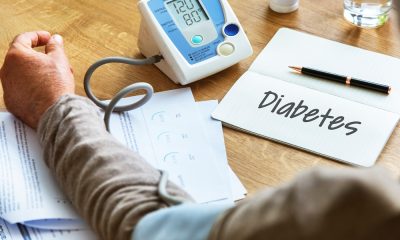






People with diabetes may have undiagnosed heart failure that could be detected by a simple screening blood test, research suggests.
The TARTAN-HF trial found that one in four patients with diabetes who had at least one other risk factor for heart failure had undiagnosed heart failure detected through screening with a blood test and ultrasound scanning of the heart.
Experts said the findings show the extent of unrecognised heart failure in people with diabetes, and how the condition can be detected using a widely available blood test called NT-proBNP, which measures how much strain the heart is under.
They suggest a heart failure screening programme for diabetics could improve diagnosis rates, lead to earlier treatment and potentially reduce the risk of hospitalisation and death.
The study, involving 700 patients, was led by the University of Glasgow in collaboration with AstraZeneca, Roche Diagnostics, Us2.ai, NHS Greater Glasgow and Clyde and NHS Lanarkshire.
Dr Kieran Docherty, clinical senior lecturer at the University of Glasgow’s School of Cardiovascular and Metabolic Health, said: “Our results from the landmark TARTAN-HF trial identified heart failure in a large proportion of people living with diabetes, emphasising the need for a heart failure screening strategy in this group of patients.
“We know that many of the symptoms and signs of heart failure are non-specific, and may go unrecognised as potentially being due to heart failure for a long time.
“The strategy used in our trial is simple and easy to implement in clinical practice, and will aid in the early identification of heart failure in people with diabetes, and facilitate the initiation of medications that we know improve outcomes in patients with heart failure.”
The study, which began more than three years ago, involved more than 700 people with diabetes from the two health board areas who had at least one other risk factor for heart failure.
They were randomly assigned either to receive heart failure screening or to continue with their usual care.
Researchers found screening uncovered a large number of previously unrecognised cases of heart failure. Around one in four, or 24.9 per cent, of those screened were found to have the condition within six months, compared with 1 per cent in the group continuing their usual care.
The study, involving patients with type 1 and type 2 diabetes, found almost all of the participants found to have heart failure had preserved ejection fraction, which can be difficult to detect without dedicated testing.
The findings of the TARTAN-HF trial were presented at the American College of Cardiology conference taking place from 28 to 30 March in New Orleans in the US.
Dr Edward Piper, medical director at AstraZeneca UK, said: “Delayed diagnosis and treatment of heart failure in people with type 2 diabetes contributes to poor long-term outcomes. TARTAN-HF demonstrates that targeted, risk-based screening can identify previously undiagnosed heart failure in approximately one in four high-risk patients with diabetes, enabling earlier intervention with guideline-directed therapy.”
Dr Christian Simon, head of global medical affairs at Roche Diagnostics, said: “We are proud to have supported the landmark TARTAN-HF trial. These findings demonstrate the transformative power of early, accessible diagnostics like the NT-proBNP blood test.
“By identifying unrecognised heart failure in people with diabetes, we enable clinicians to initiate appropriate treatments sooner, ultimately improving patient outcomes and lives.”

The UK has launched a £6.3m men’s health fund to back local projects aimed at helping men and boys live longer, healthier lives.
The Men’s Health Community Fund is a partnership between the Department of Health and Social Care, Movember and People’s Health Trust.
The government is contributing £3m, while the two charities are more than doubling that to take the total to £6.3m.
Grants will support community projects reaching underserved men and boys aged 16 and over, particularly in the most disadvantaged areas and at key points in their lives such as becoming a father, losing a job or retiring.
Projects could include support for new fathers, activities for men facing loneliness and social isolation, services to help young men engage with the health system, and support for men in work, out of work and moving into retirement.
The programme will bring together voluntary, community and social enterprise organisations to test new ways of reaching men who are least likely to use traditional health services.
An evaluation funded through the National Institute for Health and Care Research will assess what works and help inform future policy and delivery.
Health and social care secretary Wes Streeting said: “Too many men across the country are living shorter, less healthy lives, particularly those in our most disadvantaged communities.
“This new partnership will help men get the support they need in the places they feel most comfortable, their communities, among people they trust.
“By working with expert charities and local organisations, we can reach the men who are too often missed by traditional services and help them take better care of their mental and physical health.”
“It is a key step in delivering our first ever Men’s Health Strategy and driving forward our ambition to halve the gap in healthy life expectancy between the richest and poorest areas.”
The Men’s Health Strategy sets out plans to tackle the physical and mental health challenges men and boys face.
Men can be less likely to seek help and more likely to suffer in silence, while higher rates of smoking, drinking, gambling and drug use are damaging men’s health and affecting families, workplaces and communities.
The government is also investing £3.6m over the next three years in suicide prevention projects for middle-aged men in local communities across areas of England where men are most at risk, many of which are also among the most deprived. Suicide is one of the biggest killers of men under 50, and three-quarters of all suicides are men.
The projects will aim to break down barriers middle-aged men face in seeking support, including stigma around asking for help and a lack of awareness of what is available and how to access it.
They will be co-designed with experts and men with lived experience of mental health crises and suicidal thoughts.

Gut-friendly foods may damage heart, charity warns

Diabetes patients face increased risk of undiagnosed heart failure

UK government announces £6.3m fund to boost men’s health

Brain health collaboratory launches in Gulf South
