


News
New drug enhances GLP-1 weight loss without extra added effects, trial finds


Nimacimab significantly enhanced weight loss when combined with GLP-1 therapy without adding side effects, according to mid-stage clinical trial results involving 136 adults.
The experimental drug targets the body’s endocannabinoid system differently from existing weight-loss medications, offering a potential new approach to treating obesity when used alongside drugs such as semaglutide.
Participants given both drugs lost an average of 13.2 per cent of their body weight over 26 weeks, compared with 10.25 per cent for those on semaglutide alone — a statistically significant difference of nearly 3 per cent.
Skye Bioscience’s CBeyond study tested the first-in-class monoclonal antibody, which blocks CB1 receptors involved in appetite regulation and fat storage. The CB1 receptor is part of the endocannabinoid system, which helps control hunger, metabolism and fat accumulation. When these receptors become overactive, they can promote weight gain.
“This is the first clinical study to show that the combination of a CB1 inhibitor and a GLP-1 therapeutic can drive clinically meaningful additional weight loss beyond a GLP-1 drug alone,” said Louis Aronne, past president of The Obesity Society and clinical adviser to Skye Bioscience, the drug’s developers.
“Equally important, although the sample size is small, nimacimab achieved this without neuropsychiatric or additive gastrointestinal adverse events. I believe these results warrant further evaluation of the therapeutic potential of this novel CB1 inhibitor.”
Previous CB1-blocking drugs were abandoned because of psychiatric side effects such as anxiety and depression. Nimacimab has been engineered to stay outside the brain, potentially avoiding the problems that affected earlier drugs targeting this pathway.
In the 26-week trial, adults with overweight or obesity were randomly assigned weekly injections of nimacimab, semaglutide (the active ingredient in Wegovy), both drugs together, or placebo.
When used alone, nimacimab produced modest results — participants lost 1.5 per cent of their body weight compared with 0.26 per cent for placebo, a difference that was not statistically significant. Researchers said exposure to the 200 mg dose was lower than expected, suggesting higher doses may prove more effective.
“The 200 mg monotherapy arm provided important pharmacokinetic insight, showing that lower-than-expected drug exposure may have limited the observed effect and informing the dose-ranging strategy we are developing,” said Puneet Arora, the company’s chief medical officer.
Pharmacokinetic data describe how the body absorbs, distributes, metabolises and eliminates a drug, helping determine optimal dosing.
“At the same time, the combination of nimacimab with semaglutide produced a clinically meaningful additional weight loss that exceeded semaglutide alone, with a favourable tolerability profile even in patients who achieved the highest exposure levels.”
The most striking results came from the combination therapy. All participants receiving both drugs lost more than 5 per cent of their body weight, compared with 85 per cent of those on semaglutide alone. Two-thirds of the combination group lost more than 10 per cent, versus 50 per cent with semaglutide alone.
Importantly, the combination produced a healthier lean-to-fat mass ratio, indicating weight loss came primarily from fat reduction rather than muscle loss — addressing a concern that some GLP-1 drugs may cause skeletal muscle wastage.
Weight loss was still ongoing at the end of the 26-week study, suggesting further reductions could occur with longer treatment.
Safety findings were encouraging across all treatment groups. No neuropsychiatric side effects — such as anxiety, depression or insomnia — were reported with nimacimab, either alone or combined with semaglutide.
Gastrointestinal side effects, a leading cause of discontinuation with GLP-1 therapies, did not increase when nimacimab was added to semaglutide. These typically include nausea, vomiting, diarrhoea and constipation.
The overall discontinuation rate was 27 per cent, with only 3.7 per cent of participants dropping out due to adverse events — most of them in the placebo group.
“Gastrointestinal side effects remain a leading cause of discontinuation with obesity therapies,” said Sean Wharton, director of the Wharton Medical Clinic and a clinical adviser to Skye Bioscience.
“It was notable that nimacimab did not increase GI adverse events while adding clinically meaningful weight loss in combination with semaglutide. In my view, a next study with higher nimacimab dosing is the logical step to fully define its role in clinical practice.”
“With our preclinical data, toxicology safety margin, and PK modelling, we believe we have a path to support higher dosing, and we are evaluating the next stage of development to optimise dosing in potential future clinical trials,” Arora said.
Participants from the Phase 2a study are continuing in a 26-week extension trial, with results expected in early 2026. This will provide data on the longer-term efficacy and safety of the combination approach.
GLP-1 drugs such as semaglutide mimic a hormone that regulates appetite and blood sugar. While highly effective for weight loss, some studies have raised concerns about side effects including kidney injury, skeletal muscle loss and gastrointestinal issues.
A combination therapy that enhances weight loss without compounding side effects could address a major unmet need in obesity treatment, where many patients struggle with the tolerability of current medications.


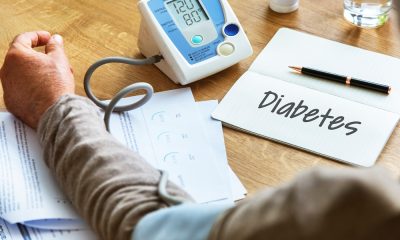






People with diabetes may have undiagnosed heart failure that could be detected by a simple screening blood test, research suggests.
The TARTAN-HF trial found that one in four patients with diabetes who had at least one other risk factor for heart failure had undiagnosed heart failure detected through screening with a blood test and ultrasound scanning of the heart.
Experts said the findings show the extent of unrecognised heart failure in people with diabetes, and how the condition can be detected using a widely available blood test called NT-proBNP, which measures how much strain the heart is under.
They suggest a heart failure screening programme for diabetics could improve diagnosis rates, lead to earlier treatment and potentially reduce the risk of hospitalisation and death.
The study, involving 700 patients, was led by the University of Glasgow in collaboration with AstraZeneca, Roche Diagnostics, Us2.ai, NHS Greater Glasgow and Clyde and NHS Lanarkshire.
Dr Kieran Docherty, clinical senior lecturer at the University of Glasgow’s School of Cardiovascular and Metabolic Health, said: “Our results from the landmark TARTAN-HF trial identified heart failure in a large proportion of people living with diabetes, emphasising the need for a heart failure screening strategy in this group of patients.
“We know that many of the symptoms and signs of heart failure are non-specific, and may go unrecognised as potentially being due to heart failure for a long time.
“The strategy used in our trial is simple and easy to implement in clinical practice, and will aid in the early identification of heart failure in people with diabetes, and facilitate the initiation of medications that we know improve outcomes in patients with heart failure.”
The study, which began more than three years ago, involved more than 700 people with diabetes from the two health board areas who had at least one other risk factor for heart failure.
They were randomly assigned either to receive heart failure screening or to continue with their usual care.
Researchers found screening uncovered a large number of previously unrecognised cases of heart failure. Around one in four, or 24.9 per cent, of those screened were found to have the condition within six months, compared with 1 per cent in the group continuing their usual care.
The study, involving patients with type 1 and type 2 diabetes, found almost all of the participants found to have heart failure had preserved ejection fraction, which can be difficult to detect without dedicated testing.
The findings of the TARTAN-HF trial were presented at the American College of Cardiology conference taking place from 28 to 30 March in New Orleans in the US.
Dr Edward Piper, medical director at AstraZeneca UK, said: “Delayed diagnosis and treatment of heart failure in people with type 2 diabetes contributes to poor long-term outcomes. TARTAN-HF demonstrates that targeted, risk-based screening can identify previously undiagnosed heart failure in approximately one in four high-risk patients with diabetes, enabling earlier intervention with guideline-directed therapy.”
Dr Christian Simon, head of global medical affairs at Roche Diagnostics, said: “We are proud to have supported the landmark TARTAN-HF trial. These findings demonstrate the transformative power of early, accessible diagnostics like the NT-proBNP blood test.
“By identifying unrecognised heart failure in people with diabetes, we enable clinicians to initiate appropriate treatments sooner, ultimately improving patient outcomes and lives.”

The UK has launched a £6.3m men’s health fund to back local projects aimed at helping men and boys live longer, healthier lives.
The Men’s Health Community Fund is a partnership between the Department of Health and Social Care, Movember and People’s Health Trust.
The government is contributing £3m, while the two charities are more than doubling that to take the total to £6.3m.
Grants will support community projects reaching underserved men and boys aged 16 and over, particularly in the most disadvantaged areas and at key points in their lives such as becoming a father, losing a job or retiring.
Projects could include support for new fathers, activities for men facing loneliness and social isolation, services to help young men engage with the health system, and support for men in work, out of work and moving into retirement.
The programme will bring together voluntary, community and social enterprise organisations to test new ways of reaching men who are least likely to use traditional health services.
An evaluation funded through the National Institute for Health and Care Research will assess what works and help inform future policy and delivery.
Health and social care secretary Wes Streeting said: “Too many men across the country are living shorter, less healthy lives, particularly those in our most disadvantaged communities.
“This new partnership will help men get the support they need in the places they feel most comfortable, their communities, among people they trust.
“By working with expert charities and local organisations, we can reach the men who are too often missed by traditional services and help them take better care of their mental and physical health.”
“It is a key step in delivering our first ever Men’s Health Strategy and driving forward our ambition to halve the gap in healthy life expectancy between the richest and poorest areas.”
The Men’s Health Strategy sets out plans to tackle the physical and mental health challenges men and boys face.
Men can be less likely to seek help and more likely to suffer in silence, while higher rates of smoking, drinking, gambling and drug use are damaging men’s health and affecting families, workplaces and communities.
The government is also investing £3.6m over the next three years in suicide prevention projects for middle-aged men in local communities across areas of England where men are most at risk, many of which are also among the most deprived. Suicide is one of the biggest killers of men under 50, and three-quarters of all suicides are men.
The projects will aim to break down barriers middle-aged men face in seeking support, including stigma around asking for help and a lack of awareness of what is available and how to access it.
They will be co-designed with experts and men with lived experience of mental health crises and suicidal thoughts.

Gut-friendly foods may damage heart, charity warns

Diabetes patients face increased risk of undiagnosed heart failure

UK government announces £6.3m fund to boost men’s health

Brain health collaboratory launches in Gulf South
