


News
Nanoparticles used to trigger immune system to fight brain cancer

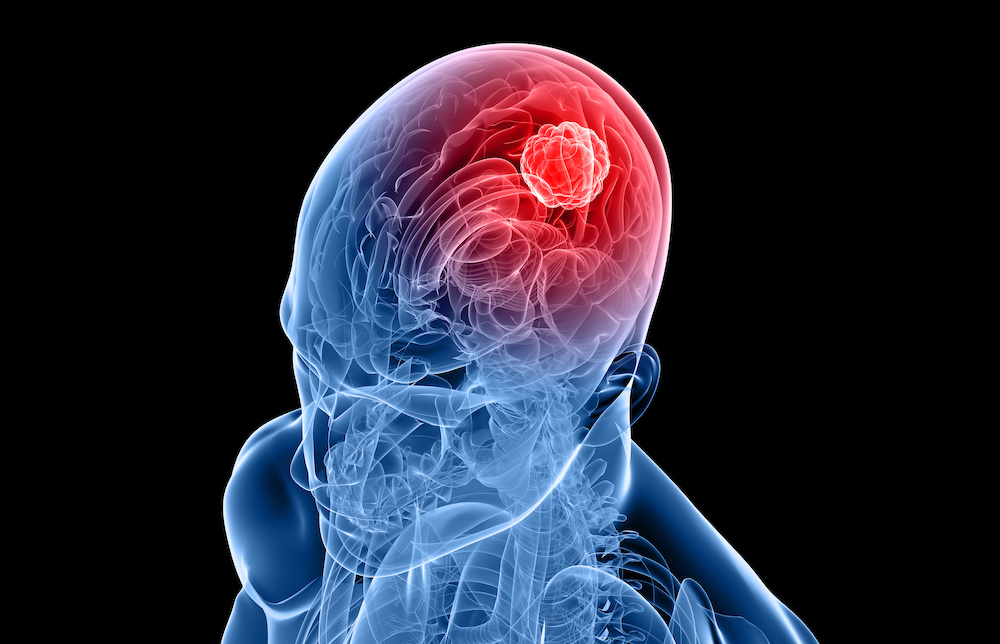
Scientists at the University of Michigan Rogel Cancer Center were optimistic when they identified a small molecule that blocked a key pathway in brain tumours.
But there was a problem: How to get the inhibitor through the bloodstream and into the brain to reach the tumour.
In collaboration with multiple labs, the teams fabricated a nanoparticle to contain the inhibitor, and the results were even better than expected.
The nanoparticles delivered the inhibitor to the tumour in mouse models, where the drug successfully turned on the immune system to eliminate the cancer.
And the process triggered immune memory so that a reintroduced tumour was also eliminated – a sign that this potential new approach could not only treat brain tumours but prevent or delay recurrences.
“No one could get this molecule into the brain. It’s really a huge milestone. Outcomes for patients with glioma have not improved for the last 30 years,” said Maria G Castro, Schneider Collegiate professor of neurosurgery at Michigan Medicine.
Castro is the senior author of the study, published in ACS Nano.
Gliomas
“Despite survival gains in many cancer types, glioma remains stubbornly challenging, with only five per cent of patients living five years after their diagnosis,” said study author Pedro R Lowenstein, Richard C Schneider Collegiate professor of neurosurgery at Michigan Medicine.
Gliomas are often resistant to traditional therapies, and the environment inside the tumour suppresses the immune system, rendering new immune-based therapies ineffective.
Add to that the challenge of passing the blood brain barrier, and it becomes even more difficult to deliver effective treatments to these tumours.
The Castro-Lowenstein lab saw an opportunity.
The small molecule inhibitor AMD3100 was developed to block the action of CXCR12, a cytokine released by the glioma cells that builds up a shield around the immune system, preventing it from firing up against the invading tumour.
Researchers showed in mouse models of glioma that AMD3100 prevented CXCR12 from binding with immune-suppressive myeloid cells.
By disarming these cells, the immune system remains intact and can attack the tumour cells.
But AMD3100 was having trouble getting to the tumour. The drug did not travel well through the bloodstream, and it did not pass the blood brain barrier, a key issue with getting drugs into the brain.
The study
The Castro-Lowenstein lab collaborated with Joerg Lahann, Wolfgang Pauli Collegiate Professor of Chemical Engineering at the U-M College of Engineering, to create protein-based nanoparticles to encapsulate the inhibitor, in the hopes of helping it pass through the bloodstream.
Castro also connected with Anuska V Andjelkovic, professor of pathology and research professor of neurosurgery at Michigan Medicine, whose research focuses on the blood brain barrier.
They note that glioma tumors create abnormal blood vessels, interfering with normal blood flow.
The researchers injected AMD3100-loaded nanoparticles into mice with gliomas.
The nanoparticles contained a peptide on the surface that binds to a protein found mostly on the brain tumour cells.
As the nanoparticles traveled through the bloodstream toward the tumour, they released AMD3100, which restored the integrity of the blood vessels.
The nanoparticles could then reach their target, where they released the drug, thus blocking the entry of the immune-suppressive myeloid cells into the tumour mass.
This allowed the immune cells to kill the tumour and delay its progression.
“If you don’t have blood flow, nothing will get to your target. That’s why tumours are so smart. But AMD3100 restores the conduits, which is what allows the nanoparticles to reach the tumour,” Castro said.
Like a vaccine
Further studies in mice and patient cell lines demonstrated that coupling the AMD3100 nanoparticle with radiation therapy enhanced the effect beyond either the nanoparticle or radiation alone.
Among the mice whose tumours were eliminated, the researchers then reintroduced the tumour, simulating a recurrence.
Without any additional therapy, 60 per cent of mice remained cancer-free.
This suggests that, like a vaccine, AMD3100 created immune memory, enabling the immune system to recognise and destroy the reintroduced cells.
While it prevented a recurrence in mice, Castro says it bodes well for at least delaying recurrence in people.
“Every glioma recurs. It’s very important for glioma therapy to have this immunological memory,” Castro said.
Initial tests showed little to no impact on liver, kidney or heart function and normal blood counts in the mice after treatment.
The nanoparticle has a similar base as ones that have been previously tested in humans and shown to be safe. Additional safety testing is necessary before moving to a clinical trial.









People with diabetes may have undiagnosed heart failure that could be detected by a simple screening blood test, research suggests.
The TARTAN-HF trial found that one in four patients with diabetes who had at least one other risk factor for heart failure had undiagnosed heart failure detected through screening with a blood test and ultrasound scanning of the heart.
Experts said the findings show the extent of unrecognised heart failure in people with diabetes, and how the condition can be detected using a widely available blood test called NT-proBNP, which measures how much strain the heart is under.
They suggest a heart failure screening programme for diabetics could improve diagnosis rates, lead to earlier treatment and potentially reduce the risk of hospitalisation and death.
The study, involving 700 patients, was led by the University of Glasgow in collaboration with AstraZeneca, Roche Diagnostics, Us2.ai, NHS Greater Glasgow and Clyde and NHS Lanarkshire.
Dr Kieran Docherty, clinical senior lecturer at the University of Glasgow’s School of Cardiovascular and Metabolic Health, said: “Our results from the landmark TARTAN-HF trial identified heart failure in a large proportion of people living with diabetes, emphasising the need for a heart failure screening strategy in this group of patients.
“We know that many of the symptoms and signs of heart failure are non-specific, and may go unrecognised as potentially being due to heart failure for a long time.
“The strategy used in our trial is simple and easy to implement in clinical practice, and will aid in the early identification of heart failure in people with diabetes, and facilitate the initiation of medications that we know improve outcomes in patients with heart failure.”
The study, which began more than three years ago, involved more than 700 people with diabetes from the two health board areas who had at least one other risk factor for heart failure.
They were randomly assigned either to receive heart failure screening or to continue with their usual care.
Researchers found screening uncovered a large number of previously unrecognised cases of heart failure. Around one in four, or 24.9 per cent, of those screened were found to have the condition within six months, compared with 1 per cent in the group continuing their usual care.
The study, involving patients with type 1 and type 2 diabetes, found almost all of the participants found to have heart failure had preserved ejection fraction, which can be difficult to detect without dedicated testing.
The findings of the TARTAN-HF trial were presented at the American College of Cardiology conference taking place from 28 to 30 March in New Orleans in the US.
Dr Edward Piper, medical director at AstraZeneca UK, said: “Delayed diagnosis and treatment of heart failure in people with type 2 diabetes contributes to poor long-term outcomes. TARTAN-HF demonstrates that targeted, risk-based screening can identify previously undiagnosed heart failure in approximately one in four high-risk patients with diabetes, enabling earlier intervention with guideline-directed therapy.”
Dr Christian Simon, head of global medical affairs at Roche Diagnostics, said: “We are proud to have supported the landmark TARTAN-HF trial. These findings demonstrate the transformative power of early, accessible diagnostics like the NT-proBNP blood test.
“By identifying unrecognised heart failure in people with diabetes, we enable clinicians to initiate appropriate treatments sooner, ultimately improving patient outcomes and lives.”


The UK has launched a £6.3m men’s health fund to back local projects aimed at helping men and boys live longer, healthier lives.
The Men’s Health Community Fund is a partnership between the Department of Health and Social Care, Movember and People’s Health Trust.
The government is contributing £3m, while the two charities are more than doubling that to take the total to £6.3m.
Grants will support community projects reaching underserved men and boys aged 16 and over, particularly in the most disadvantaged areas and at key points in their lives such as becoming a father, losing a job or retiring.
Projects could include support for new fathers, activities for men facing loneliness and social isolation, services to help young men engage with the health system, and support for men in work, out of work and moving into retirement.
The programme will bring together voluntary, community and social enterprise organisations to test new ways of reaching men who are least likely to use traditional health services.
An evaluation funded through the National Institute for Health and Care Research will assess what works and help inform future policy and delivery.
Health and social care secretary Wes Streeting said: “Too many men across the country are living shorter, less healthy lives, particularly those in our most disadvantaged communities.
“This new partnership will help men get the support they need in the places they feel most comfortable, their communities, among people they trust.
“By working with expert charities and local organisations, we can reach the men who are too often missed by traditional services and help them take better care of their mental and physical health.”
“It is a key step in delivering our first ever Men’s Health Strategy and driving forward our ambition to halve the gap in healthy life expectancy between the richest and poorest areas.”
The Men’s Health Strategy sets out plans to tackle the physical and mental health challenges men and boys face.
Men can be less likely to seek help and more likely to suffer in silence, while higher rates of smoking, drinking, gambling and drug use are damaging men’s health and affecting families, workplaces and communities.
The government is also investing £3.6m over the next three years in suicide prevention projects for middle-aged men in local communities across areas of England where men are most at risk, many of which are also among the most deprived. Suicide is one of the biggest killers of men under 50, and three-quarters of all suicides are men.
The projects will aim to break down barriers middle-aged men face in seeking support, including stigma around asking for help and a lack of awareness of what is available and how to access it.
They will be co-designed with experts and men with lived experience of mental health crises and suicidal thoughts.

Gut-friendly foods may damage heart, charity warns

Diabetes patients face increased risk of undiagnosed heart failure

UK government announces £6.3m fund to boost men’s health

Brain health collaboratory launches in Gulf South
