

News
How fall detection tech is evolving


Fall detection tech allows users to access quick medical assistance following a fall, as the tech detects the incident and then issues a medical alert, an all-important tool for seniors living alone.
A survey commissioned by Age UK has found that millions of elderly are worried about falling over, with 36 per cent of people asked saying it topped their list of concerns – so the tech is certainly sought-after.
Fall technology launched back in the 1990s, with businesses giving consumers access to pendants to wear, buttons to press and numbers to ring.
But since then, the technology has moved on and been adapted to help provide reassurance to the families of the elderly, accident prone and people living alone. Agetech World takes a look at what’s on offer…
People Power and Vayyar Imaging
People Power and Vayyer Imaging recently teamed up to provide individuals who live alone with discreet fall detection technology though the power of sensors that are strategically placed around the home.
There are many benefits to this state-of-the-art tech, including its subtle detectors that require no wearables, cameras or buttons – ideal for keeping the home clutter-free or for those who may forget to wear devices.
The sensors are constantly monitored by the People Power’s advanced AI technology which records trends in activity patterns and can detect and provide hazard alerts.
The tech is certainly an advanced option to consider, but there are other choices on the market too…
With over one quarter of British homes housing an Amazon Alexa device, the next product is certainly attainable and trusted by most households to ensure family members are safe.
The Alexa Together is a multi-user subscription service costing around £20 per month with the aim of protecting elderly relatives.
The membership features an emergency helpline, fall detection and activity detection which is all hosted through the Amazon Echo device, costing between £20 and £40.
The service is part of Amazon’s Alexa Together package, which alerts designated users when the Echo device of a family member has been used and offers a feed of interactions they had with Alexa throughout the day. With the newer Alexa Together package, it includes hands-free access to an urgent response helpline and compatibility with fall detection devices from ATS and Vayyar.
However, there are other more wearable products on the market that are potentially useful for elderly people who like to stay active.
The Apple Watch and Samsung Watch possess many advanced features, but most importantly have recently been making developments in their fall technology elements.
Apple has enhanced its algorithms by adding an attribute that allows the user to enable fall detection during workouts, which was developed as a result of Covid-19 after the rise of at-home exercise.
Samsung also recently announced new updates to the Galaxy Watch 4, where the fall detection features work even when the wearer is motionless, as previously the device relied upon the built-in accelerometer, which monitors speed.
Both devices work in a similar way, sending a notification to the user that it has detected a fall, and if the message isn’t responded to within a certain timeframe, help is called.
Walabot Home
The issue with smart watches is whether they are worn in the bathroom, where 80 per cent of falls actually occur.
The Walabot Home device has been created specifically for restroom and bedroom usage, and works by using radio sensors, not cameras, to ensure the user’s privacy is protected.
The tech is fitted to a wall and provides family members or nursing staff with insights including fall detection, room status (which indicates whether the person is in the room or not) and updates on night-time wandering.
Not only can the tech be installed at home to provide families of the elderly with peace of mind, but it could also be beneficial to care homes, as Walabot Home can provide detailed reports on each resident to enable staff to prioritise care delivery.
Instead of monitoring falls, tech that prevents them in the first place could be even more useful. That’s the idea behind Smart Socks, created and manufactured by PUP.
The high-tech footwear is designed to be used by hospitals, care homes, rehab facilities and in the home.
Its most basic feature is its anti-slip grips that prevent slipping on tile flooring, but the sock is also rigged with sensors designed to send alerts to medical staff or family members to make them aware of movement or falls so that real-time care can be provided when it is most critical.
In fact, this piece of kit is so advanced that it notifies the closest members of staff or relatives as soon as the wearer leaves their bed, so assistance can be provided before a potential fall even happens.


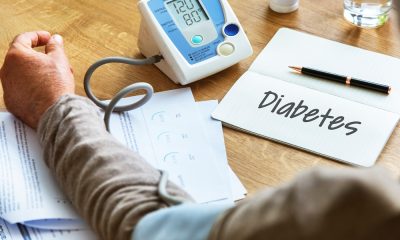





People with diabetes may have undiagnosed heart failure that could be detected by a simple screening blood test, research suggests.
The TARTAN-HF trial found that one in four patients with diabetes who had at least one other risk factor for heart failure had undiagnosed heart failure detected through screening with a blood test and ultrasound scanning of the heart.
Experts said the findings show the extent of unrecognised heart failure in people with diabetes, and how the condition can be detected using a widely available blood test called NT-proBNP, which measures how much strain the heart is under.
They suggest a heart failure screening programme for diabetics could improve diagnosis rates, lead to earlier treatment and potentially reduce the risk of hospitalisation and death.
The study, involving 700 patients, was led by the University of Glasgow in collaboration with AstraZeneca, Roche Diagnostics, Us2.ai, NHS Greater Glasgow and Clyde and NHS Lanarkshire.
Dr Kieran Docherty, clinical senior lecturer at the University of Glasgow’s School of Cardiovascular and Metabolic Health, said: “Our results from the landmark TARTAN-HF trial identified heart failure in a large proportion of people living with diabetes, emphasising the need for a heart failure screening strategy in this group of patients.
“We know that many of the symptoms and signs of heart failure are non-specific, and may go unrecognised as potentially being due to heart failure for a long time.
“The strategy used in our trial is simple and easy to implement in clinical practice, and will aid in the early identification of heart failure in people with diabetes, and facilitate the initiation of medications that we know improve outcomes in patients with heart failure.”
The study, which began more than three years ago, involved more than 700 people with diabetes from the two health board areas who had at least one other risk factor for heart failure.
They were randomly assigned either to receive heart failure screening or to continue with their usual care.
Researchers found screening uncovered a large number of previously unrecognised cases of heart failure. Around one in four, or 24.9 per cent, of those screened were found to have the condition within six months, compared with 1 per cent in the group continuing their usual care.
The study, involving patients with type 1 and type 2 diabetes, found almost all of the participants found to have heart failure had preserved ejection fraction, which can be difficult to detect without dedicated testing.
The findings of the TARTAN-HF trial were presented at the American College of Cardiology conference taking place from 28 to 30 March in New Orleans in the US.
Dr Edward Piper, medical director at AstraZeneca UK, said: “Delayed diagnosis and treatment of heart failure in people with type 2 diabetes contributes to poor long-term outcomes. TARTAN-HF demonstrates that targeted, risk-based screening can identify previously undiagnosed heart failure in approximately one in four high-risk patients with diabetes, enabling earlier intervention with guideline-directed therapy.”
Dr Christian Simon, head of global medical affairs at Roche Diagnostics, said: “We are proud to have supported the landmark TARTAN-HF trial. These findings demonstrate the transformative power of early, accessible diagnostics like the NT-proBNP blood test.
“By identifying unrecognised heart failure in people with diabetes, we enable clinicians to initiate appropriate treatments sooner, ultimately improving patient outcomes and lives.”


The UK has launched a £6.3m men’s health fund to back local projects aimed at helping men and boys live longer, healthier lives.
The Men’s Health Community Fund is a partnership between the Department of Health and Social Care, Movember and People’s Health Trust.
The government is contributing £3m, while the two charities are more than doubling that to take the total to £6.3m.
Grants will support community projects reaching underserved men and boys aged 16 and over, particularly in the most disadvantaged areas and at key points in their lives such as becoming a father, losing a job or retiring.
Projects could include support for new fathers, activities for men facing loneliness and social isolation, services to help young men engage with the health system, and support for men in work, out of work and moving into retirement.
The programme will bring together voluntary, community and social enterprise organisations to test new ways of reaching men who are least likely to use traditional health services.
An evaluation funded through the National Institute for Health and Care Research will assess what works and help inform future policy and delivery.
Health and social care secretary Wes Streeting said: “Too many men across the country are living shorter, less healthy lives, particularly those in our most disadvantaged communities.
“This new partnership will help men get the support they need in the places they feel most comfortable, their communities, among people they trust.
“By working with expert charities and local organisations, we can reach the men who are too often missed by traditional services and help them take better care of their mental and physical health.”
“It is a key step in delivering our first ever Men’s Health Strategy and driving forward our ambition to halve the gap in healthy life expectancy between the richest and poorest areas.”
The Men’s Health Strategy sets out plans to tackle the physical and mental health challenges men and boys face.
Men can be less likely to seek help and more likely to suffer in silence, while higher rates of smoking, drinking, gambling and drug use are damaging men’s health and affecting families, workplaces and communities.
The government is also investing £3.6m over the next three years in suicide prevention projects for middle-aged men in local communities across areas of England where men are most at risk, many of which are also among the most deprived. Suicide is one of the biggest killers of men under 50, and three-quarters of all suicides are men.
The projects will aim to break down barriers middle-aged men face in seeking support, including stigma around asking for help and a lack of awareness of what is available and how to access it.
They will be co-designed with experts and men with lived experience of mental health crises and suicidal thoughts.

Gut-friendly foods may damage heart, charity warns

Diabetes patients face increased risk of undiagnosed heart failure

UK government announces £6.3m fund to boost men’s health

Brain health collaboratory launches in Gulf South

Centenarian study probes healthy ageing

Landmark prostate cancer screening trial begins in UK
Centenarian study probes healthy ageing

Active sitting linked to lower dementia risk

Endogenex raises US$50m for diabetes procedure

Working nights undermines type 2 diabetes management – study
 News4 weeks ago
Landmark prostate cancer screening trial begins in UK
- News4 weeks ago
Centenarian study probes healthy ageing
- News4 weeks ago
Active sitting linked to lower dementia risk
- News4 weeks ago
Endogenex raises US$50m for diabetes procedure
- News4 weeks ago
Working nights undermines type 2 diabetes management – study
- News4 weeks ago
UK government announces £6.3m fund to boost men’s health
- News4 weeks ago
Brain health collaboratory launches in Gulf South
- Wellness4 weeks ago
Social isolation is a horrible consequence of dementia – AI could be an answer