


Wellness
Citrus and grapes may protect against type 2 diabetes


A daily blend of citrus and grape extracts with chromium normalised blood sugar in people with prediabetes within six months during a recent study, outperforming diet alone.
The six-month clinical trial found that a supplement containing citrus and red grape extracts, chromium and hesperidin helped people with impaired fasting glucose – a prediabetic condition – achieve normal blood sugar levels faster than diet alone.
The randomised, double-blind, placebo-controlled study involved 62 Italian adults aged 18 to 75 with impaired fasting glucose (fasting blood sugar levels between 100 and 125 mg/dL).
All participants followed an isocaloric DASH diet (Dietary Approaches to Stop Hypertension), designed to support cardiovascular and metabolic health.
Half also received two tablets of the supplement daily, taken after lunch and dinner.
Each dose provided 250 micrograms of chromium and 560 milligrams of flavonoids from lemon, red grape and orange extracts.
After three months, fasting blood glucose in the supplement group fell from 114 to 94 mg/dL, reaching normal levels and remaining stable through six months.
The placebo group showed only a modest reduction, from 113 to 107 mg/dL, remaining within the prediabetes range.
The supplement also improved lipid profiles. LDL, or “bad”, cholesterol dropped from 114 to 73 mg/dL, while HDL, or “good”, cholesterol rose from 38 to 56 mg/dL.
Triglycerides – fats found in the blood – decreased significantly in the supplement group but increased among those on the placebo.
HbA1c, which reflects average blood sugar over three months, decreased only in the supplement group. Insulin levels and insulin resistance, measured by HOMA-IR, showed no treatment effect in either group.
Prediabetes is a major metabolic health challenge linked to increased cardiovascular disease risk.
While diet and exercise can reverse it, adherence is often low, prompting interest in nutritional strategies that complement lifestyle changes.
The supplement’s formulation provided chromium, known to support glucose metabolism, alongside flavonoids – plant compounds with antioxidant properties – derived from citrus and red grapes. It also included hesperidin, a citrus flavonoid associated with improved vascular health.
Blood samples were collected at baseline, three months and six months to assess glucose, cholesterol, insulin and liver and kidney function.
Measures of aspartate transaminase (AST), alanine transaminase (ALT) and creatinine confirmed the supplement was well tolerated with no adverse effects.
Researchers acknowledged the study’s limitations, including its single-centre design, the exclusion of participants with a body mass index over 30, and the absence of post-trial follow-up to assess long-term effects.
The findings suggest that this combination of plant-derived flavonoids and chromium may offer a useful approach for managing prediabetes and improving cardiovascular health markers.
Larger, multicentre studies are recommended to confirm these results in broader populations.


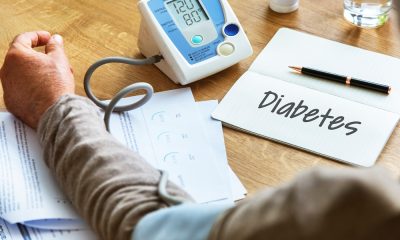






People with diabetes may have undiagnosed heart failure that could be detected by a simple screening blood test, research suggests.
The TARTAN-HF trial found that one in four patients with diabetes who had at least one other risk factor for heart failure had undiagnosed heart failure detected through screening with a blood test and ultrasound scanning of the heart.
Experts said the findings show the extent of unrecognised heart failure in people with diabetes, and how the condition can be detected using a widely available blood test called NT-proBNP, which measures how much strain the heart is under.
They suggest a heart failure screening programme for diabetics could improve diagnosis rates, lead to earlier treatment and potentially reduce the risk of hospitalisation and death.
The study, involving 700 patients, was led by the University of Glasgow in collaboration with AstraZeneca, Roche Diagnostics, Us2.ai, NHS Greater Glasgow and Clyde and NHS Lanarkshire.
Dr Kieran Docherty, clinical senior lecturer at the University of Glasgow’s School of Cardiovascular and Metabolic Health, said: “Our results from the landmark TARTAN-HF trial identified heart failure in a large proportion of people living with diabetes, emphasising the need for a heart failure screening strategy in this group of patients.
“We know that many of the symptoms and signs of heart failure are non-specific, and may go unrecognised as potentially being due to heart failure for a long time.
“The strategy used in our trial is simple and easy to implement in clinical practice, and will aid in the early identification of heart failure in people with diabetes, and facilitate the initiation of medications that we know improve outcomes in patients with heart failure.”
The study, which began more than three years ago, involved more than 700 people with diabetes from the two health board areas who had at least one other risk factor for heart failure.
They were randomly assigned either to receive heart failure screening or to continue with their usual care.
Researchers found screening uncovered a large number of previously unrecognised cases of heart failure. Around one in four, or 24.9 per cent, of those screened were found to have the condition within six months, compared with 1 per cent in the group continuing their usual care.
The study, involving patients with type 1 and type 2 diabetes, found almost all of the participants found to have heart failure had preserved ejection fraction, which can be difficult to detect without dedicated testing.
The findings of the TARTAN-HF trial were presented at the American College of Cardiology conference taking place from 28 to 30 March in New Orleans in the US.
Dr Edward Piper, medical director at AstraZeneca UK, said: “Delayed diagnosis and treatment of heart failure in people with type 2 diabetes contributes to poor long-term outcomes. TARTAN-HF demonstrates that targeted, risk-based screening can identify previously undiagnosed heart failure in approximately one in four high-risk patients with diabetes, enabling earlier intervention with guideline-directed therapy.”
Dr Christian Simon, head of global medical affairs at Roche Diagnostics, said: “We are proud to have supported the landmark TARTAN-HF trial. These findings demonstrate the transformative power of early, accessible diagnostics like the NT-proBNP blood test.
“By identifying unrecognised heart failure in people with diabetes, we enable clinicians to initiate appropriate treatments sooner, ultimately improving patient outcomes and lives.”

The UK has launched a £6.3m men’s health fund to back local projects aimed at helping men and boys live longer, healthier lives.
The Men’s Health Community Fund is a partnership between the Department of Health and Social Care, Movember and People’s Health Trust.
The government is contributing £3m, while the two charities are more than doubling that to take the total to £6.3m.
Grants will support community projects reaching underserved men and boys aged 16 and over, particularly in the most disadvantaged areas and at key points in their lives such as becoming a father, losing a job or retiring.
Projects could include support for new fathers, activities for men facing loneliness and social isolation, services to help young men engage with the health system, and support for men in work, out of work and moving into retirement.
The programme will bring together voluntary, community and social enterprise organisations to test new ways of reaching men who are least likely to use traditional health services.
An evaluation funded through the National Institute for Health and Care Research will assess what works and help inform future policy and delivery.
Health and social care secretary Wes Streeting said: “Too many men across the country are living shorter, less healthy lives, particularly those in our most disadvantaged communities.
“This new partnership will help men get the support they need in the places they feel most comfortable, their communities, among people they trust.
“By working with expert charities and local organisations, we can reach the men who are too often missed by traditional services and help them take better care of their mental and physical health.”
“It is a key step in delivering our first ever Men’s Health Strategy and driving forward our ambition to halve the gap in healthy life expectancy between the richest and poorest areas.”
The Men’s Health Strategy sets out plans to tackle the physical and mental health challenges men and boys face.
Men can be less likely to seek help and more likely to suffer in silence, while higher rates of smoking, drinking, gambling and drug use are damaging men’s health and affecting families, workplaces and communities.
The government is also investing £3.6m over the next three years in suicide prevention projects for middle-aged men in local communities across areas of England where men are most at risk, many of which are also among the most deprived. Suicide is one of the biggest killers of men under 50, and three-quarters of all suicides are men.
The projects will aim to break down barriers middle-aged men face in seeking support, including stigma around asking for help and a lack of awareness of what is available and how to access it.
They will be co-designed with experts and men with lived experience of mental health crises and suicidal thoughts.

Gut-friendly foods may damage heart, charity warns

Diabetes patients face increased risk of undiagnosed heart failure

UK government announces £6.3m fund to boost men’s health

Brain health collaboratory launches in Gulf South
