


Insights
What Agetech trends will we see in 2023?


AgeTech World meets sector experts to predict the trends we are likely to see in 2023, as pressure on the healthcare sector rises.
Our world is going through an unprecedented demographic shift as we’ve never seen so many people reaching old age.
According to the annual State of Ageing report by the Centre for Ageing Better, there are almost 11 million people aged 65 and over in the UK. This equates to around 19 per cent of the UK population.
Estimates suggest that in 10 years this figure will increase to around 22 per cent of the population that will amount to almost 12 million people.
In 2022, the UK has also seen a number of centenarians at its highest level ever, with a 52 per cent increase.
As the UK and the world have seen a huge increase in the average life expectancy, the healthcare sector has been put under pressure. Recent studies have found that healthcare providers do not do enough for older people.
Steve Gates, managing director at TakingCare Personal Alarms, says: “With recent ONS data indicating we have an increasingly ageing population, and the challenges faced by the NHS to support elderly people, more investment is needed into preventative technologies within agetech.”
Agetech as an informative tool

With older people embracing modern technology more than ever before, agetech provides the solution to the issue. In fact, according to recent studies, 77 per cent of over-65s used the internet at home in 2020.
According to the same findings, recent internet usage among women aged 75 and over had more than doubled since 2011.
Therefore, technology is, and can be used to help patients and caregivers become better informed, make better care decisions, and manage medical conditions outside clinical settings.
Gary Steen, chief operating officer at Tunstall Healthcare, says: “The latest evolution of connected care is underpinned by digital technology, providing data and insight to enable more personalised services and predictive solutions, and will open up a new world of possibilities for changing lives and transforming services.”
‘Assistive technology should be recognised as a proactive step’

In 2023, we will see more assistive technology being used as a form of prevention for elderly people. “Assistive technology for older people has evolved a lot over the past decade, and I don’t think we’ll see this evolution slow down any time soon,” says Gates.
“Assistive technology should be recognised as a proactive step, rather than a reactive solution.
“Many people introduce technology into an elderly person’s home after they have experienced a fall or accident, but an increase in digital and AI-led technologies could help reduce the likelihood of these falls, mitigating the risk of injury.”
About 36 million falls are reported among older adults each year, with around three million of them getting treated in emergency departments for fall injuries. Of these falls, one out of five causes an injury.
“Through gazing and exploring key areas to innovate, we can drive the health, housing and care sectors forward, whilst ensuring tech literacy is kept in sharp focus,” says Steen. “I’m building on the collaborations that have already been generated to shape a system that is better able to serve people in such a fast-changing world and ensure the future of technology within the digital health and care space.
“Whether it’s the use of virtual care platforms, remote monitoring solutions, communication tools, digital apps or sophisticated data platforms, services are entering a new phase of digital maturity.”
What is the future of ‘longevity economy’?

As we’ll see an increased use of technology for the care of older people, the ‘longevity economy’ is expected to reach US$200 billion by 2030. ‘Longevity economy’ is defined as the sum of all economic activity serving the needs of older adults.
“Over the next five years we’re going to see both the technology industry and our health and social care services experience continued disruption, and solutions will be revolutionised,” says Steen. “Our technology platforms will be developed to process data from multiple sources and provide a clear picture of the risks someone faces, enabling us to create a model of health and care which is proactive and predictive, rather that reactive.”
Gates concludes: “Assistive technology for older people has evolved a lot over the past decade, and I don’t think we’ll see this evolution slow down any time soon.
“It would be great to see further development and acceptance of these digital technologies within the agetech space as we move into 2023 and beyond, and we’re already seeing more diversity within elderly care technologies and products which I hope will continue.”








Super-ageing key, Seaweed’s special, hair-raising breakthrough and more
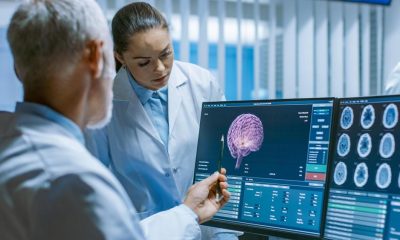
The secret of how ‘super-agers’ have the mental agility of people decades younger is centred around brain health, say US researchers.
Some elderly people are able to regenerate brain cells twice as quickly as other, healthy adults, of the same age.
While it has recently been established that we continue creating brain cells throughout our lives, the new research suggests that some people age without any signs of cognitive decline because their bodies are much better at renewing brain cells.
This is known as neurogenesis and happens in the hippocampus – which is crucial for memory.
“Super agers had twice the neurogenesis of the other healthy older adults,” said Professor Orly Lazarov, of the University of Illinois at Chicago.
“Something in their brains enables them to maintain a superior memory. I believe hippocampal neurogenesis is the secret ingredient, and the data support that.
Amino acid alert
“This is a big step forward in understanding how the human brain processes cognition, forms memories and ages.”
A super-ager is someone aged 80 or older who exhibits cognitive function that is comparable to an average person who is middle-aged.
A study of more than 270,000 participants from the UK Biobank has uncovered a link between a common amino acid and how long men live.
Researchers found that higher levels of tyrosine – an amino acid found in protein-rich foods and often marketed as a focus-boosting supplement – were associated with shorter life expectancy in men.
The study published in Aging-US, from the University of Hong Kong and the University of Georgia, examined the role of phenylalanine and tyrosine in longevity.
Their findings suggest that higher tyrosine levels are associated with shorter life expectancy in men, raising the possibility that longevity strategies may need to differ by sex.
‘Seaing’ into the future
Researchers are using a unique Australian seaweed that mimics the biological functions of human skin to develop sustainable, regenerative wound-healing, anti-ageing solutions for complex skin injuries and burns.
The healing power of seaweed is not a new discovery.
There is evidence that it was chewed medicinally in what is now Chile more than 14,000 years ago, and that seaweed has been a versatile resource for Indigenous Australians for millennia.
It is now believed there are some 12,000 species of seaweed around the world, and that current scientific understanding of the possible benefits of those species is just scratching the surface.
Over the last decade, University of Wollongong researchers at the Intelligent Polymer Research Institute (IPRI) have been investigating a unique Australian green seaweed with antibacterial, anti-inflammatory and regenerative properties.
The team believes this discovery could revolutionise complex wound healing and boost longevity.
Link between obesity and muscle loss
Researchers at the UK’s University of Birmingham have identified a new mechanism by which obesity may contribute to muscle loss in older adults.
The study, published in the Journal of Cachexia, Sarcopenia and Muscle and delivered through the National Institute for Health and Care Research (NIHR) Birmingham Biomedical Research Centre (BRC) shows for the first time that extracellular vesicles – tiny particles released by fat tissue – can directly trigger muscle atrophy in human cells.
Sarcopenic obesity, where excess body fat coexists with reduced muscle mass and strength, is an increasingly common condition in ageing populations and is associated with frailty, reduced mobility, and poorer overall health outcomes.
It is estimated to affect around 11 per cent of the population.
In the study, researchers found that extracellular vesicles released from obese adipose tissue caused significant thinning of muscle fibres derived from older adults, whilst researchers found
that muscle cells derived from younger adults were resilient to these effects.
Lead researcher Dr Joshua Price, first author and Postdoctoral Researcher, said: “It isn’t just having more fat tissue that matters.
“Obesity changes how fat tissue behaves and how it communicates with muscle.
“Ageing muscle is far more vulnerable to these altered signals, which helps explain why muscle loss accelerates with obesity later in life.”
Hair-raising breakthrough
Japanese regenerative health firm OrganTech has pinpointed the trio of cells required to prevent hair loss.
The Tokyo-based biotech said its researchers have defined a three-cell configuration capable of reconstructing hair follicle organ germs to sustain a hair growth cycle.
The work, published in Biochemical and Biophysical Research Communications, provides a potential blueprint for regeneration of hair follicles; which are complex, mini-organs that repeatedly manifest through growth, regression, rest and shedding cycles.
Previous regenerative approaches have combined epithelial stem cells and dermal papilla cells to form early follicular structures.
But, working with researchers at the RIKEN Center for Biosystems Dynamics Research, OrganTech identified a third, previously uncharacterised, cell type that appears to be essential for complete regeneration.
This mesenchymal cell was shown to play a critical role in triggering the transition from the resting to the growth phase of the hair cycle and in driving the follicle’s downward extension into surrounding tissue.
OrganTech CEO Yoshio Shimo, said: “This work defines a foundational cellular configuration for functional hair follicle regeneration.
“Beyond hair biology, it reinforces our broader strategy of organ-level regenerative medicine, where precisely orchestrated epithelial and mesenchymal interactions enable stable and functional tissue reconstruction.”


Gut-friendly foods may damage heart, charity warns

Diabetes patients face increased risk of undiagnosed heart failure

UK government announces £6.3m fund to boost men’s health

Brain health collaboratory launches in Gulf South
