


Insights
How Connected Care Technology supports older people to live independently for longer


Paul Berney, CMO at Anthropos, explores how connected care technology can improve older people’s lives.
Within Connected Care, we are all working towards the same goal; enabling older people to maintain their independence for longer. One way of achieving this is by pioneering new technologies that support better understanding of the needs of older people.
The 2021 Census confirmed what many of us who work within the Connected Care sector have long known; our population is ageing. Over the past 10 years, the percentage of people aged 65 and older has risen from 16.4 per cent to 18.6 per cent in the UK. In addition to this, life expectancy in the UK has also increased by an average of one year since 2010. This means that, on average, men are living until 79 years old, and women until 80 years old. Our ageing population is coupled with a falling birth rate, which, in 2020 hit the lowest level recorded since 2002 with 613,936 live births recorded.
This data reflects the simple fact that within the UK we will have more older people living for longer, but there may be fewer people to care for them. We are already seeing reports of the unsustainable pressures facing the NHS, which are stemming from workforce shortages. However, these pressures will only grow as we have more older people in society, which will inevitably lead to further pressures placed on every part of the care continuum.
Currently, many older people who live at home are reliant on routine health checks to detect changes in their wellbeing. This is due to the fact that the technology used to support older people in their homes has for many years been restricted to reactive, telecare solutions. But as the care system struggles to cope with the volume of people it needs to support, a switch to proactive and preventative methods would support both the delivery of better care and the creation of better care outcomes for older people and their families.
The role of technology and its impact on health care expectations

Over the past 20 years, technology has advanced to a point where, for many, it is fully integrated into everyday life. Throughout this period, we have seen developments to home care solutions that aid physical mobility including stair lifts and handrails. However, we have seen a lack of integration of digital technologies into care solutions. But, it is a fallacy that older people are opposed to or uncomfortable with technology. Today’s older people have witnessed the creation of the digital age and many have become accustomed to technology supporting them in a variety of ways throughout their middle and later life.
I believe that those experiences of technology have led to a change in expectations for both older people and their families. For example, we know it is now possible for a watch to detect the number of steps someone takes and deliver reminders to move when it has detected sedentary periods of the day. This technology can be adapted for older people. A quick Google search will pull up a huge number of responses explaining how these devices can best be used for older people, and the best way to understand the data that comes from them.
While awareness of wearable technology is growing, less is known about the kinds of passive technologies that are used in Connected Care to build a picture of someone’s life.
How do Connected Care Platforms work?
Connected Care Platforms use the data collected from sensors installed around a home that monitor the environment that people are living in, their daily routine and patterns of behaviour, alongside their physiological wellbeing and their safety and security. These sensors collect data, which is transferred to a cloud-based platform where it is analysed and processed, before being turned into intelligence. This intelligence is shared with family and carers to help them to build a more complete understanding of what goes on inside the home when they are not there. Once you have better intelligence about someone’s care needs you can make better informed decisions about their care. This constant monitoring is so much more powerful than making decisions based on a snapshot of someone’s life.
Connected Care Platforms, like Anthropos, can build on that understanding of an older person’s patterns of behaviour through analysing trends over time. Simply put, we see changes in someone’s daily routine that may not be visible to others. The older person themselves may not be aware of changing sleep patterns or activity levels. Connected Care Platforms provide families and carers with an evidence base to inform better decisions to be made. This information also allows different conversations to be had between carers, family members and older people in order to identify the care which they truly need.
Once you build an understanding of the normal day to day behaviour of older people, it becomes easier to identify anomalies which could be indicators of a decline in wellbeing. For example, if an older person boiled their kettle repeatedly, Anthropos could alert the carer to this as a potential sign of cognitive decline. Or, if an older person was to fall in their home, the platform could flag a lack of movement to a carer. With this knowledge, the carer can then organise proactive care solutions to improve conditions that may have gone unnoticed or worsened over time.
How Connected Care technology helps carers and family members

For many people with ageing parents, the reality is that they can’t physically check up on them as much as they would like. Our research shows that 51 per cent of people aged 40 years old would like an update on their parents’ wellbeing at least once a day, and 67 per cent of people aged 40 years old think their parents would be open to having Connected Care technologies installed as it allows safety to be ensured in a non-intrusive way.
One customer told us that having Connected Care “gives a bit of relief I think, especially with having the app on the phone, because we can keep checking it. I am so used to them saying they are fine, they’re coping, but they aren’t. I can see for myself they’re not”.
As we are faced with an increasing number of older people in the UK, it is clear that the need for innovative care solutions will only grow. Connected Care proposes an intelligent solution to the challenges faced by the sector. The ability for Connected Care technology to become predictive allows older people, their carers and family members to take their wellbeing into their own hands. This technology stops issues from occurring by giving carers the ability to provide meaningful care when it is needed, rather than in the aftermath of an injury or illness.
Connected Care technology offers a discrete solution to this problem whilst, more importantly, allowing older people to maintain their independence in a place of their choosing for longer.








Super-ageing key, Seaweed’s special, hair-raising breakthrough and more
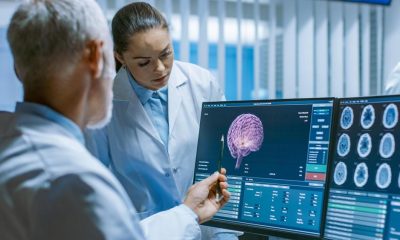
The secret of how ‘super-agers’ have the mental agility of people decades younger is centred around brain health, say US researchers.
Some elderly people are able to regenerate brain cells twice as quickly as other, healthy adults, of the same age.
While it has recently been established that we continue creating brain cells throughout our lives, the new research suggests that some people age without any signs of cognitive decline because their bodies are much better at renewing brain cells.
This is known as neurogenesis and happens in the hippocampus – which is crucial for memory.
“Super agers had twice the neurogenesis of the other healthy older adults,” said Professor Orly Lazarov, of the University of Illinois at Chicago.
“Something in their brains enables them to maintain a superior memory. I believe hippocampal neurogenesis is the secret ingredient, and the data support that.
Amino acid alert
“This is a big step forward in understanding how the human brain processes cognition, forms memories and ages.”
A super-ager is someone aged 80 or older who exhibits cognitive function that is comparable to an average person who is middle-aged.
A study of more than 270,000 participants from the UK Biobank has uncovered a link between a common amino acid and how long men live.
Researchers found that higher levels of tyrosine – an amino acid found in protein-rich foods and often marketed as a focus-boosting supplement – were associated with shorter life expectancy in men.
The study published in Aging-US, from the University of Hong Kong and the University of Georgia, examined the role of phenylalanine and tyrosine in longevity.
Their findings suggest that higher tyrosine levels are associated with shorter life expectancy in men, raising the possibility that longevity strategies may need to differ by sex.
‘Seaing’ into the future
Researchers are using a unique Australian seaweed that mimics the biological functions of human skin to develop sustainable, regenerative wound-healing, anti-ageing solutions for complex skin injuries and burns.
The healing power of seaweed is not a new discovery.
There is evidence that it was chewed medicinally in what is now Chile more than 14,000 years ago, and that seaweed has been a versatile resource for Indigenous Australians for millennia.
It is now believed there are some 12,000 species of seaweed around the world, and that current scientific understanding of the possible benefits of those species is just scratching the surface.
Over the last decade, University of Wollongong researchers at the Intelligent Polymer Research Institute (IPRI) have been investigating a unique Australian green seaweed with antibacterial, anti-inflammatory and regenerative properties.
The team believes this discovery could revolutionise complex wound healing and boost longevity.
Link between obesity and muscle loss
Researchers at the UK’s University of Birmingham have identified a new mechanism by which obesity may contribute to muscle loss in older adults.
The study, published in the Journal of Cachexia, Sarcopenia and Muscle and delivered through the National Institute for Health and Care Research (NIHR) Birmingham Biomedical Research Centre (BRC) shows for the first time that extracellular vesicles – tiny particles released by fat tissue – can directly trigger muscle atrophy in human cells.
Sarcopenic obesity, where excess body fat coexists with reduced muscle mass and strength, is an increasingly common condition in ageing populations and is associated with frailty, reduced mobility, and poorer overall health outcomes.
It is estimated to affect around 11 per cent of the population.
In the study, researchers found that extracellular vesicles released from obese adipose tissue caused significant thinning of muscle fibres derived from older adults, whilst researchers found
that muscle cells derived from younger adults were resilient to these effects.
Lead researcher Dr Joshua Price, first author and Postdoctoral Researcher, said: “It isn’t just having more fat tissue that matters.
“Obesity changes how fat tissue behaves and how it communicates with muscle.
“Ageing muscle is far more vulnerable to these altered signals, which helps explain why muscle loss accelerates with obesity later in life.”
Hair-raising breakthrough
Japanese regenerative health firm OrganTech has pinpointed the trio of cells required to prevent hair loss.
The Tokyo-based biotech said its researchers have defined a three-cell configuration capable of reconstructing hair follicle organ germs to sustain a hair growth cycle.
The work, published in Biochemical and Biophysical Research Communications, provides a potential blueprint for regeneration of hair follicles; which are complex, mini-organs that repeatedly manifest through growth, regression, rest and shedding cycles.
Previous regenerative approaches have combined epithelial stem cells and dermal papilla cells to form early follicular structures.
But, working with researchers at the RIKEN Center for Biosystems Dynamics Research, OrganTech identified a third, previously uncharacterised, cell type that appears to be essential for complete regeneration.
This mesenchymal cell was shown to play a critical role in triggering the transition from the resting to the growth phase of the hair cycle and in driving the follicle’s downward extension into surrounding tissue.
OrganTech CEO Yoshio Shimo, said: “This work defines a foundational cellular configuration for functional hair follicle regeneration.
“Beyond hair biology, it reinforces our broader strategy of organ-level regenerative medicine, where precisely orchestrated epithelial and mesenchymal interactions enable stable and functional tissue reconstruction.”


Gut-friendly foods may damage heart, charity warns

Diabetes patients face increased risk of undiagnosed heart failure

UK government announces £6.3m fund to boost men’s health

Brain health collaboratory launches in Gulf South
