


Insights
Five American companies that are building better senior care


With one in six people in the world expected to be over 60 by 2030, building a better life for seniors has never been more important. Agetech World explores five American companies that are revolutionsing senior care.
At the moment, the pace of population ageing is much faster than in the past. In 2020, the number of people aged 60 years and older outnumbered children younger that five years old. Between 2015 and 2050, the proportion of the world’s population over 60 years old will nearly double from 12 per cent to 22 per cent.
As a consequence, there are a growing number of technologies targeted at older people with – according to estimates – the agetech market expected to reach US$2T by the end of 2022.
Here are five American companies that are working towards a better senior healthcare.
Balanced
Balanced is an online platform that provides a personalised digital wellness community that inspires movement, mindfulness and joy through group exercise to live a healthier and more fulfilling life. The company provides trainers, medical advisors and a team for users who decide to take part in their programmes.
The platform provides three types of classes: balanced, focused and restore.
Balanced classes are designed for optimal full body fitness for healthy ageing. Focused classes are focused workouts such as boxing, yoga, pilates and similars. Restore classes focus on the connection between mind and body, addressing joint stiffness and improving posture.
Mon Ami
Mon Ami is an American startup building the next generation of SaaS for senior services to enable the delivery of life-sustain social services for older adults.
The platform provides resources for delivering ageing and disability services, such as articles, white papers, case studies and webinars.
Mon Ami aims to build stronger communities through their services in what they define as a “caregiving crisis”.
Joy Zhang, Mon Ami co-founder, said: “If we as a society are overwhelmed by the process of ensuring physical safety and care for our loved ones, we lose what makes us human: joy, connection, meaning and enrichment.”
Rendever
Rendever is a virtual reality company working with retirement communities and it offers people a way to overcome feelings of isolation. By using VR headsets and softwares like Google Maps, clients can navigate real-world locations and even experience visits to their former homes.
Moving into a senior living community can make older adults feel as if their freedom is limited. In fact, more than 50 per cent of senior living residents will experience depression or isolation during their stay, making loneliness among seniors a modern mental health epidemic.
Al Faxon, a member of the Vermont Veterans’ Home, said: “Renderer sessions are educational, engaging, and fun, so it’s not uncommon to hear residents chatting about their trip to Paris or recent hot air balloon ride for days or weeks afterwards.”
CarePredict
CarePredict is a health tech company that provides predictive analytics, that aim to improve the quality of life for our again population.
The goal of predictive analytics is to collect information for analyses of current or historical data and to make informed predictions for the future. For senior living, this means that caregivers are able to predict illnesses before the first symptoms show.
The tech company developed Tempo, a wrist-worn bracelet with a microphone and speaker, along with sensors that detect activities of daily living such as eating, bathing, walking, sleeping and walking. The device also communicates wirelessly with beacons in order to pinpoint the rooms where the activities take place.
Tempo detects changes that may signal the onset of serious health problems and alerts the home care provider for early intervention before the senior person needs to be hospitalised.
Luvozo PBC
Luvozo PBC is a tech company that provides mobile robots. These robots can check on patients more regularly, reduce the cost of care and raise patient satisfaction index and compensate for the lack of interaction and attention in care settings.
SAM, the company’s human-sized robot, combines technology with a human touch to provide frequent check-ins, hands-free communications portal, automated fall hazard assessment and non-medical care for residents in long-term care settings.
The company overall goal is to improve the quality of life for seniors and people with disabilities at home and in senior living communities.








Super-ageing key, Seaweed’s special, hair-raising breakthrough and more
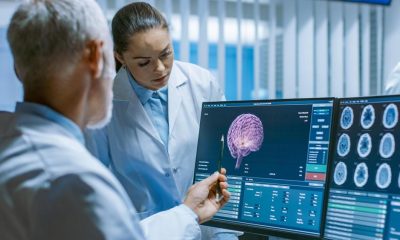
The secret of how ‘super-agers’ have the mental agility of people decades younger is centred around brain health, say US researchers.
Some elderly people are able to regenerate brain cells twice as quickly as other, healthy adults, of the same age.
While it has recently been established that we continue creating brain cells throughout our lives, the new research suggests that some people age without any signs of cognitive decline because their bodies are much better at renewing brain cells.
This is known as neurogenesis and happens in the hippocampus – which is crucial for memory.
“Super agers had twice the neurogenesis of the other healthy older adults,” said Professor Orly Lazarov, of the University of Illinois at Chicago.
“Something in their brains enables them to maintain a superior memory. I believe hippocampal neurogenesis is the secret ingredient, and the data support that.
Amino acid alert
“This is a big step forward in understanding how the human brain processes cognition, forms memories and ages.”
A super-ager is someone aged 80 or older who exhibits cognitive function that is comparable to an average person who is middle-aged.
A study of more than 270,000 participants from the UK Biobank has uncovered a link between a common amino acid and how long men live.
Researchers found that higher levels of tyrosine – an amino acid found in protein-rich foods and often marketed as a focus-boosting supplement – were associated with shorter life expectancy in men.
The study published in Aging-US, from the University of Hong Kong and the University of Georgia, examined the role of phenylalanine and tyrosine in longevity.
Their findings suggest that higher tyrosine levels are associated with shorter life expectancy in men, raising the possibility that longevity strategies may need to differ by sex.
‘Seaing’ into the future
Researchers are using a unique Australian seaweed that mimics the biological functions of human skin to develop sustainable, regenerative wound-healing, anti-ageing solutions for complex skin injuries and burns.
The healing power of seaweed is not a new discovery.
There is evidence that it was chewed medicinally in what is now Chile more than 14,000 years ago, and that seaweed has been a versatile resource for Indigenous Australians for millennia.
It is now believed there are some 12,000 species of seaweed around the world, and that current scientific understanding of the possible benefits of those species is just scratching the surface.
Over the last decade, University of Wollongong researchers at the Intelligent Polymer Research Institute (IPRI) have been investigating a unique Australian green seaweed with antibacterial, anti-inflammatory and regenerative properties.
The team believes this discovery could revolutionise complex wound healing and boost longevity.
Link between obesity and muscle loss
Researchers at the UK’s University of Birmingham have identified a new mechanism by which obesity may contribute to muscle loss in older adults.
The study, published in the Journal of Cachexia, Sarcopenia and Muscle and delivered through the National Institute for Health and Care Research (NIHR) Birmingham Biomedical Research Centre (BRC) shows for the first time that extracellular vesicles – tiny particles released by fat tissue – can directly trigger muscle atrophy in human cells.
Sarcopenic obesity, where excess body fat coexists with reduced muscle mass and strength, is an increasingly common condition in ageing populations and is associated with frailty, reduced mobility, and poorer overall health outcomes.
It is estimated to affect around 11 per cent of the population.
In the study, researchers found that extracellular vesicles released from obese adipose tissue caused significant thinning of muscle fibres derived from older adults, whilst researchers found
that muscle cells derived from younger adults were resilient to these effects.
Lead researcher Dr Joshua Price, first author and Postdoctoral Researcher, said: “It isn’t just having more fat tissue that matters.
“Obesity changes how fat tissue behaves and how it communicates with muscle.
“Ageing muscle is far more vulnerable to these altered signals, which helps explain why muscle loss accelerates with obesity later in life.”
Hair-raising breakthrough
Japanese regenerative health firm OrganTech has pinpointed the trio of cells required to prevent hair loss.
The Tokyo-based biotech said its researchers have defined a three-cell configuration capable of reconstructing hair follicle organ germs to sustain a hair growth cycle.
The work, published in Biochemical and Biophysical Research Communications, provides a potential blueprint for regeneration of hair follicles; which are complex, mini-organs that repeatedly manifest through growth, regression, rest and shedding cycles.
Previous regenerative approaches have combined epithelial stem cells and dermal papilla cells to form early follicular structures.
But, working with researchers at the RIKEN Center for Biosystems Dynamics Research, OrganTech identified a third, previously uncharacterised, cell type that appears to be essential for complete regeneration.
This mesenchymal cell was shown to play a critical role in triggering the transition from the resting to the growth phase of the hair cycle and in driving the follicle’s downward extension into surrounding tissue.
OrganTech CEO Yoshio Shimo, said: “This work defines a foundational cellular configuration for functional hair follicle regeneration.
“Beyond hair biology, it reinforces our broader strategy of organ-level regenerative medicine, where precisely orchestrated epithelial and mesenchymal interactions enable stable and functional tissue reconstruction.”


Gut-friendly foods may damage heart, charity warns

Diabetes patients face increased risk of undiagnosed heart failure

UK government announces £6.3m fund to boost men’s health

Brain health collaboratory launches in Gulf South
