


Insights
Dogs detect Parkinson’s with high accuracy

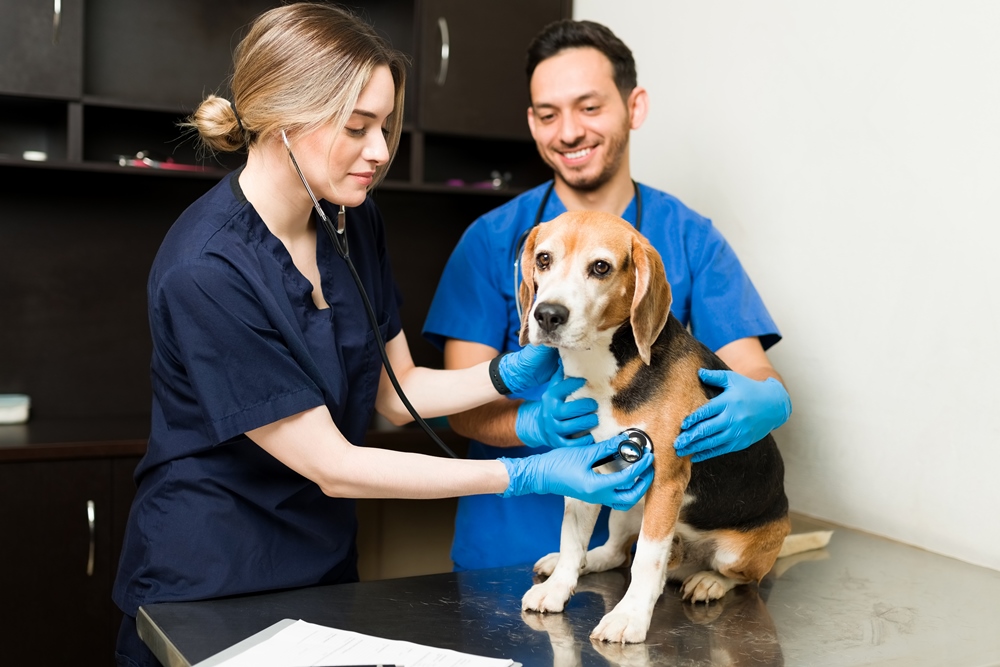
Trained dogs have identified Parkinson’s disease from skin swabs with up to 98 per cent accuracy, even before symptoms appear, a new study has found.
In a double-blind study using more than 200 samples, scent-detection dogs were able to distinguish people with Parkinson’s from healthy individuals and those with other conditions. The results suggest the disease has a specific scent signature, offering potential for faster, non-invasive diagnosis years earlier than current methods allow.
The research was carried out by Medical Detection Dogs in partnership with the Universities of Bristol and Manchester. Two dogs – a golden retriever named Bumper and a black labrador called Peanut – were trained to recognise the difference in smell between skin oil (sebum) samples from people with Parkinson’s and those without.
In testing, the dogs achieved up to 80 per cent sensitivity and up to 98 per cent specificity. Sensitivity is the ability to correctly identify positive cases, while specificity measures how well negative samples are excluded.
The dogs maintained their performance even when samples came from individuals with additional health conditions, indicating they were responding to a Parkinson’s-specific scent profile.
The training involved more than 200 sebum samples collected from both Parkinson’s patients and healthy controls, presented on a specialised sample stand. The dogs were rewarded for correctly identifying positive samples or accurately ignoring negative ones.
In the double-blind testing phase, only a computer knew the layout of the samples. Each line was presented in reverse order if a dog made no decision. Unsearched samples were then grouped into new lines until decisions were made for all.
The findings support earlier anecdotal reports of people detecting changes in a loved one’s smell before Parkinson’s was diagnosed. Researchers believe the disease produces unique volatile organic compounds that dogs can detect through their highly sensitive sense of smell.
Current diagnostic methods focus mainly on motor symptoms such as tremors, stiffness and slowness of movement, which often appear after significant brain cell loss. Earlier detection could help initiate treatment when it may be more effective in slowing progression.
Researchers say the results could lead to the development of electronic sensors that mimic dogs’ scent-detection ability, potentially creating fast, non-invasive screening tools for use in clinical settings.








Super-ageing key, Seaweed’s special, hair-raising breakthrough and more
The secret of how ‘super-agers’ have the mental agility of people decades younger is centred around brain health, say US researchers.
Some elderly people are able to regenerate brain cells twice as quickly as other, healthy adults, of the same age.
While it has recently been established that we continue creating brain cells throughout our lives, the new research suggests that some people age without any signs of cognitive decline because their bodies are much better at renewing brain cells.
This is known as neurogenesis and happens in the hippocampus – which is crucial for memory.
“Super agers had twice the neurogenesis of the other healthy older adults,” said Professor Orly Lazarov, of the University of Illinois at Chicago.
“Something in their brains enables them to maintain a superior memory. I believe hippocampal neurogenesis is the secret ingredient, and the data support that.
Amino acid alert
“This is a big step forward in understanding how the human brain processes cognition, forms memories and ages.”
A super-ager is someone aged 80 or older who exhibits cognitive function that is comparable to an average person who is middle-aged.
A study of more than 270,000 participants from the UK Biobank has uncovered a link between a common amino acid and how long men live.
Researchers found that higher levels of tyrosine – an amino acid found in protein-rich foods and often marketed as a focus-boosting supplement – were associated with shorter life expectancy in men.
The study published in Aging-US, from the University of Hong Kong and the University of Georgia, examined the role of phenylalanine and tyrosine in longevity.
Their findings suggest that higher tyrosine levels are associated with shorter life expectancy in men, raising the possibility that longevity strategies may need to differ by sex.
‘Seaing’ into the future
Researchers are using a unique Australian seaweed that mimics the biological functions of human skin to develop sustainable, regenerative wound-healing, anti-ageing solutions for complex skin injuries and burns.
The healing power of seaweed is not a new discovery.
There is evidence that it was chewed medicinally in what is now Chile more than 14,000 years ago, and that seaweed has been a versatile resource for Indigenous Australians for millennia.
It is now believed there are some 12,000 species of seaweed around the world, and that current scientific understanding of the possible benefits of those species is just scratching the surface.
Over the last decade, University of Wollongong researchers at the Intelligent Polymer Research Institute (IPRI) have been investigating a unique Australian green seaweed with antibacterial, anti-inflammatory and regenerative properties.
The team believes this discovery could revolutionise complex wound healing and boost longevity.
Link between obesity and muscle loss
Researchers at the UK’s University of Birmingham have identified a new mechanism by which obesity may contribute to muscle loss in older adults.
The study, published in the Journal of Cachexia, Sarcopenia and Muscle and delivered through the National Institute for Health and Care Research (NIHR) Birmingham Biomedical Research Centre (BRC) shows for the first time that extracellular vesicles – tiny particles released by fat tissue – can directly trigger muscle atrophy in human cells.
Sarcopenic obesity, where excess body fat coexists with reduced muscle mass and strength, is an increasingly common condition in ageing populations and is associated with frailty, reduced mobility, and poorer overall health outcomes.
It is estimated to affect around 11 per cent of the population.
In the study, researchers found that extracellular vesicles released from obese adipose tissue caused significant thinning of muscle fibres derived from older adults, whilst researchers found
that muscle cells derived from younger adults were resilient to these effects.
Lead researcher Dr Joshua Price, first author and Postdoctoral Researcher, said: “It isn’t just having more fat tissue that matters.
“Obesity changes how fat tissue behaves and how it communicates with muscle.
“Ageing muscle is far more vulnerable to these altered signals, which helps explain why muscle loss accelerates with obesity later in life.”
Hair-raising breakthrough
Japanese regenerative health firm OrganTech has pinpointed the trio of cells required to prevent hair loss.
The Tokyo-based biotech said its researchers have defined a three-cell configuration capable of reconstructing hair follicle organ germs to sustain a hair growth cycle.
The work, published in Biochemical and Biophysical Research Communications, provides a potential blueprint for regeneration of hair follicles; which are complex, mini-organs that repeatedly manifest through growth, regression, rest and shedding cycles.
Previous regenerative approaches have combined epithelial stem cells and dermal papilla cells to form early follicular structures.
But, working with researchers at the RIKEN Center for Biosystems Dynamics Research, OrganTech identified a third, previously uncharacterised, cell type that appears to be essential for complete regeneration.
This mesenchymal cell was shown to play a critical role in triggering the transition from the resting to the growth phase of the hair cycle and in driving the follicle’s downward extension into surrounding tissue.
OrganTech CEO Yoshio Shimo, said: “This work defines a foundational cellular configuration for functional hair follicle regeneration.
“Beyond hair biology, it reinforces our broader strategy of organ-level regenerative medicine, where precisely orchestrated epithelial and mesenchymal interactions enable stable and functional tissue reconstruction.”


Gut-friendly foods may damage heart, charity warns

Diabetes patients face increased risk of undiagnosed heart failure

UK government announces £6.3m fund to boost men’s health

Brain health collaboratory launches in Gulf South
