

Independence
MySense – helping people stay safe for longer at home

Seven years ago, the renowned theoretical physicist and cosmologist Professor Stephen Hawking warned that the creation of artificial intelligence would be “either the best, or the worst thing, ever to happen to humanity.”
He was speaking at the opening of the Leverhulme Centre for the Future of Intelligence, a multi-disciplinary institute within Cambridge University dedicated to studying artificial intelligence – now universally known simply as AI.
Despite fears in some circles around the rise of AI, its development has moved on apace. From medicine to manufacturing, education, science, transportation, customer service, agriculture, entertainment, retail, surveillance, finance, and the military, the technology has quickly become a part of everyday life.
Not surprisingly, it’s also a driving force behind pioneering new ideas and inventions, one of which is helping oversee people living with dementia and other neurological conditions.
MySense is a high-level monitoring system developed in the UK that uses AI algorithmic intelligence to keep a check on vulnerable patients, identify preventative solutions, and prioritise the human touch when it’s needed, cutting down on hospital visits and allowing people to live at home for longer.
The data collected builds a digital portrait of the patient and in some cases can even recognise the warning signals for a potential illness, alerting care givers weeks in advance.
Clinical evaluation at two NHS trusts has shown MySense is already having a positive impact in cutting unplanned hospital admissions, freeing up beds, and saving money.
South Warkwickshire NHS Foundation Trust, for instance, recorded a 46% reduction in unplanned hospital admissions for patients in its area using MySense.
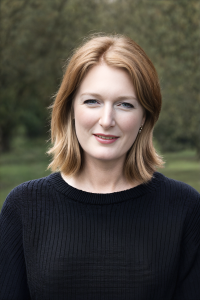
MySense founder and group CPO, Lucie Glenday
Meanwhile, University Hospitals North Midlands NHS Trust, which has used MySense to work with a cohort of high-intensity and frail elderly patients, recorded consistent monthly reductions of between 40%-50% over an eight-month period compared to admissions for the same users before the product was used in their care.
This equated to an average cost reduction per patient of £16,458 per year.
They’re impressive figures. But for many, there may be the thorny issue that whilst MySense offers the chance to get in front of a range of health problems, alongside giving valuable reassurance and peace of mind to users, their families, and caregivers, at its heart it is reliant on AI to build up a picture of the patient.
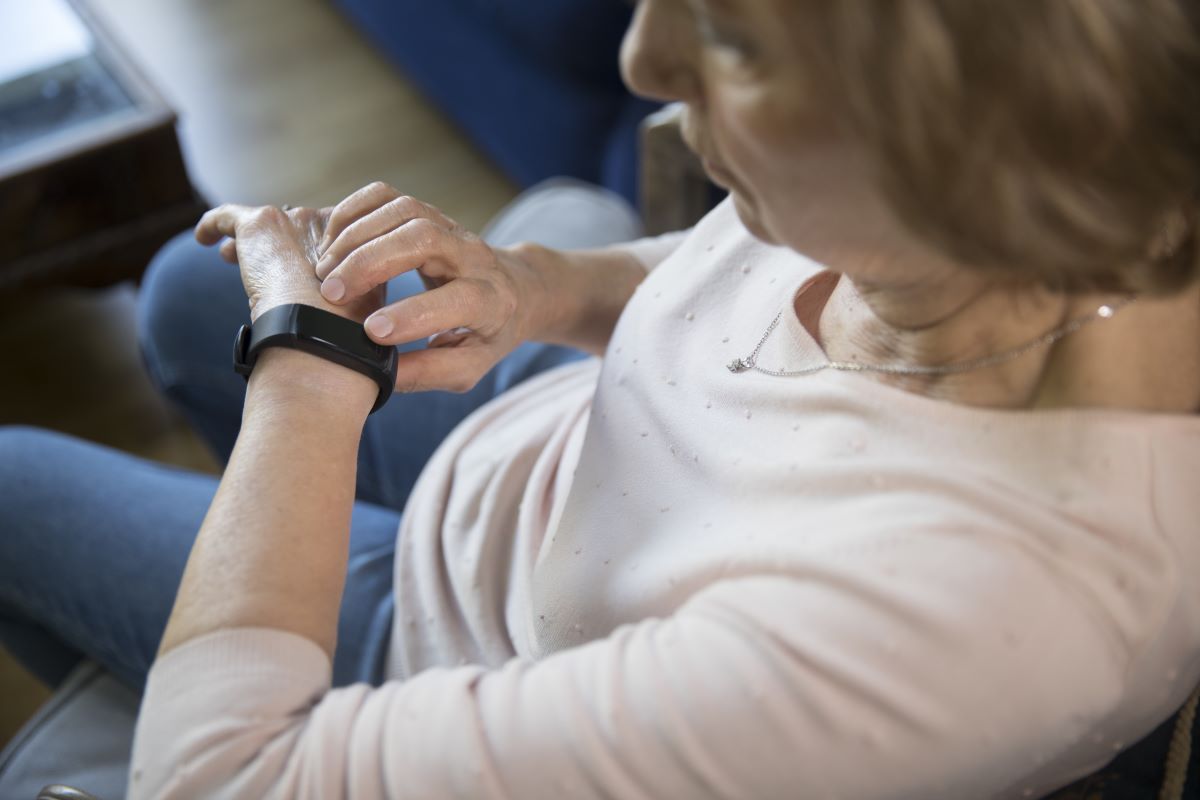
Eight sensors are installed in specific locations around the home. One is a wearable heart monitor, whilst another is a sleep belt that goes on the bed. But the others are used to detect movement and activities around the house, such as the bathroom, kitchen, and front door.
This sensor technology picks up around 20,000 data points per day per person to create a personalised insight.
Multiple layers of algorithms and AI process that information to build up a picture of an individual’s activities and health. Environmental and contextual attributes are then applied that overlay disease models and can predict health decline and deterioration.
What MySense essentially does is build a picture of what is ‘normal’ for each user to live independently in their own home. Variations in the data from the sensors could then be a warning signal that not all is well.
Self-confessed data geek and MySense founder and group CPO, Lucie Glenday, whose early career included working on the Government Digital Services team which created gov.uk, is the first to admit that she shares some of the current worries being aired about the possible risks our overreliance on AI could pose.
She told Agetech World: “I have very strong feelings myself around the way that AI models are trained, the ethical nature of that training, and the transparency of the decision-making. I think all of those things are really big questions that need to be answered.”
But Ms Glenday, who set up MySense in 2016 to help people with neurological disorders like dementia, Parkinson’s, and motor neurone disease, live better lives, added: “We’re a B-Corp (companies that meet high standards of social and environmental performance, transparency, and accountability), so we take our ethical responsibilities really, really, seriously. This is not something that is in response to all this damaging stuff in the press.
“This is something that we have built into the business that is at the very core. It is really important.”
She explained that because of the complexity of the problem that MySense needs to solve, it runs multiple machine-learning algorithms.
“The reason we use the sensors is because we get those consistent data points coming in day in and day out to be able to build the models off.
“We have to have good data coming in, and ethically acquired data.
“So, we have all of this data, how do we process, understand and analyse it in a way that doesn’t mean that we have this black box and a machine making decisions that it’s not qualified to make?
“We put some guard rails in place. You say that all machine learning has to be supervised for a production environment, so every single decision that is made has to have supervision in it so that we can absolutely go back and audit every decision an AI machine has made.
 “We do use some deep learning methodology, but it’s only in research. It is literally looking at some of the medical data out there and understanding those patterns.”
Transparency and audibility are critical, she said, making sure the training is undertaken on ethically acquired data, and that there is proper oversight “to make sure we are not running roughshod over this stuff.”
MySense is a very personal venture for Ms Glenday. Her sister, Olivia, was just 23 when she died from a rare form of MND in December 2006.
Hence her interest in helping people with neurological disorders to live better, independent lives in their own homes.
Ms Glenday believes MySense is unique.
She said: “There is an awful lot out there in the market that is part of the digital switchover that uses sensors around the home and talks about AI. But we have never put ourselves in that box. We have not played in the telecare space. That is not the environment that we have built the product for.
“It is probably going to sound a bit arrogant but yes, I believe we are unique because we have looked at this purely as a data problem.
“I do not believe there is any other organisation out there right now with 352 metrics on an individual on a daily basis that can track and manage someone’s independence and health to the level that we can.
“It may well be that there is a whole cohort of people out there that say ‘Oh well, I don’t need all of that information. I just need to know that somebody is alive and that they are not on the floor.’ And that is absolutely fine. I have to say there are lots of great products out there to solve that problem.
“But I genuinely believe with overstretched health provision across the world, not just here in the UK, more and more focus is going to be about supporting people to live with long-term and chronic conditions at home, and we are going to need to overcome that challenge as a society over the next few years. I believe we are positioned perfectly to take that opportunity on.”
The vast amounts of information collected by MySense allow for better early diagnosis of a range of problems. Ms Glenday said: “A great example of this is UTIs (urinary tract infection). For the most part, people are picking them up between a week to two weeks in advance of a UTI requiring somebody to be blue-lighted into hospital.
“This is because we are seeing the patterns. We are seeing the behaviours, we are seeing the reduction in mobility, we are seeing the poor sleep patterns, we are seeing the escalation in heart rate, we are seeing a reduction in the number of times going to the kitchen to stay hydrated, we are seeing a decrease or increase in respiratory rate overnight.
“All of these factors show the early indications really early on so that people can intervene and say, ‘OK, we think we’ve got a problem.’ I think that is why we have achieved the results we have.
“It means that people can get ahead and hopefully either put the additional support around or treat at home so there is no requirement to go into hospital.”
MySense is not a medical device, however, although Ms Glenday has high hopes it will get such accreditation in the next year. “All we do at this point in time is deliver what we see. We are not triaging, we are not saying we have picked up an early diagnosis of dementia. What we are saying is, look at all these different factors that would help a clinical team on the ground get to that decision much quicker than they would without that line of sight.
“That is the really important part of what we do; telling that story so that it is easier for the clinical teams to make a clinical decision about future care for this individual.”
Ms Glenday’s hope is that in the near future, enough behaviour information will have been gathered for MySense to begin to fundamentally understand what is going to happen and build care tailored better to each patient.
“We are really excited for the next phase as we start to build our predictive models around specific diseases.
“So, we are going to be looking at Parkinson’s and diabetes and of course, a cause close to my heart, MND, and start building our predictive models against those specific conditions.
“Hopefully, that will mean that we get to work with those cohorts.
“I would love to be able to go and sit down with someone who has recently been diagnosed with Parkinson’s and say ‘We are going to help you manage this.’
“That would just be an extraordinary thing for us as a business to be able to achieve. That is what is making me really excited.”








Eye-screening firm Forus Health has received a 21 per cent investment to scale its AI diagnostics across India and abroad.
Forus Health develops ophthalmic diagnostics — tools that detect eye disease — and “oculomics”, which uses eye images to flag wider risks such as diabetes or hypertension. Its devices have screened over 22 million people in more than 75 countries, and its AI-integrated platform has delivered comprehensive eye assessments to over five million patients.
The deal is a secondary transaction intended to support the scale-up of Forus Health’s AI eye-screening platforms and international deployment.
Inviga Healthcare Fund has acquired the 21 per cent stake, its second major investment after Mynvax in 2024, signalling support for India-built AI diagnostics in global markets.
Dr B. S. Ajaikumar, founder of Inviga Healthcare Fund and chair of HCG, said: “Forus Health embodies the Inviga ethos: clinically strong, technologically deep, socially impactful, growth oriented, profitable. This investment is a testament to our confidence in India’s ability to produce world-class healthcare innovations for domestic and international markets. We are delighted to partner with visionary founders like Chandrasekhar (KC) who combine deep insight with execution to make preventive, equitable healthcare a reality.”
K. Chandrasekhar, founder and chief executive of Forus Health, said: “We are thrilled to welcome Inviga as we enter the next phase of our growth. Their expertise in healthcare, operational experience, and insights from a clinician’s perspective are incredibly valuable. Together, we aim to enhance our AI and platform capabilities, utilise our proven ability to innovate in medical devices, and expand our reach both in India and globally. Our mission remains focused on eradicating preventable blindness.”
Rakshith Rangarajan, fund manager at Inviga Healthcare Fund, said: “Our collaboration with Forus is a strategic step intended to facilitate the expansion of a reputed med-tech franchise that is serving a significant market demand through a sustainable and economically sound business model. It reflects our commitment to advancing accessible solutions that address large, unsolved health challenges. The Make in India, Make for India and Make for the World ethos of Forus resonates deeply with our Fund. We’re confident this partnership will drive sustained growth and long-term value creation.”
The burden underscores the need for scalable tools: an estimated 270 million people in India live with visual impairment, much of it preventable; globally, 2.2bn people live with vision impairment or blindness, with over 1bn cases considered preventable or treatable. Forus Health’s 3nethra screening devices and wearable 3nethra specto — a smartphone-operated digital refractor for remote and tele-optometry — target earlier detection and easier access to care.

By Professor Ama Johal, clinical lead and dental sleep expert at Aerox Health
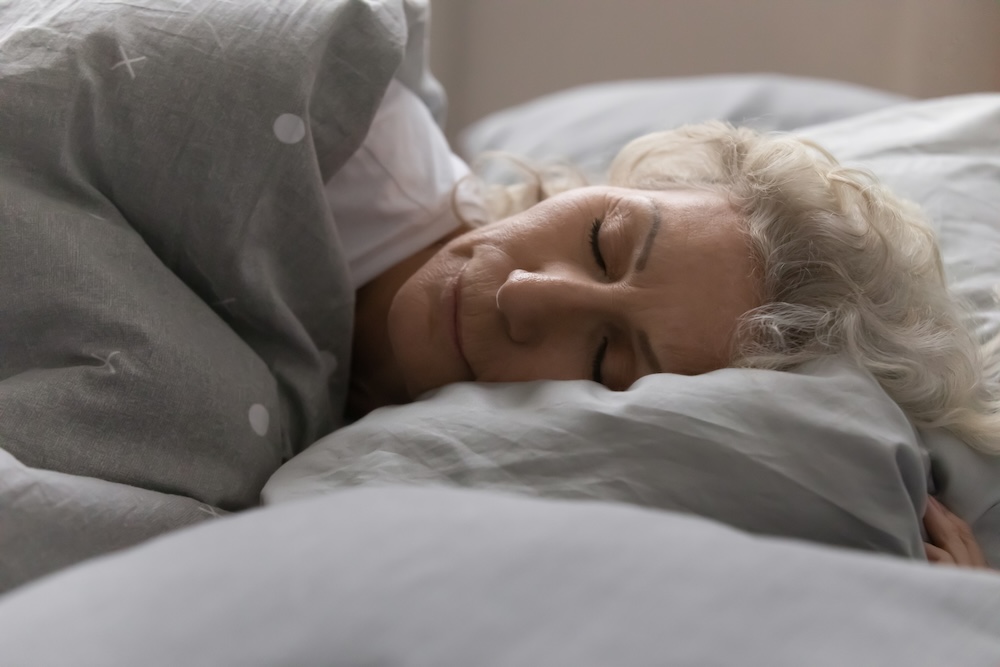
During menopause, it’s very common for women to notice significant changes to their sleep patterns and experience things like restless nights, loud snoring, or simply waking up feeling exhausted.
What most don’t realise, however, is that these symptoms can signal something far more serious – obstructive sleep apnoea (OSA), one of the most impactful and consequential sleep-related breathing disorders.
Women across the world are unknowingly fighting an uphill battle. Around 90 per cent of females with moderate to severe sleep apnoea remain undiagnosed.
This collective lack of awareness is due to a plethora of factors including archaic taboos around the subject and lack of education or omission of menopause in sexual education.
Ultimately, this combination leaves women underprepared and vulnerable to the biological, social and medical realities associated with the menopause.
Now more than ever, we must confront this silence head-on and recognise the hidden sleep crisis affecting so many women globally and the opportunity to address it.
The hidden sleep crisis
Snoring that develops or worsens during menopause can progress into OSA due to a decline in estrogen and progesterone which reduces muscle tone in the throat and in turn makes the obstruction or collapse of the airways more likely during sleep.
Yet this link between menopause and sleep disorders remains largely overlooked, leaving millions of women undiagnosed, untreated, and unaware that their sleep struggles are more than just “part of getting older”.
In my practice, I see the consequences of this misunderstanding far too often.
I hear from many female patients who have been suffering in silence, without the knowledge that they could seek help. In fact, I often encounter the common misconception that snoring is a man’s issue.
This preconceived notion perpetuates a persistent gender bias in sleep-related health research.
As ENT consultant and sleep surgeon at University College London hospitals, Ryan Chin Taw Cheong recently highlighted, the development of snoring is reason enough to consult your doctor. It’s time for this pervasive issue to emerge from the dark.
So why don’t women seek help?
When considering why many women do not seek help for their symptoms, there are two overarching reasons.
Firstly, the information and knowledge is not widely available for sufferers to realise that snoring can be a medical issue which can be assessed and subsequently readily treated.
Secondly, there is a potent stigma surrounding both the menopause and snoring which is an inhibiting factor amongst sufferers, discouraging open discussion.
Perhaps unsurprisingly, menopause is not included in traditional sex education in schools. Being unaware of what is ‘normal’ and what could require medical attention is widespread amongst my patients with sleep disorders, yet this information is not freely disseminated outside of clinics.
Unfortunately, cognitive fog and irritability – symptoms of snoring and obstructive sleep apnoea – are too often written off as stress, anxiety or ‘just the menopause’.
Avoiding sharing symptoms with medical providers, combined with online misinformation, often results in individuals suffering in silence or worse, turning to unregulated miracle menopause cures that exacerbate the risks of undiagnosed OSA.
These so-called ‘cures’ reinforce the harmful notion that the menopause is a defect which needs to be fixed rather than a natural life stage.
The health costs of ignoring snoring
A breadth of research links untreated OSA to cardiovascular disease, hypertension and cognitive decline.
However, aside from the medical risks, snoring and sleep apnoea can have profound social and emotional consequences.
For women, the shame in snoring, a symptom often mischaracterised as a ‘male issue’, can significantly affect self esteem and mental health.
Partners may also suffer if the snoring is disruptive to their sleep, in some instances causing rifts in relationships and a phenomena known as ‘sleep divorces’ (sleeping in separate beds or rooms).
In fact, according to a recent study commissioned by 32Co, 47% of recently divorced Brits cite interrupted sleep linked to snoring or sleep disorders as contributing to their relationship breakdowns, with 85 per cent believing ‘sleep divorces’ contributed to ultimate separation.
Sleep specialists seek to manage and monitor the symptoms of sleep disorders and OSA to minimise disruption to an individual’s personal and public life.
Screening menopausal women for OSA is a preventative measure which leads to informed patients. It is not simply about getting better sleep but about the long-term health outcomes.
Breaking the silence: what needs to change
Drawing on the stories of those I meet in my clinic, I would like to outline five steps that we can take to address this silent epidemic.
First, the menopause and associated symptoms should be included in a comprehensive sex and health education.
This could be provided both in schools’ curricula and made readily available at health services catering to adults.
Second, throughout the course of history women’s issues have been chronically underserved.
More resources can be funnelled into conducting research to help us better understand the impact of the menopause on women’s physical and mental health.
Future research would also help to neutralise the gender bias of previous studies.
Third, launching public health campaigns and workplace initiatives to encourage employers to recognise sleep disorders as a significant element of menopause will help build awareness and reduce the impact of stigmas.
Fourth, myth-busting, shattering taboos, and normalising discussion about the menopause will be key.
We must view snoring as a gender neutral issue rather than a male stereotype and denounce harmful rhetoric and jokes that perpetuate stigma.
Fifth, we must better equip more localised healthcare providers up and down the country to both diagnose and treat OSA effectively.
Sleep disorders are not niche issues but a major public health concern with potentially severe consequences.
Quality of life amongst my patients is inextricably linked with sleep quality.
Recognising the relationship between snoring and OSA and the menopause is not simply about pathologising a natural stage of life, but providing women with the information, respect and medical care they deserve.
Only through more transparency and collaboration amongst researchers, educators and clinicians can we hope to close the gender gap in sleep medicine and bring this hidden crisis to light.

A platform that uses music to help people better understand diabetes and other healthcare concepts has been launched ahead of World Diabetes Day.
Developed by Dr Stephen Lawrence, associate clinical professor in diabetes at the University of Warwick, Prescribed Notes is the world’s first platform to use music as an immersive, memorable tool for learning complex health concepts.
Combining face-to-face and online lessons, each session is tailored, interactive and brought to life through live music and storytelling.
The platform combines live piano music with evidence-based diabetes and healthcare education to engage, inspire and empower diverse audiences.
As a practising physician, academic and accomplished improvising pianist, Dr Lawrence noticed that traditional medical education often struggles to make a lasting impact on healthcare professionals.
In response, he created Prescribed Notes, drawing on research and his own experience showing that medical information is more easily understood and retained when delivered through music and rhythmic patterns.
Dr Lawrence said: “Music has an incredible ability to make complex ideas stick in the mind.
“With Prescribed Notes, we are creating a space where medical knowledge and melody come together, helping people understand and remember healthcare concepts in a way that is both engaging and inspiring.”
“By combining storytelling, live performance and evidence-based education, we aim to transform the way people experience learning about diabetes and other health conditions, making it memorable, meaningful and, above all, enjoyable.”
Dr Lawrence brings extensive expertise to this platform, having previously served as the diabetes lead for the Royal College of General Practitioner (RCGP) and as the primary care lead for Diabetes UK.
His experience in these roles has given him insights into the challenges faced by both people living with diabetes and healthcare providers.
World Diabetes Day is an annual global awareness campaign held on 14 November to highlight the importance of diabetes awareness and management.
It marks the birthday of Sir Frederick Banting – co-discoverer of insulin.
The day serves as a platform to raise awareness about diabetes and to promote the importance of coordinated action to confront the disease as a critical global health issue.

Gut-friendly foods may damage heart, charity warns

Diabetes patients face increased risk of undiagnosed heart failure

UK government announces £6.3m fund to boost men’s health

Brain health collaboratory launches in Gulf South