Markets & Industry
Novel stroke treatment receives new US patent

A new twist on a drug used to treat alcohol use disorder could double up as a treatment for stroke.
Carb – short for Carbamathione – is a new formulation designed to treat ischemic stroke, protect brain tissue against injury and minimise the size of localised brain damage.
About 87% of all strokes are caused by a sudden disruption of blood supply to the brain. Whilst significant strides have been made in recent years in stroke research and care, effective treatments are still few and far between.
Now Jang-Yen (John) Wu, a professor of biomedical science in Florida Atlantic University’s Schmidt College of Medicine and the inventor of the Carb therapy, has received a new US patent for his work related to Carbamathione, that will open the door to the novel drug being commercialised.
According to the World Health Organisation, 15 million people a year globally suffer a stroke. Of these, five million die and another five million are left permanently disabled. The chance of suffering a stroke doubles every 10 years after the age of 55 with the most common age being 71.4 in men and 76.9 years in women.
The potential promise of Dr Wu’s discovery has enticed CHS Pharma Inc, a South Florida biotechnology company, to make the stroke treatment a reality. The firm has acquired this patent and four others related to neurological disorders and traumatic brain injury.
It is CHS’s intention to move forward with the Carb discovery through commercialisation.
Dr Wu said: “One of the novel aspects of using Carbamathione, or Carb therapy, to treat stroke is its safety. Carb is an active metabolite of disulfiram or DSF, which has been used to treat alcohol use disorder for more than six decades and has been found to be safe with minimal adverse effects.

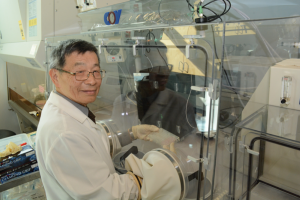
Jang-Yen (John) Wu, inventor of ‘Carb’ therapy
“Once we are able to demonstrate the efficacy of Carb therapy in treating stroke, we will be able to use it on patients.”
Strides have been made in the field of brain injury brought on by inadequate blood supply (ischemia) and lack of oxygen (hypoxia), a major pathophysiology of stroke.
However, despite extensive research to develop medicines for stroke based on the known mechanisms, these efforts have largely failed to fulfil expectations.
Dr Wu said: “Attempts to develop medicines to treat stroke have been disappointing, partially because the underpinning mechanism of stroke-induced neuronal injury is multi-factorial and therefore needs a therapeutic intervention that addresses the multi-factorial nature of the disease.”
It is generally believed excitotoxicity caused by excessive release of excitatory neurotransmitter glutamate plays an important role in ischemia/reperfusion induced neuronal death.
Carb works by protecting ischemia-induced brain injury through its action as a glutamate receptor partial antagonist. This unique property could provide neuronal protection through its ability to block excessive glutamate-induced neuronal excitation while allowing the basal glutamate neurotransmission to continue.
Dr Wu said a pharmaceutically formulated version of Carb could be administered as an injection to treat patients diagnosed with an ischemic stroke.
“Unlike tissue plasminogen activator (TPA), which has a window of opportunity of only four hours, Carb could be administered within 24 hours of the onset of symptoms of ischemic stroke,” he explained.
Carb therapy also holds the promise to treat other diseases in the future as glutamate-induced excitotocixity is thought to be involved in many neurological diseases, including Alzheimer’s, epilepsy and others.