Insights
How Connected Care Technology supports older people to live independently for longer

Paul Berney, CMO at Anthropos, explores how connected care technology can improve older people’s lives.
Within Connected Care, we are all working towards the same goal; enabling older people to maintain their independence for longer. One way of achieving this is by pioneering new technologies that support better understanding of the needs of older people.
The 2021 Census confirmed what many of us who work within the Connected Care sector have long known; our population is ageing. Over the past 10 years, the percentage of people aged 65 and older has risen from 16.4 per cent to 18.6 per cent in the UK. In addition to this, life expectancy in the UK has also increased by an average of one year since 2010. This means that, on average, men are living until 79 years old, and women until 80 years old. Our ageing population is coupled with a falling birth rate, which, in 2020 hit the lowest level recorded since 2002 with 613,936 live births recorded.
This data reflects the simple fact that within the UK we will have more older people living for longer, but there may be fewer people to care for them. We are already seeing reports of the unsustainable pressures facing the NHS, which are stemming from workforce shortages. However, these pressures will only grow as we have more older people in society, which will inevitably lead to further pressures placed on every part of the care continuum.
Currently, many older people who live at home are reliant on routine health checks to detect changes in their wellbeing. This is due to the fact that the technology used to support older people in their homes has for many years been restricted to reactive, telecare solutions. But as the care system struggles to cope with the volume of people it needs to support, a switch to proactive and preventative methods would support both the delivery of better care and the creation of better care outcomes for older people and their families.
The role of technology and its impact on health care expectations
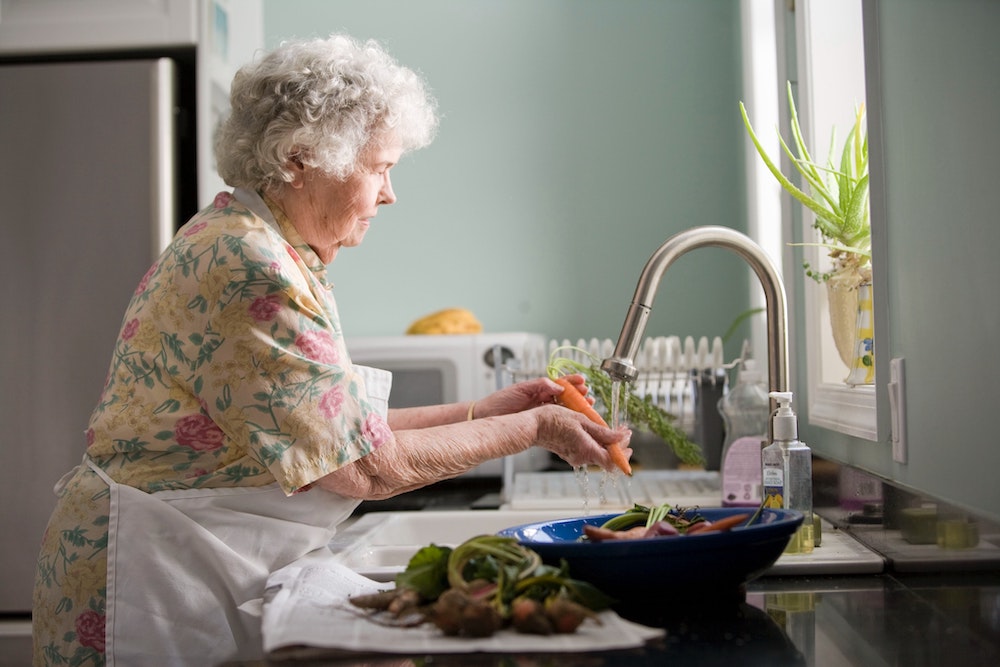

Over the past 20 years, technology has advanced to a point where, for many, it is fully integrated into everyday life. Throughout this period, we have seen developments to home care solutions that aid physical mobility including stair lifts and handrails. However, we have seen a lack of integration of digital technologies into care solutions. But, it is a fallacy that older people are opposed to or uncomfortable with technology. Today’s older people have witnessed the creation of the digital age and many have become accustomed to technology supporting them in a variety of ways throughout their middle and later life.
I believe that those experiences of technology have led to a change in expectations for both older people and their families. For example, we know it is now possible for a watch to detect the number of steps someone takes and deliver reminders to move when it has detected sedentary periods of the day. This technology can be adapted for older people. A quick Google search will pull up a huge number of responses explaining how these devices can best be used for older people, and the best way to understand the data that comes from them.
While awareness of wearable technology is growing, less is known about the kinds of passive technologies that are used in Connected Care to build a picture of someone’s life.
How do Connected Care Platforms work?
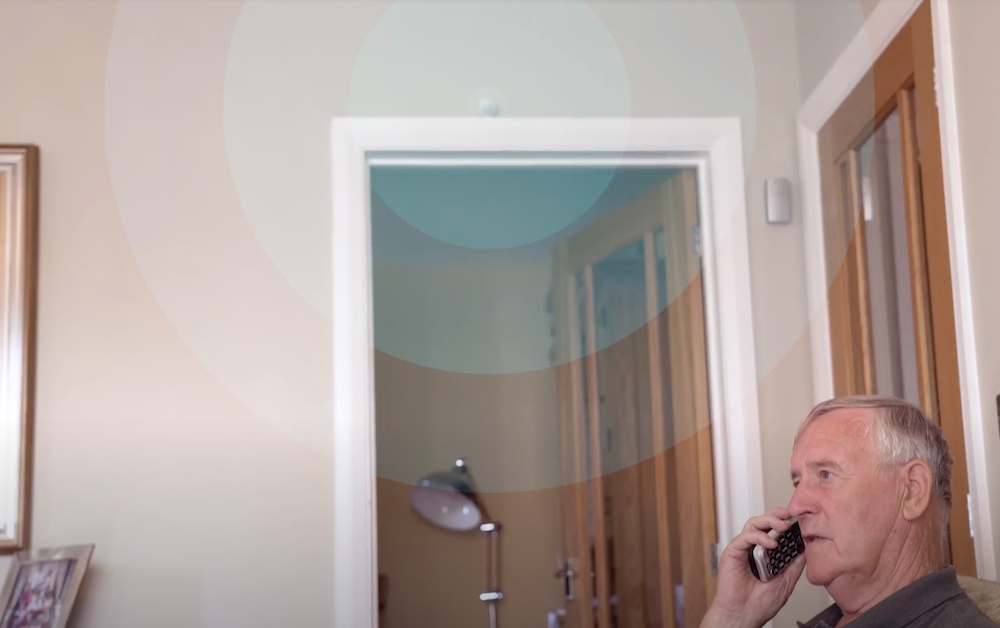
Connected Care Platforms use the data collected from sensors installed around a home that monitor the environment that people are living in, their daily routine and patterns of behaviour, alongside their physiological wellbeing and their safety and security. These sensors collect data, which is transferred to a cloud-based platform where it is analysed and processed, before being turned into intelligence. This intelligence is shared with family and carers to help them to build a more complete understanding of what goes on inside the home when they are not there. Once you have better intelligence about someone’s care needs you can make better informed decisions about their care. This constant monitoring is so much more powerful than making decisions based on a snapshot of someone’s life.
Connected Care Platforms, like Anthropos, can build on that understanding of an older person’s patterns of behaviour through analysing trends over time. Simply put, we see changes in someone’s daily routine that may not be visible to others. The older person themselves may not be aware of changing sleep patterns or activity levels. Connected Care Platforms provide families and carers with an evidence base to inform better decisions to be made. This information also allows different conversations to be had between carers, family members and older people in order to identify the care which they truly need.
Once you build an understanding of the normal day to day behaviour of older people, it becomes easier to identify anomalies which could be indicators of a decline in wellbeing. For example, if an older person boiled their kettle repeatedly, Anthropos could alert the carer to this as a potential sign of cognitive decline. Or, if an older person was to fall in their home, the platform could flag a lack of movement to a carer. With this knowledge, the carer can then organise proactive care solutions to improve conditions that may have gone unnoticed or worsened over time.
How Connected Care technology helps carers and family members

For many people with ageing parents, the reality is that they can’t physically check up on them as much as they would like. Our research shows that 51 per cent of people aged 40 years old would like an update on their parents’ wellbeing at least once a day, and 67 per cent of people aged 40 years old think their parents would be open to having Connected Care technologies installed as it allows safety to be ensured in a non-intrusive way.
One customer told us that having Connected Care “gives a bit of relief I think, especially with having the app on the phone, because we can keep checking it. I am so used to them saying they are fine, they’re coping, but they aren’t. I can see for myself they’re not”.
As we are faced with an increasing number of older people in the UK, it is clear that the need for innovative care solutions will only grow. Connected Care proposes an intelligent solution to the challenges faced by the sector. The ability for Connected Care technology to become predictive allows older people, their carers and family members to take their wellbeing into their own hands. This technology stops issues from occurring by giving carers the ability to provide meaningful care when it is needed, rather than in the aftermath of an injury or illness.
Connected Care technology offers a discrete solution to this problem whilst, more importantly, allowing older people to maintain their independence in a place of their choosing for longer.