


Insights
Opinion: How robots could help to ease the social care crisis


Robear is an animatronic bear that lifts elders with mobility problems, Paro is a fuzzy robotic seal intended to provide a futuristic form of animal therapy, and Pepper is a humanoid with remote-monitoring capabilities and learning tools.
Pet robots have revolutionised and enhanced the standard of care, improving the wellbeing of care home residents. Here Stephen Hayes, managing director at automation tech firm Beckhoff UK, explores the benefits of integrating robots in social care homes.
There is a wide variety of care robots on the market. Some are aimed at physical care, including machines that can assist with mobility and exercise, feed their owner and help them with hygiene tasks. These could greatly benefit caregivers, freeing their time and preventing them from suffering from long-term health conditions or disability due to the physical effort associated with giving care.
Others play the role of a companion, engaging older people emotionally to reduce and even prevent cognitive decline, providing companionship for lonely older people, and making those with cognitive conditions easier for care staff to manage.
Research by the University of Plymouth, conducted in care homes using these pets found decreased neuropsychiatric symptoms such as delusions, depression, anxiety, apathy and occupational disruptiveness because they provided a sense of responsibility and purpose.
Social care vacancies are higher than before the COVID-19 pandemic, and data shows one in ten social care posts are unfilled in a staffing crisis that could have harmful results for residents. In England, 152,000 social care posts remain empty, according to a report released by Skills for Care.
Steve Barclay, Secretary of State for Health and Social Care commented for The Telegraph earlier this year, stating that robots and AI are key to better supporting patients and reducing demand on social care staff. He said that there was a need to adopt an innovative approach to health and attempt to cut NHS waiting times while improving care for the elderly.
However, these robots present limitations, such as superficiality and lack of personalisation. Also, the content of their conversations can be very limited, making them less entertaining with the pass of time.
This was the case of the humanoid Pepper, for which production ceased in 2021 due to a weak demand as care homes did not see the long-term benefit of his interactions. Nevertheless, robots like Paro, which move and respond to touch, have had a positive impact on the wellbeing of care home residents. However, with a cost of £5,000, care homes are looking for more affordable options.
Japan is a pioneer in developing this kind of technology. The nation is facing a ‘greying’ crisis due to the aging of its population, so the country has invested heavily in developing caretech able to serve and provide emotional support.
In the UK, there are currently almost 12 million people who are aged 65 or over, and the number of people coping with illnesses such as arthritis or dementia is expected to increase. In fact, a recent machine learning study by the Journal of Medical Systems suggests that 135 million people might be affected by dementia by 2050.
To allow for continuous innovation in this field, the UK Government announced its commitment to invest at least 2.4 per cent of GDP in R&D by 2027. The programme supports the UK Government’s Ageing Society Grand Challenge and Future of Mobility Grand Challenge, which will ensure we meet the needs of an ageing society.
With this in mind, there are certain technologies that we are likely to see more of in care homes over the coming years, including robots that can connect to each other and other devices.
This includes devices such as oximeters, thermometers, or even thermal cameras, enabling the elderly to have consultations any time of the day, from home, and send out emergency notices to staff or hospitals. However, for care robots to be a success, state-of-the-art control technology is required.
Beckhoff’s Ethernet-based fieldbus system, EtherCAT, has extension modules that are compatible with third party hardware for integration. This platform process data and transports it directly, has a flexible topology and simple line or tree structure that requires no expensive infrastructure components and includes the environments for programming, diagnostics and configuration.
This global standard for real-time Ethernet communication provides workers with real-time information about elders like location, health condition, or learning progress. This data also allows carers focus their time on other urgent tasks, optimise resources and personalise treatment.
The advancement and implementation of robot pets could improve awareness of preventative care, reduce anxiety on disease and enhance stakeholder relationship.
Further research on caretech would tackle functional problems, making these devices an essential asset for any caregiver. By investing in the right control technology now, social care homes will be better prepared to take care of their residents.
Beckhoff provides PC-based control and EtherCAT to connect caretech systems. See more here.








Super-ageing key, Seaweed’s special, hair-raising breakthrough and more
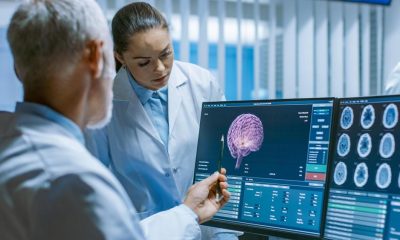
The secret of how ‘super-agers’ have the mental agility of people decades younger is centred around brain health, say US researchers.
Some elderly people are able to regenerate brain cells twice as quickly as other, healthy adults, of the same age.
While it has recently been established that we continue creating brain cells throughout our lives, the new research suggests that some people age without any signs of cognitive decline because their bodies are much better at renewing brain cells.
This is known as neurogenesis and happens in the hippocampus – which is crucial for memory.
“Super agers had twice the neurogenesis of the other healthy older adults,” said Professor Orly Lazarov, of the University of Illinois at Chicago.
“Something in their brains enables them to maintain a superior memory. I believe hippocampal neurogenesis is the secret ingredient, and the data support that.
Amino acid alert
“This is a big step forward in understanding how the human brain processes cognition, forms memories and ages.”
A super-ager is someone aged 80 or older who exhibits cognitive function that is comparable to an average person who is middle-aged.
A study of more than 270,000 participants from the UK Biobank has uncovered a link between a common amino acid and how long men live.
Researchers found that higher levels of tyrosine – an amino acid found in protein-rich foods and often marketed as a focus-boosting supplement – were associated with shorter life expectancy in men.
The study published in Aging-US, from the University of Hong Kong and the University of Georgia, examined the role of phenylalanine and tyrosine in longevity.
Their findings suggest that higher tyrosine levels are associated with shorter life expectancy in men, raising the possibility that longevity strategies may need to differ by sex.
‘Seaing’ into the future
Researchers are using a unique Australian seaweed that mimics the biological functions of human skin to develop sustainable, regenerative wound-healing, anti-ageing solutions for complex skin injuries and burns.
The healing power of seaweed is not a new discovery.
There is evidence that it was chewed medicinally in what is now Chile more than 14,000 years ago, and that seaweed has been a versatile resource for Indigenous Australians for millennia.
It is now believed there are some 12,000 species of seaweed around the world, and that current scientific understanding of the possible benefits of those species is just scratching the surface.
Over the last decade, University of Wollongong researchers at the Intelligent Polymer Research Institute (IPRI) have been investigating a unique Australian green seaweed with antibacterial, anti-inflammatory and regenerative properties.
The team believes this discovery could revolutionise complex wound healing and boost longevity.
Link between obesity and muscle loss
Researchers at the UK’s University of Birmingham have identified a new mechanism by which obesity may contribute to muscle loss in older adults.
The study, published in the Journal of Cachexia, Sarcopenia and Muscle and delivered through the National Institute for Health and Care Research (NIHR) Birmingham Biomedical Research Centre (BRC) shows for the first time that extracellular vesicles – tiny particles released by fat tissue – can directly trigger muscle atrophy in human cells.
Sarcopenic obesity, where excess body fat coexists with reduced muscle mass and strength, is an increasingly common condition in ageing populations and is associated with frailty, reduced mobility, and poorer overall health outcomes.
It is estimated to affect around 11 per cent of the population.
In the study, researchers found that extracellular vesicles released from obese adipose tissue caused significant thinning of muscle fibres derived from older adults, whilst researchers found
that muscle cells derived from younger adults were resilient to these effects.
Lead researcher Dr Joshua Price, first author and Postdoctoral Researcher, said: “It isn’t just having more fat tissue that matters.
“Obesity changes how fat tissue behaves and how it communicates with muscle.
“Ageing muscle is far more vulnerable to these altered signals, which helps explain why muscle loss accelerates with obesity later in life.”
Hair-raising breakthrough
Japanese regenerative health firm OrganTech has pinpointed the trio of cells required to prevent hair loss.
The Tokyo-based biotech said its researchers have defined a three-cell configuration capable of reconstructing hair follicle organ germs to sustain a hair growth cycle.
The work, published in Biochemical and Biophysical Research Communications, provides a potential blueprint for regeneration of hair follicles; which are complex, mini-organs that repeatedly manifest through growth, regression, rest and shedding cycles.
Previous regenerative approaches have combined epithelial stem cells and dermal papilla cells to form early follicular structures.
But, working with researchers at the RIKEN Center for Biosystems Dynamics Research, OrganTech identified a third, previously uncharacterised, cell type that appears to be essential for complete regeneration.
This mesenchymal cell was shown to play a critical role in triggering the transition from the resting to the growth phase of the hair cycle and in driving the follicle’s downward extension into surrounding tissue.
OrganTech CEO Yoshio Shimo, said: “This work defines a foundational cellular configuration for functional hair follicle regeneration.
“Beyond hair biology, it reinforces our broader strategy of organ-level regenerative medicine, where precisely orchestrated epithelial and mesenchymal interactions enable stable and functional tissue reconstruction.”


Gut-friendly foods may damage heart, charity warns

Diabetes patients face increased risk of undiagnosed heart failure

UK government announces £6.3m fund to boost men’s health

Brain health collaboratory launches in Gulf South
