

Wellness
Music may have health benefits for older adults, finds poll


From stress relief and improved mood to keeping minds sharp and connecting to others, a poll of people aged 50 to 80 finds many positives from listening to or making music.
Whether it’s singing in a choir, playing the living room piano, joining in hymns at church, or just whistling along with the radio, a new poll finds that nearly all older adults say music brings them far more than just entertainment.
Three-quarters of people age 50 to 80 say music helps them relieve stress or relax and 65 per cent say it helps their mental health or mood, according to the new results from the University of Michigan National Poll on Healthy Aging. Meanwhile, 60 per cent say they get energised or motivated by music.
Those are just a few of the health-related benefits cited by older adults who answered questions about listening to and making music of all kinds.
Virtually all (98 per cent) said they benefit in at least one health-related way from engaging with music. In addition, 41 per cent say music is very important to them, with another 48 per cent saying it’s somewhat important.
“Music has the power to bring joy and meaning to life. It is woven into the very fabric of existence for all of humankind,” said Joel Howell, M.D., Ph.D., a professor of internal medicine at the U-M Medical School who worked with the poll team.
Music also has tangible effects on a variety of health-related ailments, he adds. “We know that music is associated with positive effects on measures from blood pressure to depression.”
The poll is based at the U-M Institute for Healthcare Policy and Innovation and supported by AARP and Michigan Medicine, the University of Michigan’s academic medical centre. The poll team asked a national sample of adults aged 50 to 80 about their experiences with and feelings toward listening to and making music.
Many older adults reported making music with other people at least occasionally, whether by singing or playing an instrument. In all, eight per cent said they have sung in a choir or other organised group at least a few times in the past year. About eight per cent of all older adults said they play an instrument with other people at least occasionally.
In all, 46 per cent of older adults reported singing at least a few times a week, and 17 per cent said they play a musical instrument at least a few times a year.
Most respondents reported listening to music, with 85 per cent saying they listen to it at least a few times a week, 80 per cent saying they’ve watched musical performances on television or the internet at least a few times in the past year, and 41 per cent saying they had attended live musical performances in person at least a few times in the past year. That latter percentage was higher among those with higher incomes and more education.
The poll shows other differences between groups in music listening habits and health impacts.
Those who said their physical health is fair or poor, and those who say they often feel isolated, were less likely to listen to music every day. Black older adults were more likely than others to have sung in a choir in the past year, and Black and Hispanic older adults were more likely to say that music is very important to them.
“While music doesn’t come up often in older adults’ visits with their usual care providers, perhaps it should,” said poll director Jeffrey Kullgren, M.D., M.P.H., M.S.
“The power of music to connect us, improve mood and energy, or even ease pain (like 7% of respondents said it does for them), means it could be a powerful tool.” Kullgren is a primary care physician at the VA Ann Arbor Healthcare System and associate professor of internal medicine at U-M.
Howell notes that music helps people keep in touch with one another throughout their lifetime. Indeed, 19 per cent of the poll respondents said music is even more important to them now than it was in their youth, and 46 per cent said it’s just as important to them now as then.
With the rising concern about the health effects of loneliness and social isolation among Americans in general, and especially among older adults, the power of music to connect people and support healthy aging should not be underestimated, Howell says. The NPHA has previously reported on trends in loneliness and social isolation in older adults.
“Music is a universal language that has powerful potential to improve wellbeing,” said Sarah Lenz Lock, senior vice president of Policy and Brain Health at AARP and executive director of the Global Council on Brain Health.
“AARP’s own research shows that music can play an important role in healthy aging by improving our moods, fostering social connections and, potentially, enriching our brain health.”


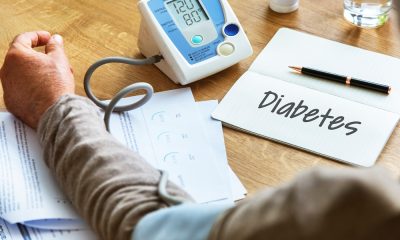
People with diabetes may have undiagnosed heart failure that could be detected by a simple screening blood test, research suggests.
The TARTAN-HF trial found that one in four patients with diabetes who had at least one other risk factor for heart failure had undiagnosed heart failure detected through screening with a blood test and ultrasound scanning of the heart.
Experts said the findings show the extent of unrecognised heart failure in people with diabetes, and how the condition can be detected using a widely available blood test called NT-proBNP, which measures how much strain the heart is under.
They suggest a heart failure screening programme for diabetics could improve diagnosis rates, lead to earlier treatment and potentially reduce the risk of hospitalisation and death.
The study, involving 700 patients, was led by the University of Glasgow in collaboration with AstraZeneca, Roche Diagnostics, Us2.ai, NHS Greater Glasgow and Clyde and NHS Lanarkshire.
Dr Kieran Docherty, clinical senior lecturer at the University of Glasgow’s School of Cardiovascular and Metabolic Health, said: “Our results from the landmark TARTAN-HF trial identified heart failure in a large proportion of people living with diabetes, emphasising the need for a heart failure screening strategy in this group of patients.
“We know that many of the symptoms and signs of heart failure are non-specific, and may go unrecognised as potentially being due to heart failure for a long time.
“The strategy used in our trial is simple and easy to implement in clinical practice, and will aid in the early identification of heart failure in people with diabetes, and facilitate the initiation of medications that we know improve outcomes in patients with heart failure.”
The study, which began more than three years ago, involved more than 700 people with diabetes from the two health board areas who had at least one other risk factor for heart failure.
They were randomly assigned either to receive heart failure screening or to continue with their usual care.
Researchers found screening uncovered a large number of previously unrecognised cases of heart failure. Around one in four, or 24.9 per cent, of those screened were found to have the condition within six months, compared with 1 per cent in the group continuing their usual care.
The study, involving patients with type 1 and type 2 diabetes, found almost all of the participants found to have heart failure had preserved ejection fraction, which can be difficult to detect without dedicated testing.
The findings of the TARTAN-HF trial were presented at the American College of Cardiology conference taking place from 28 to 30 March in New Orleans in the US.
Dr Edward Piper, medical director at AstraZeneca UK, said: “Delayed diagnosis and treatment of heart failure in people with type 2 diabetes contributes to poor long-term outcomes. TARTAN-HF demonstrates that targeted, risk-based screening can identify previously undiagnosed heart failure in approximately one in four high-risk patients with diabetes, enabling earlier intervention with guideline-directed therapy.”
Dr Christian Simon, head of global medical affairs at Roche Diagnostics, said: “We are proud to have supported the landmark TARTAN-HF trial. These findings demonstrate the transformative power of early, accessible diagnostics like the NT-proBNP blood test.
“By identifying unrecognised heart failure in people with diabetes, we enable clinicians to initiate appropriate treatments sooner, ultimately improving patient outcomes and lives.”


The UK has launched a £6.3m men’s health fund to back local projects aimed at helping men and boys live longer, healthier lives.
The Men’s Health Community Fund is a partnership between the Department of Health and Social Care, Movember and People’s Health Trust.
The government is contributing £3m, while the two charities are more than doubling that to take the total to £6.3m.
Grants will support community projects reaching underserved men and boys aged 16 and over, particularly in the most disadvantaged areas and at key points in their lives such as becoming a father, losing a job or retiring.
Projects could include support for new fathers, activities for men facing loneliness and social isolation, services to help young men engage with the health system, and support for men in work, out of work and moving into retirement.
The programme will bring together voluntary, community and social enterprise organisations to test new ways of reaching men who are least likely to use traditional health services.
An evaluation funded through the National Institute for Health and Care Research will assess what works and help inform future policy and delivery.
Health and social care secretary Wes Streeting said: “Too many men across the country are living shorter, less healthy lives, particularly those in our most disadvantaged communities.
“This new partnership will help men get the support they need in the places they feel most comfortable, their communities, among people they trust.
“By working with expert charities and local organisations, we can reach the men who are too often missed by traditional services and help them take better care of their mental and physical health.”
“It is a key step in delivering our first ever Men’s Health Strategy and driving forward our ambition to halve the gap in healthy life expectancy between the richest and poorest areas.”
The Men’s Health Strategy sets out plans to tackle the physical and mental health challenges men and boys face.
Men can be less likely to seek help and more likely to suffer in silence, while higher rates of smoking, drinking, gambling and drug use are damaging men’s health and affecting families, workplaces and communities.
The government is also investing £3.6m over the next three years in suicide prevention projects for middle-aged men in local communities across areas of England where men are most at risk, many of which are also among the most deprived. Suicide is one of the biggest killers of men under 50, and three-quarters of all suicides are men.
The projects will aim to break down barriers middle-aged men face in seeking support, including stigma around asking for help and a lack of awareness of what is available and how to access it.
They will be co-designed with experts and men with lived experience of mental health crises and suicidal thoughts.

Gut-friendly foods may damage heart, charity warns

Diabetes patients face increased risk of undiagnosed heart failure

UK government announces £6.3m fund to boost men’s health

Brain health collaboratory launches in Gulf South