


News
Designer neurons: A new hope for Parkinson’s disease treatment

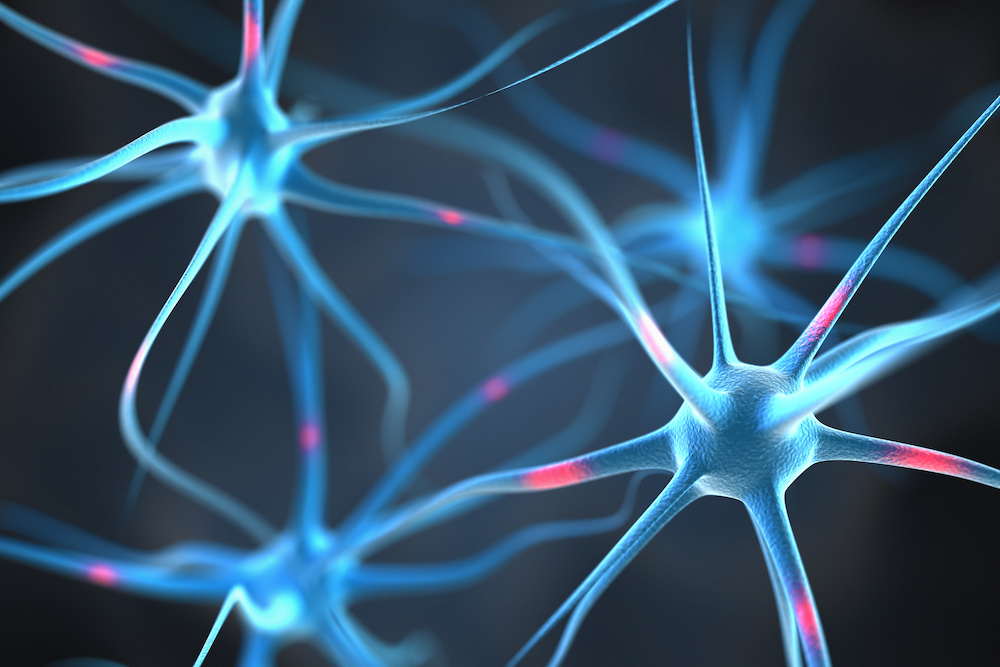
Neurodegenerative diseases damage and destroy neurons, ravaging both mental and physical health, and Parkinson’s disease, which affects over 10 million people worldwide, is no exception.
The most obvious symptoms of Parkinson’s disease arise after the illness damages a specific class of neuron located in the midbrain.
The effect is to rob the brain of dopamine – a key neurotransmitter produced by the affected neurons.
Jeffrey Kordower and his colleagues describe a process for converting non-neuronal cells into functioning neurons able to take up residence in the brain, send out their fibrous branches across neural tissue, form synapses, dispense dopamine and restore capacities undermined by Parkinson’s destruction of dopaminergic cells.
The current proof-of-concept study reveals that one group of experimentally engineered cells performs optimally in terms of survival, growth, neural connectivity, and dopamine production, when implanted in the brains of rats.
The study demonstrates that the result of such neural grafts is to effectively reverse motor symptoms due to Parkinson’s disease.
Stem cell replacement therapy represents a radical new strategy for the treatment of Parkinson’s and other neurodegenerative diseases.
The futuristic approach will soon be put to the test in the first of its kind clinical trial, in a specific population of Parkinson’s disease sufferers, bearing a mutation in the gene parkin.
The trial will be conducted at various locations, including the Barrow Neurological Institute in Phoenix, with Kordower as principal investigator.
The work is supported through a grant from the Michael J Fox Foundation.
“We cannot be more excited by the opportunity to help individuals who suffer from this genetic form of Parkinson’s disease, but the lessons learned from this trial will also directly impact patients who suffer from sporadic, or non-genetic forms of this disease,” Kordower said.
Kordower directs the ASU-Banner Neurodegenerative Disease Research Center at Arizona State University and is the Charlene and J Orin Edson Distinguished Director at the Biodesign Institute.
The new study describes in detail the experimental preparation of stem cells suitable for implantation to reverse the effects of Parkinson’s disease.
The research appears in the current issue of the npj journal Nature Regenerative Medicine.
New perspectives
You don’t have to be a neuroscientist to identify a neuron. Such cells, with their branching arbor of axons and dendrites are instantly recognisable and look like no other cell type in the body.
Through their electrical impulses, they exert meticulous control over everything from heart rate to speech. Neurons are also the repository of our hopes and anxieties, the source of our individual identity.
Degeneration and loss of dopaminergic neurons causes the physical symptoms of rigidity, tremor, and postural instability, which characterise Parkinson’s disease.
Additional effects of Parkinson’s disease can include depression, anxiety, memory deficit, hallucinations and dementia.
Due to an ageing population, humanity is facing a mounting crisis of Parkinson’s disease cases, with numbers expected to swell to more than 14 million globally by 2040.
Current therapies, which include use of the drug L-DOPA, are only able to address some of the motor symptoms of the disease and may produce serious, often intolerable side effects after five to 10 years of use.
There is no existing treatment capable of reversing Parkinson’s disease or halting its pitiless advance. Far-sighted innovations to address this pending emergency are desperately needed.
A potent weapon
Despite the intuitive appeal of simply replacing dead or damaged cells to treat neurodegenerative disease, the challenges for successfully implanting viable neurons to restore function are formidable.
Many technical hurdles had to be overcome before researchers, including Kordower, could begin achieving positive results, using a class of cells known as stem cells.
The interest in stem cells as an attractive therapy for a range of diseases rapidly gained momentum after 2012, when John B Gurdon and Shinya Yamanaka shared the Nobel Prize for their breakthrough in stem cell research.
They showed that mature cells can be reprogrammed, making them “pluripotent”—or capable of differentiating into any cell type in the body.
These pluripotent stem cells are functionally equivalent to fetal stem cells, which flourish during embryonic development, migrating to their place of residence and developing into heart, nerve, lung, and other cell types, in one of the most remarkable transformations in nature.
Neural alchemy
Adult stem cells come in two varieties. One type can be found in fully developed tissues like bone marrow, liver, and skin.
These stem cells are few in number and generally develop into the type of cells belonging to the tissue they are derived from.
The second kind of adult stem cells (and the focus of this study) are known as induced pluripotent stem cells (iPSCs).
The technique for producing the iPSCs used in the study occurs in two phases. In a way, the cells are induced to time travel, initially, in a backward and then a forward direction.
First, adult blood cells are treated with specific reprogramming factors that cause them to revert to embryonic stem cells.
The second phase treats these embryonic stem cells with additional factors, causing them to differentiate into the desired target cells – dopamine-producing neurons.
“The major finding in the in the present paper is that the timing in which you give the second set of factors is critical,” Kordower said. “If you treat and culture them for 17 days, and then stop their divisions and differentiate them, that works best.”
Pitch perfect
The study’s experiments included iPSCs cultured for 24 and 37 days, but those cultured for 17 days prior to their differentiation into dopaminergic neurons were markedly superior, capable of surviving in greater numbers and sending out their branches over long distances.
“That’s important,” Kordower says, “because they’re going to have to grow long distances in the larger human brain and we now know that these cells are capable of doing that.”
Rats treated with the 17-day iPSCs showed remarkable recovery from the motor symptoms of Parkinson’s disease. The study further demonstrates that this effect is dose dependent.
When a small number of iPSCs were grafted into the animal brain, recovery was negligible, but a large complement of cells produced more profuse neural branching, and complete reversal of Parkinson’s symptoms.
The initial clinical trial will apply iPSC therapy to a group of Parkinson’s patients bearing a particular genetic mutation, known as a Parkin mutation.
Such patients suffer from the typical symptoms of motor dysfunction found in general or idiopathic Parkinson’s, but do not suffer from cognitive decline or dementia.
This cohort of patients provides an ideal testing ground for cell replacement therapy.
If the treatment is effective, larger trials will follow, applying the strategy to the version of Parkinson’s affecting most patients stricken with the disease.
Further, the treatment could potentially be combined with existing therapies to treat Parkinson’s disease.
Once the brain has been seeded with dopamine-producing replacement cells, lower doses of drugs like L-DOPA could be used, mitigating side effects, and enhancing beneficial results.
The research sets the stage for the replacement of damaged or dead neurons with fresh cells for a broad range of devastating diseases.
“Patients with Huntington’s disease or multiple system atrophy or even Alzheimer’s disease could be treated in this way for specific aspects of the disease process,” Kordower said.









People with diabetes may have undiagnosed heart failure that could be detected by a simple screening blood test, research suggests.
The TARTAN-HF trial found that one in four patients with diabetes who had at least one other risk factor for heart failure had undiagnosed heart failure detected through screening with a blood test and ultrasound scanning of the heart.
Experts said the findings show the extent of unrecognised heart failure in people with diabetes, and how the condition can be detected using a widely available blood test called NT-proBNP, which measures how much strain the heart is under.
They suggest a heart failure screening programme for diabetics could improve diagnosis rates, lead to earlier treatment and potentially reduce the risk of hospitalisation and death.
The study, involving 700 patients, was led by the University of Glasgow in collaboration with AstraZeneca, Roche Diagnostics, Us2.ai, NHS Greater Glasgow and Clyde and NHS Lanarkshire.
Dr Kieran Docherty, clinical senior lecturer at the University of Glasgow’s School of Cardiovascular and Metabolic Health, said: “Our results from the landmark TARTAN-HF trial identified heart failure in a large proportion of people living with diabetes, emphasising the need for a heart failure screening strategy in this group of patients.
“We know that many of the symptoms and signs of heart failure are non-specific, and may go unrecognised as potentially being due to heart failure for a long time.
“The strategy used in our trial is simple and easy to implement in clinical practice, and will aid in the early identification of heart failure in people with diabetes, and facilitate the initiation of medications that we know improve outcomes in patients with heart failure.”
The study, which began more than three years ago, involved more than 700 people with diabetes from the two health board areas who had at least one other risk factor for heart failure.
They were randomly assigned either to receive heart failure screening or to continue with their usual care.
Researchers found screening uncovered a large number of previously unrecognised cases of heart failure. Around one in four, or 24.9 per cent, of those screened were found to have the condition within six months, compared with 1 per cent in the group continuing their usual care.
The study, involving patients with type 1 and type 2 diabetes, found almost all of the participants found to have heart failure had preserved ejection fraction, which can be difficult to detect without dedicated testing.
The findings of the TARTAN-HF trial were presented at the American College of Cardiology conference taking place from 28 to 30 March in New Orleans in the US.
Dr Edward Piper, medical director at AstraZeneca UK, said: “Delayed diagnosis and treatment of heart failure in people with type 2 diabetes contributes to poor long-term outcomes. TARTAN-HF demonstrates that targeted, risk-based screening can identify previously undiagnosed heart failure in approximately one in four high-risk patients with diabetes, enabling earlier intervention with guideline-directed therapy.”
Dr Christian Simon, head of global medical affairs at Roche Diagnostics, said: “We are proud to have supported the landmark TARTAN-HF trial. These findings demonstrate the transformative power of early, accessible diagnostics like the NT-proBNP blood test.
“By identifying unrecognised heart failure in people with diabetes, we enable clinicians to initiate appropriate treatments sooner, ultimately improving patient outcomes and lives.”


The UK has launched a £6.3m men’s health fund to back local projects aimed at helping men and boys live longer, healthier lives.
The Men’s Health Community Fund is a partnership between the Department of Health and Social Care, Movember and People’s Health Trust.
The government is contributing £3m, while the two charities are more than doubling that to take the total to £6.3m.
Grants will support community projects reaching underserved men and boys aged 16 and over, particularly in the most disadvantaged areas and at key points in their lives such as becoming a father, losing a job or retiring.
Projects could include support for new fathers, activities for men facing loneliness and social isolation, services to help young men engage with the health system, and support for men in work, out of work and moving into retirement.
The programme will bring together voluntary, community and social enterprise organisations to test new ways of reaching men who are least likely to use traditional health services.
An evaluation funded through the National Institute for Health and Care Research will assess what works and help inform future policy and delivery.
Health and social care secretary Wes Streeting said: “Too many men across the country are living shorter, less healthy lives, particularly those in our most disadvantaged communities.
“This new partnership will help men get the support they need in the places they feel most comfortable, their communities, among people they trust.
“By working with expert charities and local organisations, we can reach the men who are too often missed by traditional services and help them take better care of their mental and physical health.”
“It is a key step in delivering our first ever Men’s Health Strategy and driving forward our ambition to halve the gap in healthy life expectancy between the richest and poorest areas.”
The Men’s Health Strategy sets out plans to tackle the physical and mental health challenges men and boys face.
Men can be less likely to seek help and more likely to suffer in silence, while higher rates of smoking, drinking, gambling and drug use are damaging men’s health and affecting families, workplaces and communities.
The government is also investing £3.6m over the next three years in suicide prevention projects for middle-aged men in local communities across areas of England where men are most at risk, many of which are also among the most deprived. Suicide is one of the biggest killers of men under 50, and three-quarters of all suicides are men.
The projects will aim to break down barriers middle-aged men face in seeking support, including stigma around asking for help and a lack of awareness of what is available and how to access it.
They will be co-designed with experts and men with lived experience of mental health crises and suicidal thoughts.

Gut-friendly foods may damage heart, charity warns

Diabetes patients face increased risk of undiagnosed heart failure

UK government announces £6.3m fund to boost men’s health

Brain health collaboratory launches in Gulf South
