


News
How COVID-19 accelerated agetech

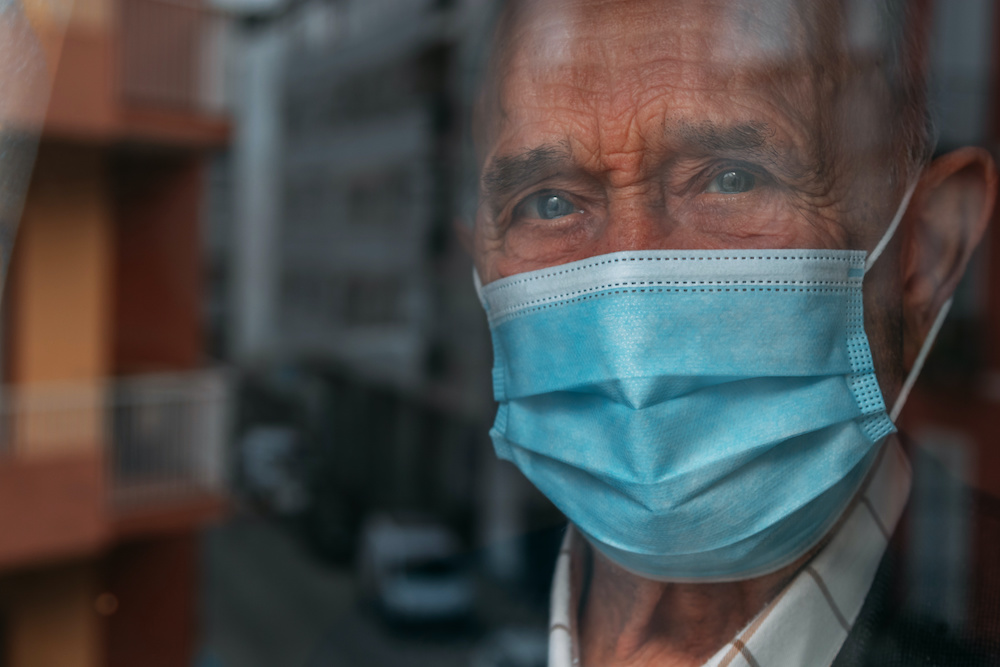
The pandemic has propelled digital health to the fore, accelerating the development – and uptake – of a vast array of innovations. Agetech World looks at what this acceleration means in terms of enabling older people to live well longer.
Tackling reluctance
It may be a cliché, that of the older generation being wary of new technology, but there is a degree of truth in it.
That’s why, as the pandemic took hold, there was a great deal of focus on getting elderly people to engage with the tech available, particularly when it came to healthcare.
However, with no other alternatives, as face-to-face appointments were discouraged or even refused altogether, seniors began to embrace telemedicine.
According to a study by the University of Michigan National Poll on Healthy Aging of adults aged between 50 and 80, from 2019 to 2020, there was a substantial increase in the proportion of older adults who reported that their health care providers offered telehealth visits.
In May 2019, just 14 per cent of this age group said that their health care providers offered telehealth visits, compared to 62 per cent in June 2020.
Similarly, the percentage of older adults who had ever used a telehealth visit personally rose dramatically from four per cent in May 2019 to 30 per cent in June 2020. Of those surveyed in 2020, six per cent said they had had a telehealth visit prior to March 2020, while 26 per cent reported having a telehealth visit in the period from March to June 2020.
And while the majority of respondents said they felt office visits as providing higher quality of care and better communication with health care providers, telehealth visits were accepted as being more convenient by most.
Furthermore, the research suggested that the effects could be long term; those who had a past telehealth visit were also more likely than those who never had one to be interested in future virtual appointments with a primary care provider (70 per cent vs 55 per cent), a specialty care provider (58 per cent vs 45 per cent), or a mental health provider (41 per cent vs 28 per cent).
More support
With greater reliance on tech comes greater government and financial support – and that’s true of agetech developments.
A report from Deloitte found that ‘Agetech … will become commonplace and health information exchanges seen as an integral part of the health ecosystem’.
Meanwhile, a paper by Andrew Sixsmith, of the department of gerontology at Simon Fraser University, Vancouver, stated that: “Technology has increasingly been seen as a potential solution for supporting seniors and caregivers during this time – helping to connect people at a time of disconnection.”
It also highlighted that, in early 2020, Canadian president Justin Trudeau created a $350m fund for community organisations to support vulnerable groups, including seniors, specifically through the use to technology.
Combatting isolation
Aside from healthcare, one of the key concerns, particularly for the elderly, was isolation. Many older people may live alone, or with existing health conditions that required them to shield.
Those in care homes also suffered as family visits were banned and group events within the home were cancelled.
To help alleviate loneliness and isolation, and recreate the natural interactions that form part of our daily routines, chat apps such as Quarantine Chat were developed.
The free digital voice service was created in 2019 by long-distance friends Danielle Baskin and Max Hawkins, and really came into its own during the pandemic.
By downloading Dial Up, an app for hosting Quarantine Chat, users could subscribe to periodic calls to randomly pair them with a chat partner who was also staying at home.
According to the developers, the aim is to recreate the experience of spontaneously talking to a stranger as part of the daily routine.
Spotting loneliness
In January 2021, Leeds County Council adopted a government-backed, satellite-powered app to spot the early signs of loneliness in the city.
The satellite-enabled Care View app is aimed at tackling social isolation and loneliness in urban areas. It does this through enlisting the help of professional volunteers across a city, including police officers, postal workers and charity workers, who register on the app when they see signs people may be experiencing social isolation.
Signs of potential loneliness include rubbish dumped in the garden or curtains that always remain shut.
The app also provides a digital tool to help volunteers find people in need of help by creating a heat map, pinpointing streets and homes where people might welcome need help.









People with diabetes may have undiagnosed heart failure that could be detected by a simple screening blood test, research suggests.
The TARTAN-HF trial found that one in four patients with diabetes who had at least one other risk factor for heart failure had undiagnosed heart failure detected through screening with a blood test and ultrasound scanning of the heart.
Experts said the findings show the extent of unrecognised heart failure in people with diabetes, and how the condition can be detected using a widely available blood test called NT-proBNP, which measures how much strain the heart is under.
They suggest a heart failure screening programme for diabetics could improve diagnosis rates, lead to earlier treatment and potentially reduce the risk of hospitalisation and death.
The study, involving 700 patients, was led by the University of Glasgow in collaboration with AstraZeneca, Roche Diagnostics, Us2.ai, NHS Greater Glasgow and Clyde and NHS Lanarkshire.
Dr Kieran Docherty, clinical senior lecturer at the University of Glasgow’s School of Cardiovascular and Metabolic Health, said: “Our results from the landmark TARTAN-HF trial identified heart failure in a large proportion of people living with diabetes, emphasising the need for a heart failure screening strategy in this group of patients.
“We know that many of the symptoms and signs of heart failure are non-specific, and may go unrecognised as potentially being due to heart failure for a long time.
“The strategy used in our trial is simple and easy to implement in clinical practice, and will aid in the early identification of heart failure in people with diabetes, and facilitate the initiation of medications that we know improve outcomes in patients with heart failure.”
The study, which began more than three years ago, involved more than 700 people with diabetes from the two health board areas who had at least one other risk factor for heart failure.
They were randomly assigned either to receive heart failure screening or to continue with their usual care.
Researchers found screening uncovered a large number of previously unrecognised cases of heart failure. Around one in four, or 24.9 per cent, of those screened were found to have the condition within six months, compared with 1 per cent in the group continuing their usual care.
The study, involving patients with type 1 and type 2 diabetes, found almost all of the participants found to have heart failure had preserved ejection fraction, which can be difficult to detect without dedicated testing.
The findings of the TARTAN-HF trial were presented at the American College of Cardiology conference taking place from 28 to 30 March in New Orleans in the US.
Dr Edward Piper, medical director at AstraZeneca UK, said: “Delayed diagnosis and treatment of heart failure in people with type 2 diabetes contributes to poor long-term outcomes. TARTAN-HF demonstrates that targeted, risk-based screening can identify previously undiagnosed heart failure in approximately one in four high-risk patients with diabetes, enabling earlier intervention with guideline-directed therapy.”
Dr Christian Simon, head of global medical affairs at Roche Diagnostics, said: “We are proud to have supported the landmark TARTAN-HF trial. These findings demonstrate the transformative power of early, accessible diagnostics like the NT-proBNP blood test.
“By identifying unrecognised heart failure in people with diabetes, we enable clinicians to initiate appropriate treatments sooner, ultimately improving patient outcomes and lives.”


The UK has launched a £6.3m men’s health fund to back local projects aimed at helping men and boys live longer, healthier lives.
The Men’s Health Community Fund is a partnership between the Department of Health and Social Care, Movember and People’s Health Trust.
The government is contributing £3m, while the two charities are more than doubling that to take the total to £6.3m.
Grants will support community projects reaching underserved men and boys aged 16 and over, particularly in the most disadvantaged areas and at key points in their lives such as becoming a father, losing a job or retiring.
Projects could include support for new fathers, activities for men facing loneliness and social isolation, services to help young men engage with the health system, and support for men in work, out of work and moving into retirement.
The programme will bring together voluntary, community and social enterprise organisations to test new ways of reaching men who are least likely to use traditional health services.
An evaluation funded through the National Institute for Health and Care Research will assess what works and help inform future policy and delivery.
Health and social care secretary Wes Streeting said: “Too many men across the country are living shorter, less healthy lives, particularly those in our most disadvantaged communities.
“This new partnership will help men get the support they need in the places they feel most comfortable, their communities, among people they trust.
“By working with expert charities and local organisations, we can reach the men who are too often missed by traditional services and help them take better care of their mental and physical health.”
“It is a key step in delivering our first ever Men’s Health Strategy and driving forward our ambition to halve the gap in healthy life expectancy between the richest and poorest areas.”
The Men’s Health Strategy sets out plans to tackle the physical and mental health challenges men and boys face.
Men can be less likely to seek help and more likely to suffer in silence, while higher rates of smoking, drinking, gambling and drug use are damaging men’s health and affecting families, workplaces and communities.
The government is also investing £3.6m over the next three years in suicide prevention projects for middle-aged men in local communities across areas of England where men are most at risk, many of which are also among the most deprived. Suicide is one of the biggest killers of men under 50, and three-quarters of all suicides are men.
The projects will aim to break down barriers middle-aged men face in seeking support, including stigma around asking for help and a lack of awareness of what is available and how to access it.
They will be co-designed with experts and men with lived experience of mental health crises and suicidal thoughts.

Gut-friendly foods may damage heart, charity warns

Diabetes patients face increased risk of undiagnosed heart failure

UK government announces £6.3m fund to boost men’s health

Brain health collaboratory launches in Gulf South
